
The potential arrival of Pieter Mulier at Versace opens a new strategic chapter for the house, one marked by uncertainty, transition and creative ambition.
The abrupt departure of Dario Vitale from Versace has generated persistent noise across the industry, yet internal conversations suggest a move that is more calculated than emotional. Sources close to the corporate environment maintain that the decision is not tied to the impact of his debut, but rather to a strategy set in motion even before the Prada Group finalised its acquisition of the Italian house. Within that quiet roadmap, one name has been circulating for months: Pieter Mulier.
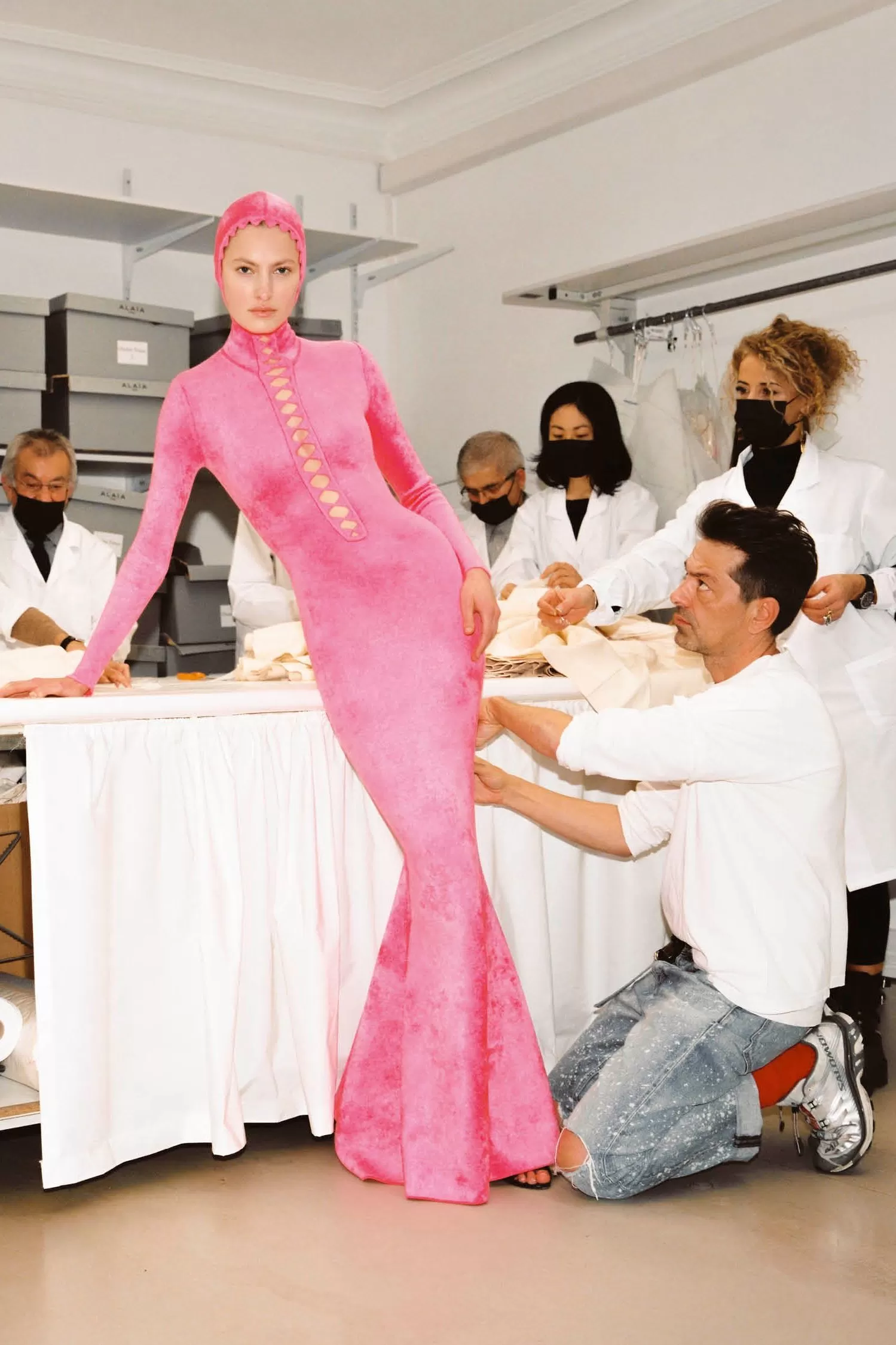
Inside Versace and within the Prada Group itself, several voices agree that Mulier has been the preferred candidate from the beginning. Currently leading Alaïa, the Belgian designer has earned a reputation for blending creative vision, commercial sensibility and a deep understanding of a brand’s DNA. His long-standing ties to Prada’s creative core reinforce the hypothesis: Mulier aligns perfectly with the growth strategy Prada intends to instil in the new Versace.
Officially, both Prada and Versace have avoided commenting, insisting that the internal team remains focused on the Autumn/Winter 2026 collection. However, the consistency of the leaks suggests that the Mulier option is far from a mere rumour. Sources close to both houses describe the operation as highly likely, while acknowledging that creative appointments can collapse just before a final announcement.
The appeal of Pieter Mulier is unmistakable. Under his direction, Alaïa — alongside CEO Myriam Serrano — evolved from a historic icon into a brand experiencing sustained growth, driven by rigorous product strategy, strong emphasis on accessories and a refined ready-to-wear offering that resonated with a global audience. While other houses struggled to maintain momentum, Alaïa secured a solid position without resorting to overexposure.
His earlier trajectory also strengthens the case for a transition. Years spent working with Raf Simons at Jil Sander, Dior, Calvin Klein and at his own label gave him a privileged understanding of large-scale brand building. That creative culture aligns seamlessly with the current architecture of the Prada Group, explaining why Mulier is viewed as the strongest fit for the new Versace roadmap.
Although it seemed certain a few months ago that he would remain at Alaïa, Richemont’s increasing focus on hard luxury suggests that fashion will no longer be its primary engine of growth. Versace, on the other hand, represents untapped global potential: mass recognition, cultural impact and the possibility of aggressive commercial expansion under seasoned creative leadership.
Recent results at Versace have not matched its visibility. The Prada acquisition highlights the need for a sharper, more competitive identity within the international market. Mulier has proven his ability to reinterpret a house’s codes without diluting its power — a crucial balance for a stage that could transform the brand from within.
The timeline remains uncertain. Richemont and Alaïa must intervene in any transition, and Mulier continues to promote the house actively, suggesting a measured process. Versace plans to show in Milan next February, regardless of whether a new Creative Director is announced before then.
If he ultimately assumes the role, Pieter Mulier would further amplify the influence of the Belgian school in Milan, alongside Raf Simons at Prada, Glenn Martens at Diesel and Margiela, and Meryll Rogge at Marni. For Versace, it could mark the beginning of a more strategic, cohesive era aligned with the demands of today’s international luxury landscape.



-380x380.webp)