

Tyler Conti enters a defining year, moving between London’s brutal boxing underworld and Guy Ritchie’s sharply tailored criminal universe on screen.
For Tyler Conti, 2026 represents an important moment in a career spanning television, independent film and theatre. With ‘Fightland’ and the second series of ‘The Gentlemen’ arriving close together, his work is set to reach a wider international audience, placing him inside two very different interpretations of crime, loyalty and power. Despite the excitement surrounding both productions, Conti is resisting the temptation to treat this period as proof that he has reached a particular point in his career.
“I’m obviously really excited that both shows are coming out so close together, and I can’t wait for people to see them,” he says. “But at the same time, I’m trying to keep things in perspective. This industry can be pretty full-on, and I know work comes and goes, so there’s no point getting too caught up in the ‘what ifs’ and ‘maybes’.” For now, he is concentrating on spending time with friends and allowing the work to reach audiences without placing unnecessary pressure on himself.


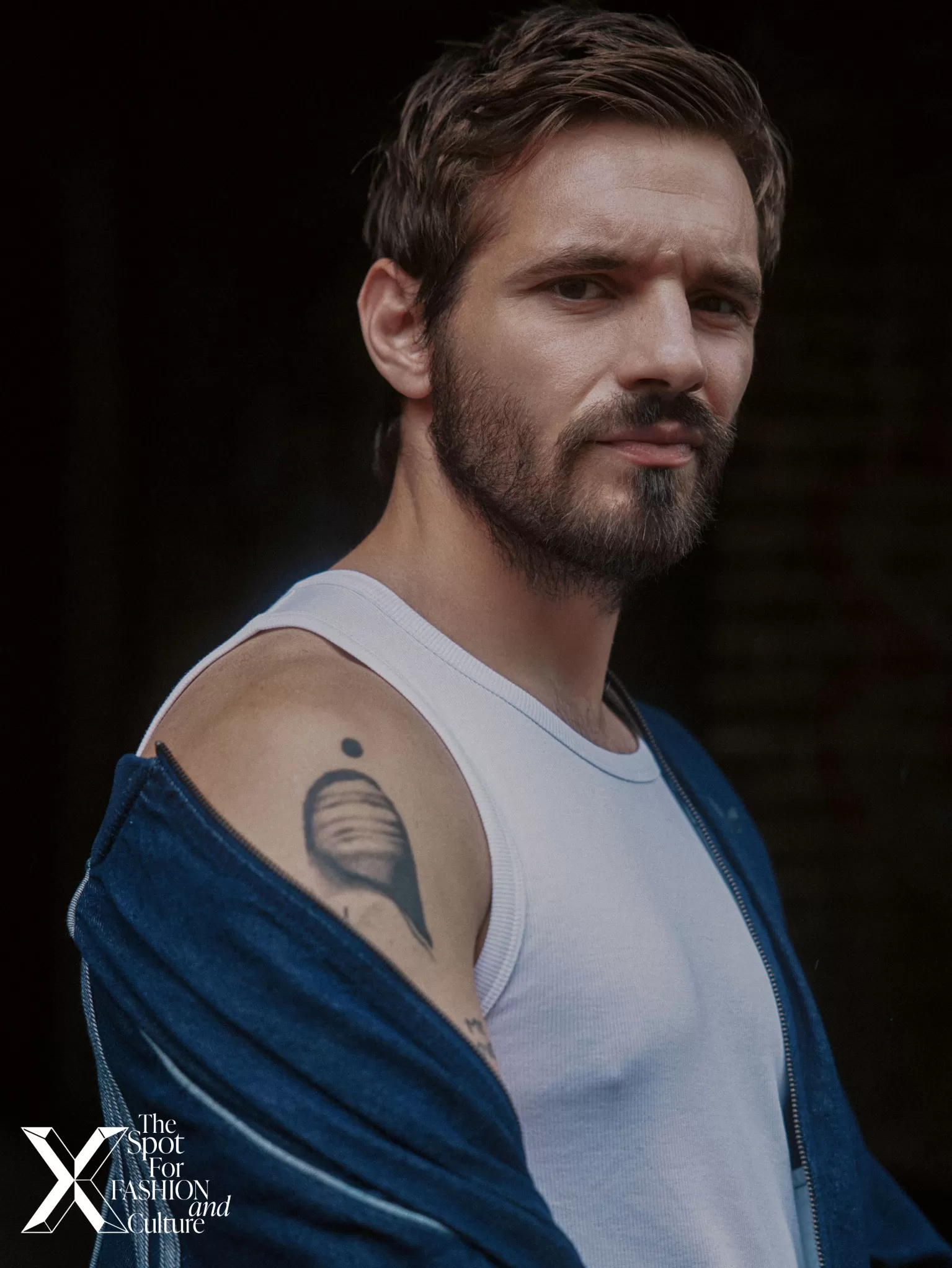
A character shaped by his environment
That measured attitude contrasts sharply with Justin ‘Jay’ Hall, the character he plays in ‘Fightland’. Set against London’s boxing scene, the drama explores a world defined by money, betrayal, revenge and complicated loyalties. From the moment he first read the scripts, Conti felt an immediate connection with Jay, a character who possesses a clear moral compass despite the dangerous environment surrounding him.
“Jay is one of the most authentic, human characters I’ve had the chance to portray,” he explains. “There’s something really relatable about him. He has a strong moral compass, even when he’s faced with incredibly difficult situations.” What interested Conti most was understanding how upbringing and environment shape the choices available to a person.
Rather than judging Jay from the outside, he tried to approach the character through his own circumstances, asking how he might respond if he had grown up within the same world.
There were also qualities in Jay that felt familiar to the actor, although those similarities became most revealing when placed alongside the differences between them. “Jay interested me loads, and I feel we share certain qualities,” he says. “It was interesting discovering where we were similar and where we were completely different. That’s always one of the most enjoyable parts of playing a character.”
The authenticity of ‘Fightland’ extended beyond its characters. Conti was particularly struck by the way the scripts portrayed London, avoiding the polished and romanticised version of the city often presented to international audiences. “London is often portrayed as this polished place of tea, crumpets and grand landmarks, but there’s so much more to it than that,” he says. “There’s real grit, complexity and character.” He recognised the locations, personalities and experiences depicted in the story, which made its world feel lived-in rather than exaggerated for dramatic effect. “It never felt like a heightened version of London; it felt honest,” he adds. “I think that authenticity is what sets ‘Fightland’ apart and makes it feel so grounded, even within the world of crime and boxing.”
“I think it’s much more fun to be in the middle of the chaos”
Jay is not allowed to observe the instability around him from a safe distance. He is emotionally connected to Duke and repeatedly pulled into situations that demand immediate decisions, leaving little time to process what is happening. That pressure suited Conti’s preferred way of working, which relies heavily on instinct and responding honestly to the performers around him.
“You don’t have time to stop, evaluate or overthink — you just have to react,” he says. “That’s how Jay lives. Things happen to him so quickly that he’s constantly having to make decisions, stay afloat and survive.” Although Conti prepares carefully before filming by learning the dialogue and understanding the circumstances of each scene, he deliberately avoids deciding every emotional response in advance. “When I step onto set, I like to leave things a little murky,” he explains. “I don’t want to pre-empt too much because I think the most truthful moments come from genuinely responding to what’s happening in front of you.”
Physicality also played an important role in developing Jay. Conti found an unusual combination of relaxed and frantic energy in the character: he can appear almost too laid-back, but when danger arrives, he is forced to accelerate immediately. His relatively low status within the group affects the way he stands, walks and occupies a room, while a certain clumsiness gives him an awkward, slightly erratic quality that the actor enjoyed exploring.
Entering Guy Ritchie’s world
While ‘Fightland’ is grounded in a raw and recognisable version of London, ‘The Gentlemen’ belongs to a highly stylised universe in which danger is often concealed behind charm, wit and immaculate tailoring. Joining the second series meant adapting to a world with an established rhythm, tone and visual identity. For Conti, the opportunity to work with Guy Ritchie was both exhilarating and slightly intimidating.
“The best way I can describe it is that it feels like trying to catch a moving train,” he says. “His world already has such a distinct rhythm and pace, and your job is to jump on board and match that energy. It’s challenging, but in the best possible way.” Part of that challenge came from Ritchie’s spontaneous approach to dialogue and performance. New lines or alternative ideas could arrive the day before filming or even shortly before a scene began, requiring the actors to remain flexible and completely receptive. Rather than finding the process unsettling, Conti enjoyed the way it prevented performances from becoming overly controlled. “It keeps you on your toes and forces you to stay present,” he says. “It was such a unique experience, and I genuinely loved every minute of it.”
The contrast between ‘Fightland’ and ‘The Gentlemen’ became especially apparent when their filming schedules briefly overlapped. Conti found that the costumes, sets, actors and directors immediately changed the atmosphere around him, allowing his body to adjust instinctively to each world. “It might sound a bit clichéd, but the air almost tastes different on each set,” he says. “Every production has its own energy, its own pace and its own language, and your body responds to that.”
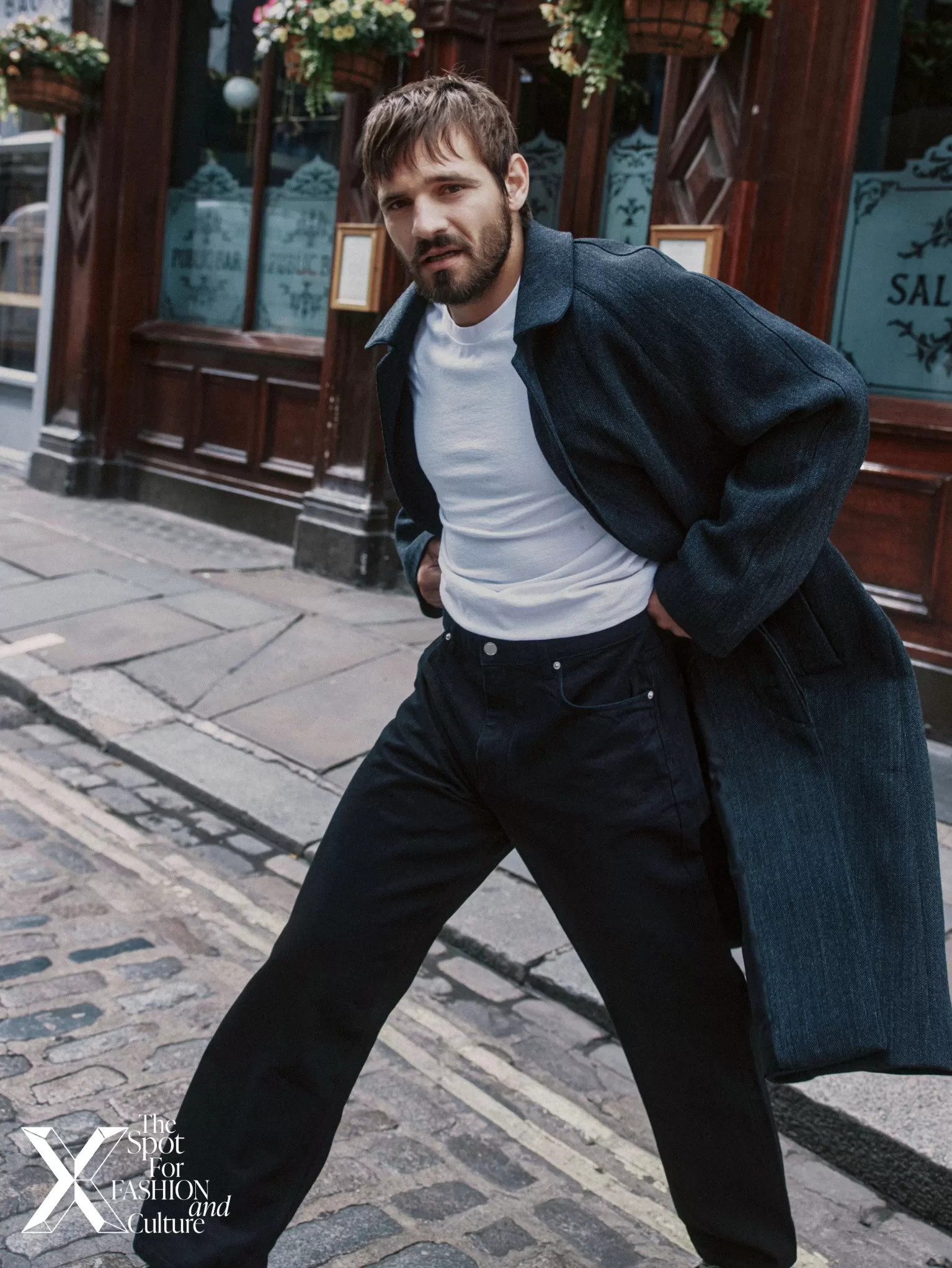


“Theatre has given me the confidence to play”
Before these two projects, Conti had already moved between television, independent film and theatre, with credits including ‘Tell Me Everything’, ‘Departures’ and a range of stage productions. Theatre, he says, gave him the freedom to take risks, make mistakes and continue experimenting rather than approaching every performance from a place of caution.
He no longer sees stage and screen as entirely separate disciplines. For him, both depend upon the same commitment to truth, character and story. “People often assume you have to be much smaller on screen, but I don’t necessarily agree,” he says. “You can go just as big as you would in theatre, as long as it’s truthful and motivated by the character rather than simply trying to project or show off. If the emotion is real, the audience will go with you.”
That confidence has also made him less afraid of pushing a performance too far. “Theatre has taught me not to be afraid of pushing things,” he explains. “It’s given me permission to play, to go a bit mad and explore the edges of a character. Then, if a director tells you you’ve gone too far, you can always pull it back. I’d much rather start from a place of freedom than one of fear.”
That willingness to explore the edges of a role helps explain why Conti is drawn to characters built from contradictions, secrets and uncertain moral choices. Straightforward characters hold less appeal than people who are difficult to understand or categorise. “The more complicated, morally grey or difficult a character is to understand, the more I’m drawn to them,” he says. “Those are the roles that really excite me because there’s always something new to uncover.”
With ‘Fightland’ and ‘The Gentlemen’ bringing his work to a larger international audience, Conti hopes the projects will lead to further opportunities, although he remains careful not to approach the future with a sense of entitlement. “As long as it opens up something, I’ll be happy,” he concludes. “If these projects open doors to more interesting work and allow me to keep doing what I love, that’s all I can really ask for.”


-380x380.webp)