
Glenn Martens bids farewell to Diesel with Spring 2027, a provocative collection celebrating denim experimentation, nightlife and the alternative luxury he helped redefine.
Glenn Martens has brought his transformative chapter at Diesel to a close with a Spring 2027 show that captured everything his tenure came to represent: experimentation, provocation, technical innovation and an unapologetic sense of excess. For his final collection at the Italian brand, the Belgian designer turned the runway into a celebration of the rebellious universe he has spent the past five years building.
The atmosphere became increasingly intense as the show progressed. A remix of Donna Summer’s Love to Love You Baby provided the soundtrack while performers hidden among the audience suddenly became part of the spectacle, dancing, kissing and transforming the presentation into something closer to a late-night club than a traditional fashion show.
It was an appropriate farewell for a designer who helped expand Diesel beyond its denim heritage, positioning it as a broader lifestyle brand associated with youth culture, nightlife and irreverence.
The spectacle also connected fashion with fragrance, referencing Only Desire, Diesel’s feminine perfume launched earlier in the summer. Yet clothing remained at the heart of the experience, offering a final demonstration of Martens’ fascination with manipulating familiar wardrobe staples until their original identities became almost impossible to recognise.
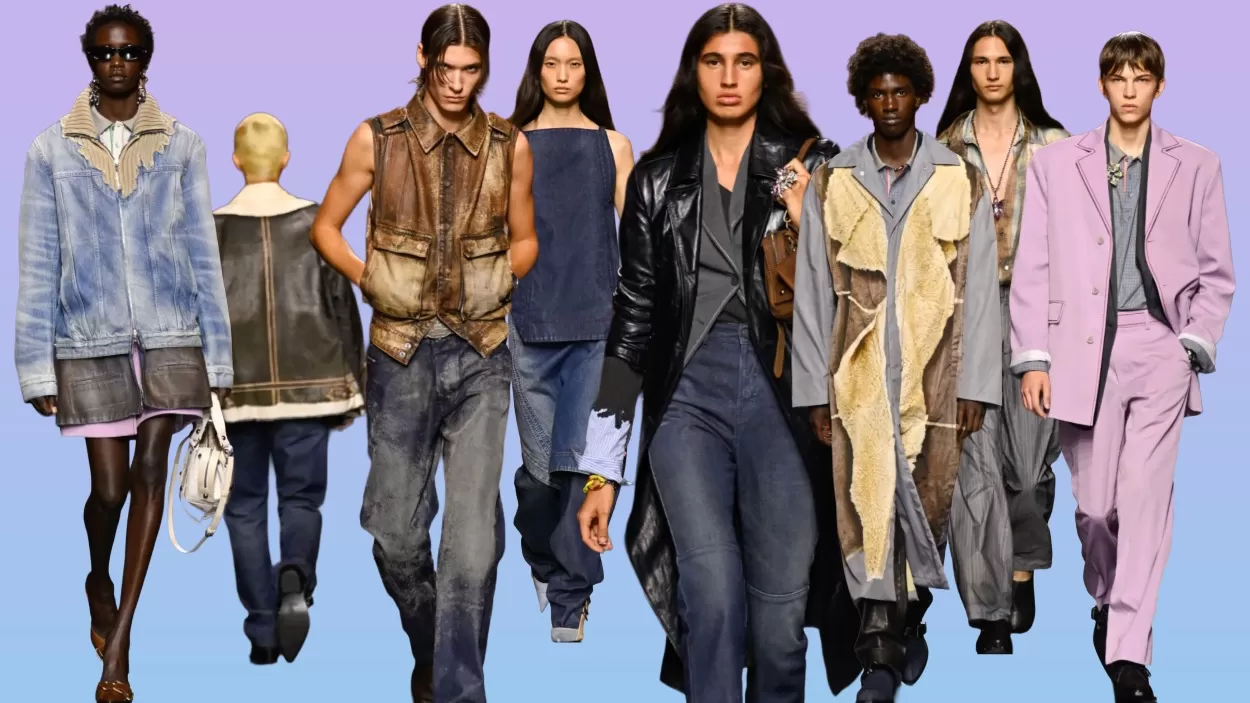
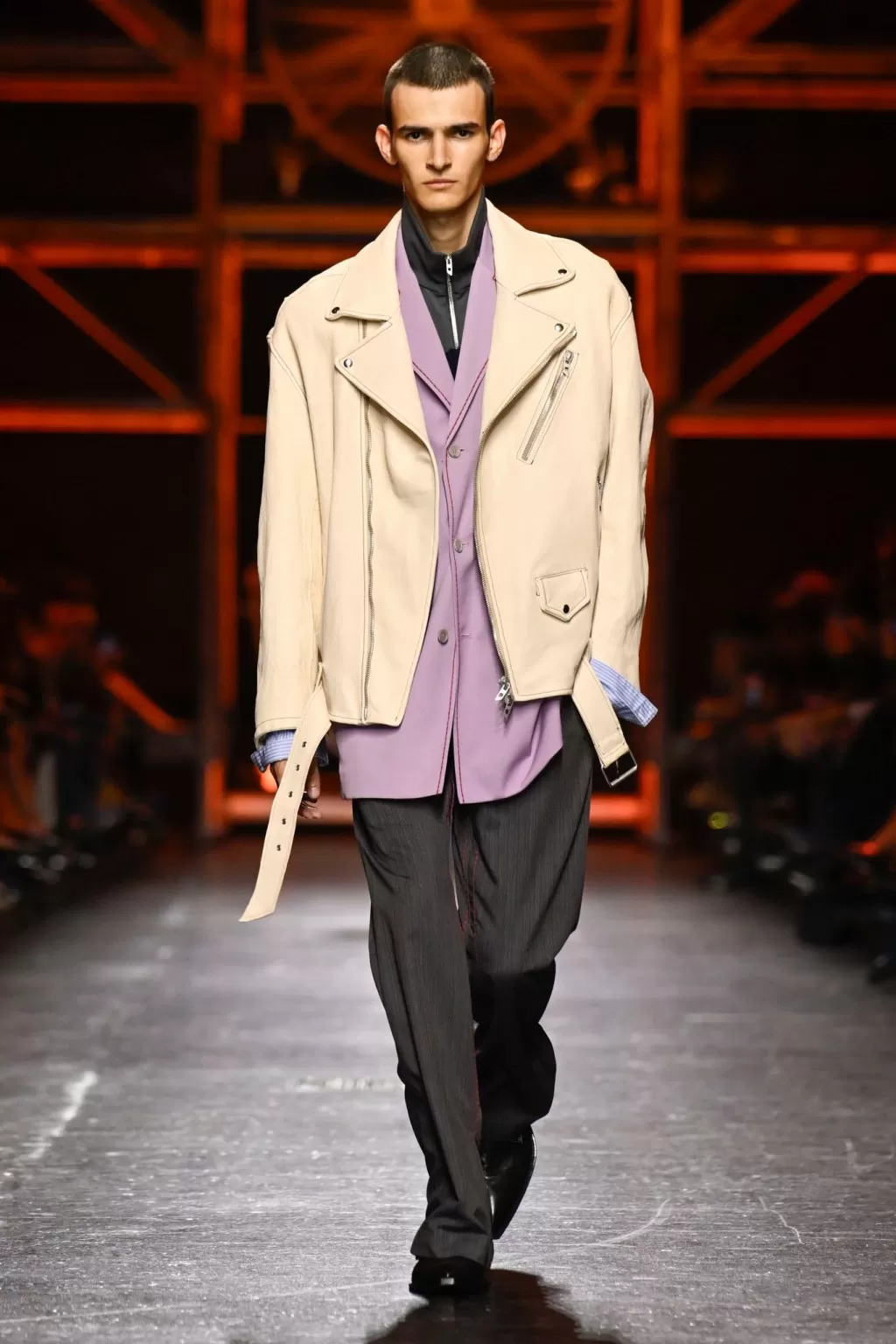
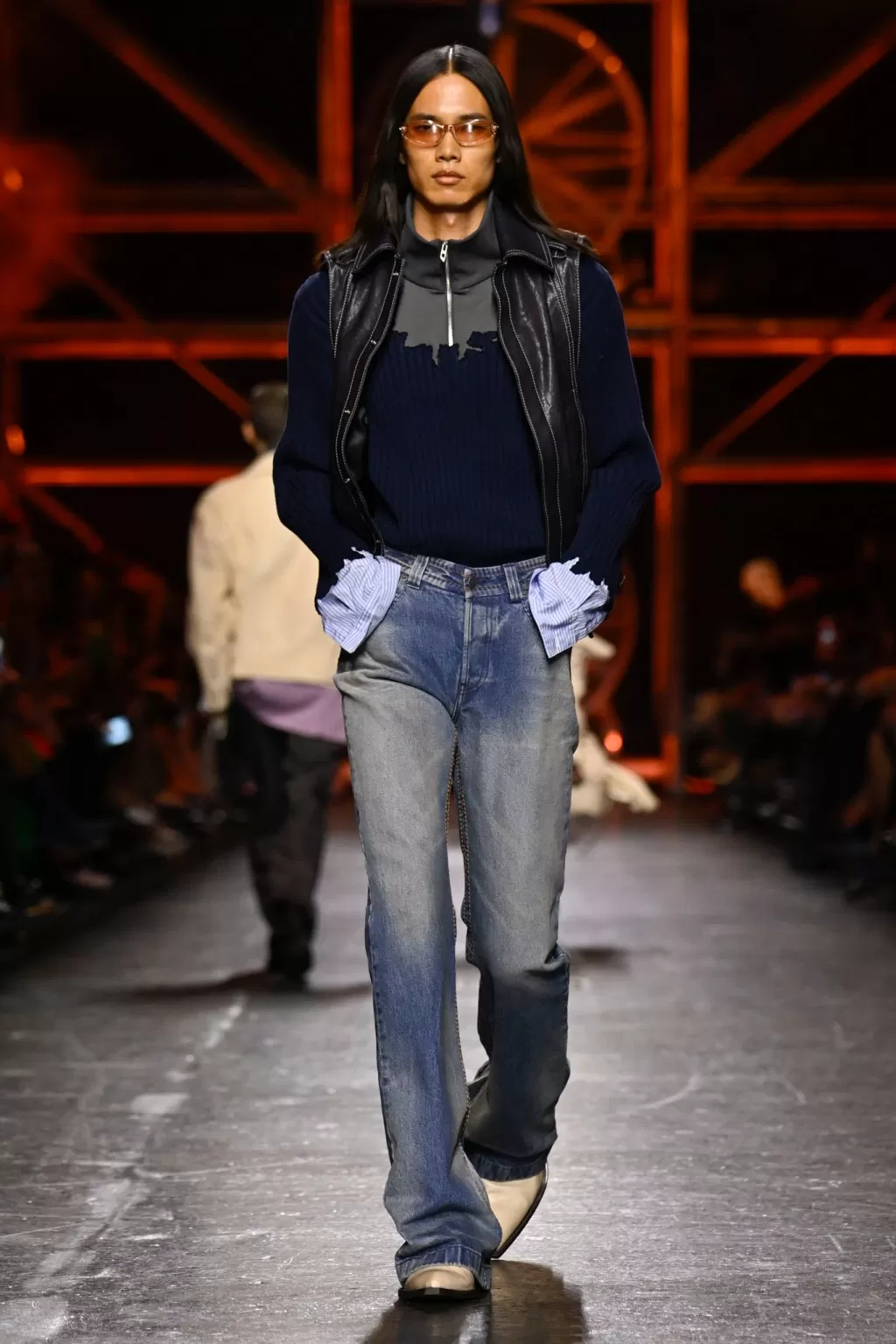
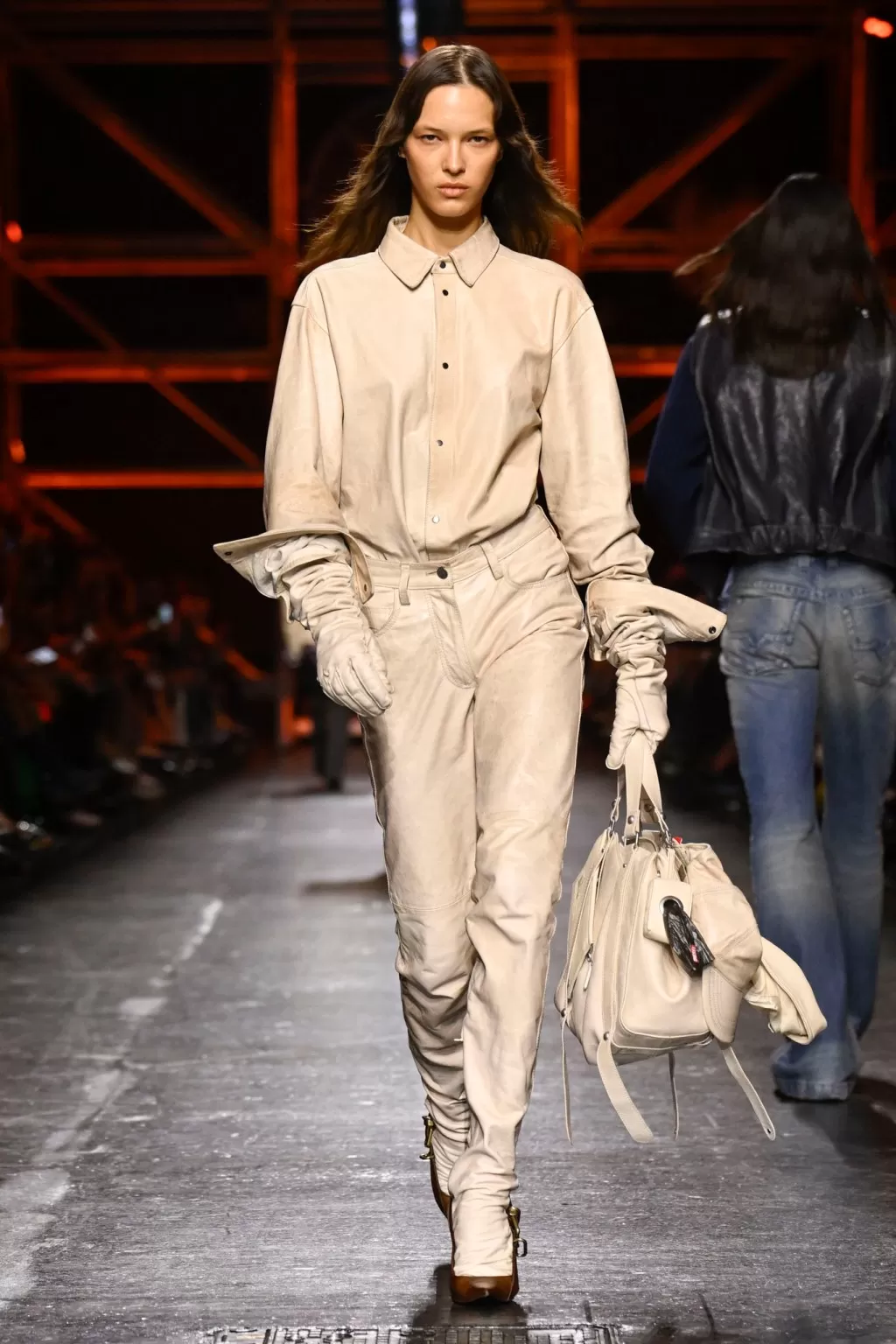
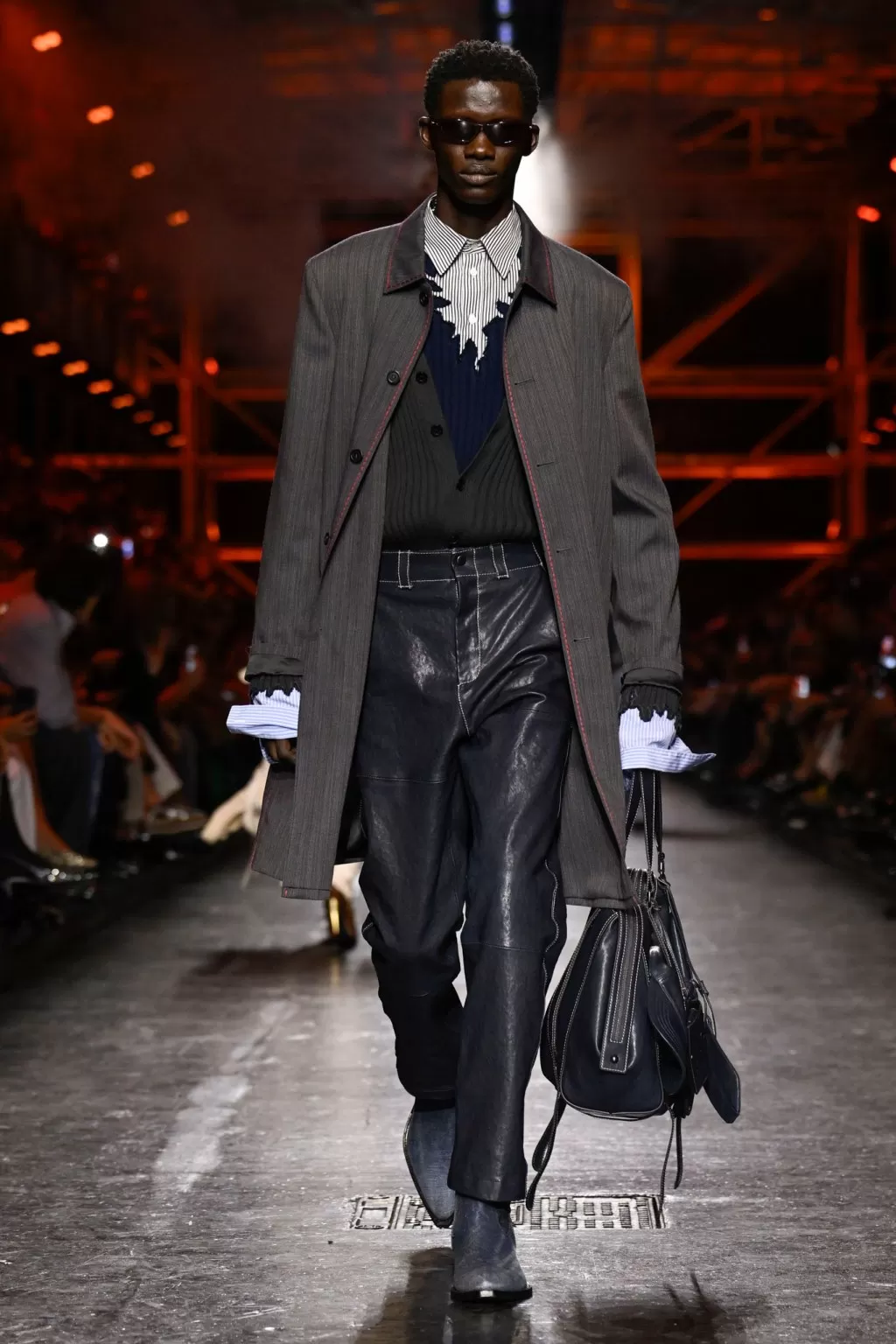
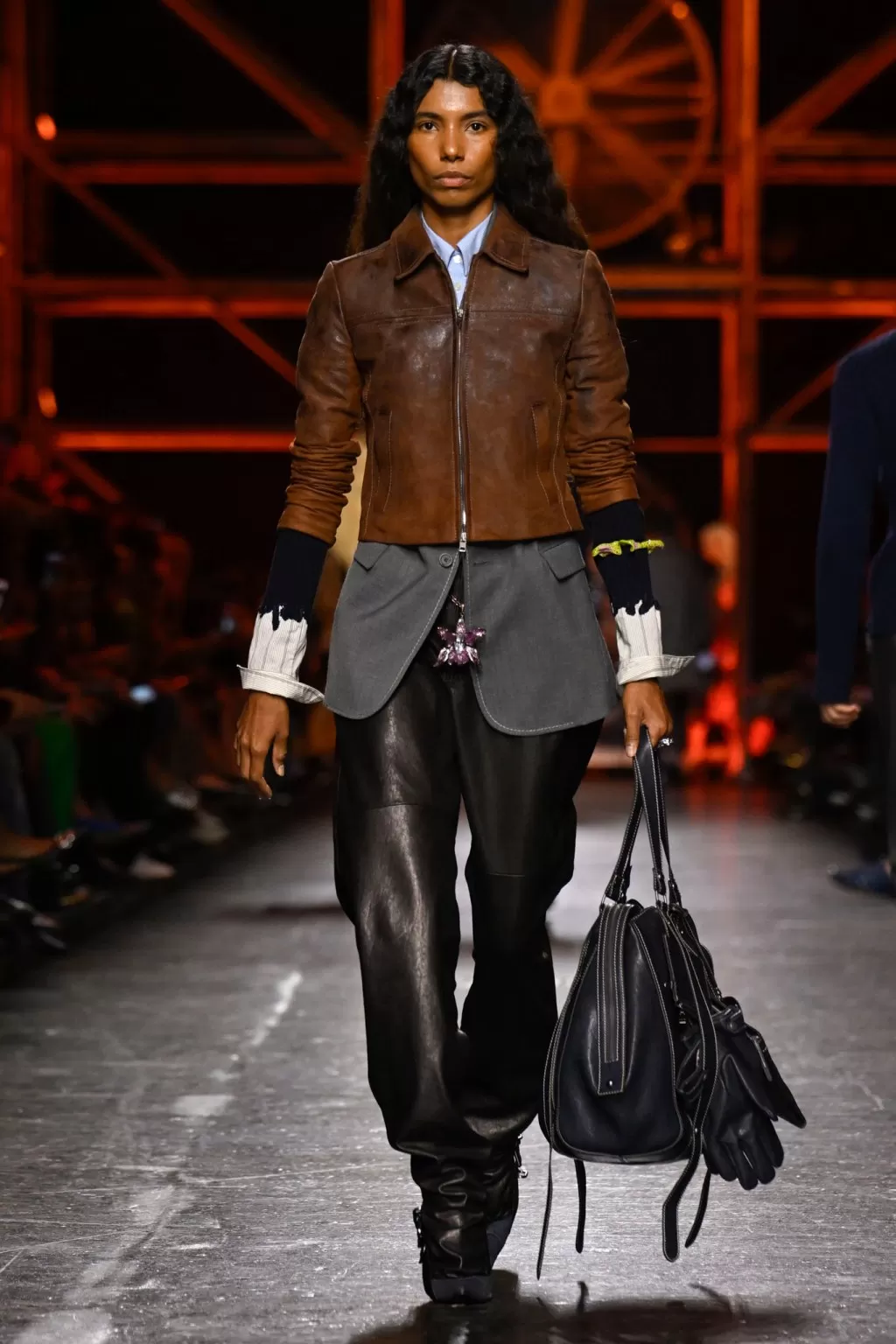
For Diesel Spring 2027, hybridisation was everywhere. A trucker jacket was fused with a quarter-zip silhouette, while a denim jacket collided with the codes of a polo shirt. Jeans extended downwards to become “pantasocks”, and shearling coats and lumberjack shirts appeared as trompe-l’œil prints across technical nylon outerwear.
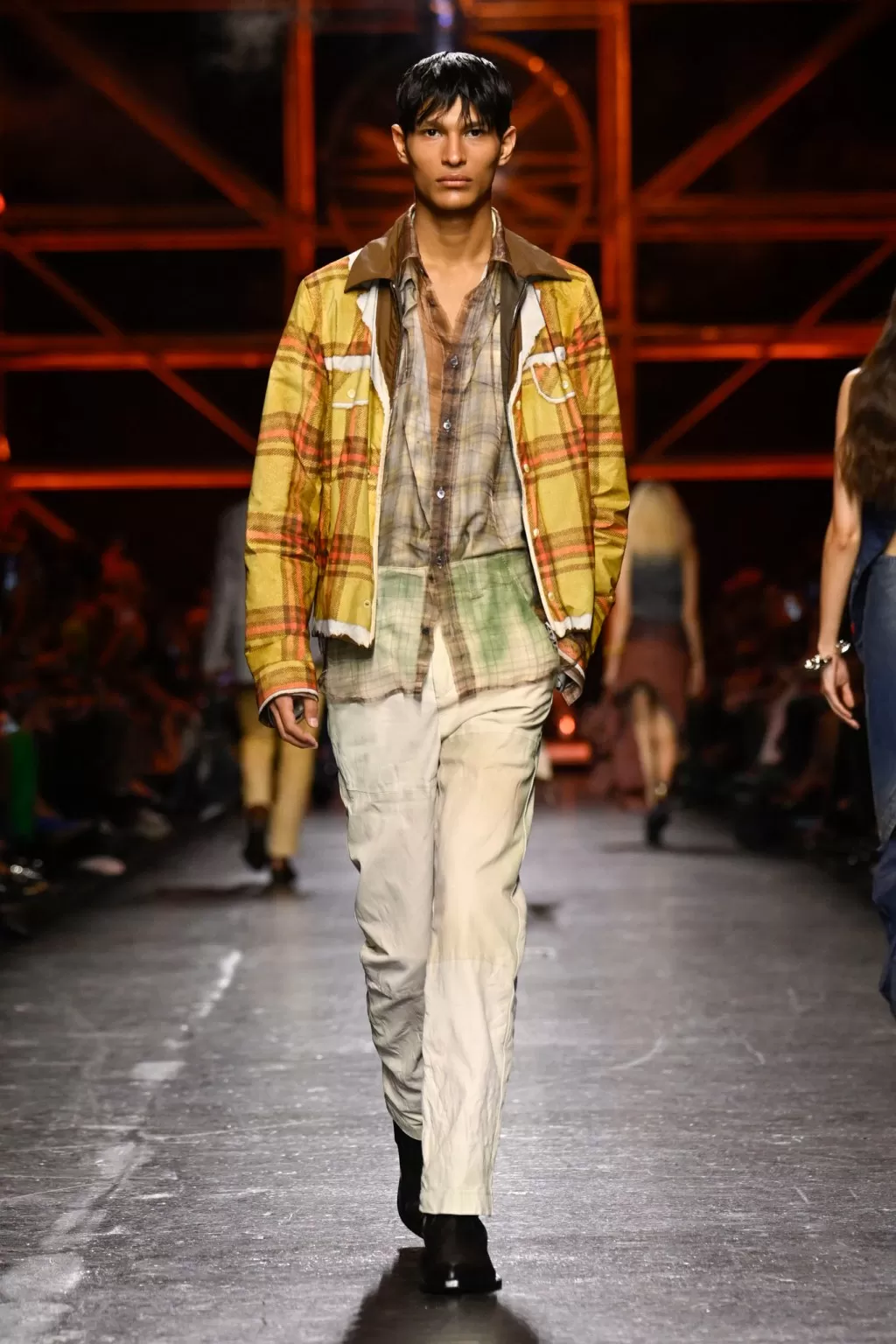
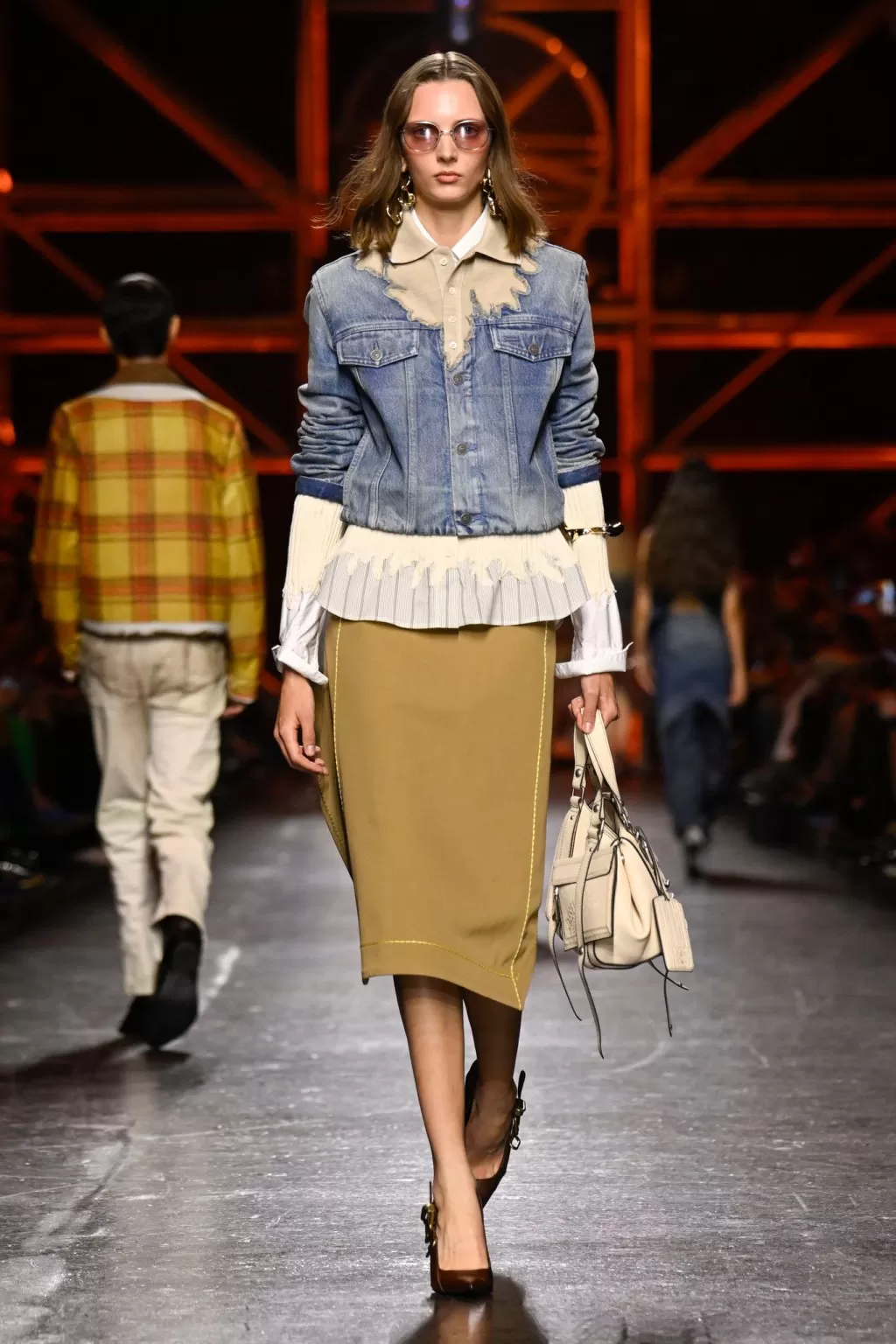
As the collection developed, silhouettes became increasingly revealing. Tiny HotPants, distressed surfaces and dresses constructed from shredded denim and sweatshirt fleece pushed fabric manipulation to its limits. Loose strands created intricate textures reminiscent of lace, turning deliberately destroyed materials into unexpectedly delicate surfaces.
That transformation demonstrated one of Martens’ greatest strengths at Diesel: his ability to treat denim as an experimental material rather than simply the foundation of a pair of jeans. Throughout the show, leather, denim and printed surfaces repeatedly blurred into one another, challenging the eye and reinforcing the technical ambition behind the collection.
“Denim is a never-ending source of inspiration,” Martens explained. For the designer, its appeal lies in how the material develops character through manipulation and wear. The more denim is worked, aged and lived in, the more personality it acquires.
There was also a carefully considered sense of closure. Ella Snyder, the model who wore Martens’ first-ever Diesel runway look, returned to wear his final look for the House, creating a symbolic bridge between the beginning and end of his tenure.
Martens leaves behind a Diesel that looks considerably different from the one he inherited. Over five years, he explored distressed denim, trompe-l’œil techniques, unconventional silhouettes and spectacular presentations while maintaining the brand’s accessible and rebellious identity.