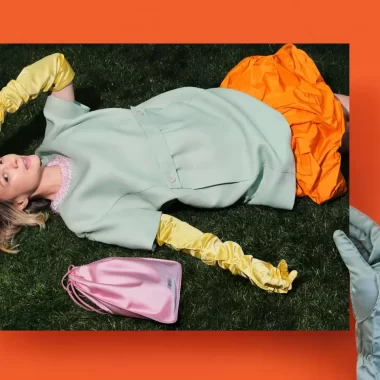
Masculinity softens on the global stage, but a crucial question emerges: political expression or a trend repackaged for profit?
The feminisation of men’s fashion currently sits on a fragile fault line between cultural resistance and commercial strategy. What once provoked ridicule or moral panic is now embraced — or consumed — through red carpets, luxury campaigns and magazine covers. The question is no longer whether men can inhabit femininity, but why now, and who ultimately benefits from this visibility.
Five years after Harry Styles wore a dress on the cover of Vogue, the gesture has evolved from shock to language. Around him, figures such as Bad Bunny, Pedro Pascal and Timothée Chalamet have helped shape a masculinity that is gentler, emotionally open and aesthetically porous. More recently, Jacob Elordi has entered this visual conversation, with a turn towards softer codes and vulnerability that reads as both personal evolution and careful cultural positioning.
And this is where the tension sharpens. Are we witnessing a collective raising of voices that genuinely expands queer visibility, or a sanitised version of queerness made palatable because ambiguity now sells? The cultural industry rarely absorbs the marginal until it is no longer perceived as dangerous. Once aestheticised and detached from its political roots, queerness becomes profitable.
The case of Lil Nas X exposes this contradiction with particular clarity. Unlike celebrities who flirt with femininity from positions of safety, he has been persistently accused of “using” queerness to sell music. The accusation itself is revealing. When queerness is explicit, sexual and unapologetic — when it refuses to reassure a heterosexual gaze — it stops being celebrated and starts being scrutinised. The discomfort is not about the act, but about who performs it, and from which position.


Privilege matters here. Feminising masculinity from a body read as heterosexual, white and normative is often interpreted as sophistication or modernity. Doing so from an openly queer or racialised identity is still framed as excess, provocation or agenda. The industry rewards controlled ambiguity, not disruption that refuses to behave.
That does not invalidate every gesture. This aesthetic shift has undeniably widened the visual and emotional vocabulary available to many people. But it is equally important to recognise the existence of a market-friendly version of queerness: elegant, aspirational and stripped of threat. A femininity without anger, without history, without political weight.
The conservative backlash only reinforces this reading. As runways and red carpets soften, reactionary spaces grow louder, clinging to a masculinity rooted in dominance and exclusion. Ironically, that hostility confirms the symbolic power of these shifts. If they were meaningless, they would not provoke such resistance.
The distinction, then, lies between visibility and transformation. Fashion can open doors, but it cannot replace activism. It can normalise images, but it does not guarantee rights. It can soften the cultural imagination, while simultaneously emptying it of substance. The real question is not whether queerness is trending, but what remains when the trend moves on.
Perhaps both realities coexist: a genuine expansion of gender expression, and a commercial mechanism eager to domesticate it. The tension is not new, but it has rarely been this visible. In that unstable space between political gesture and cultural product, feminised masculinity acts as an uncomfortable mirror — reflecting progress, but also its limits.
Getting dressed is still a political act. But not all bodies pay the same price for it. And it is precisely there — in that uneven cost — where the conversation about queerness stops being aesthetic and becomes urgent.