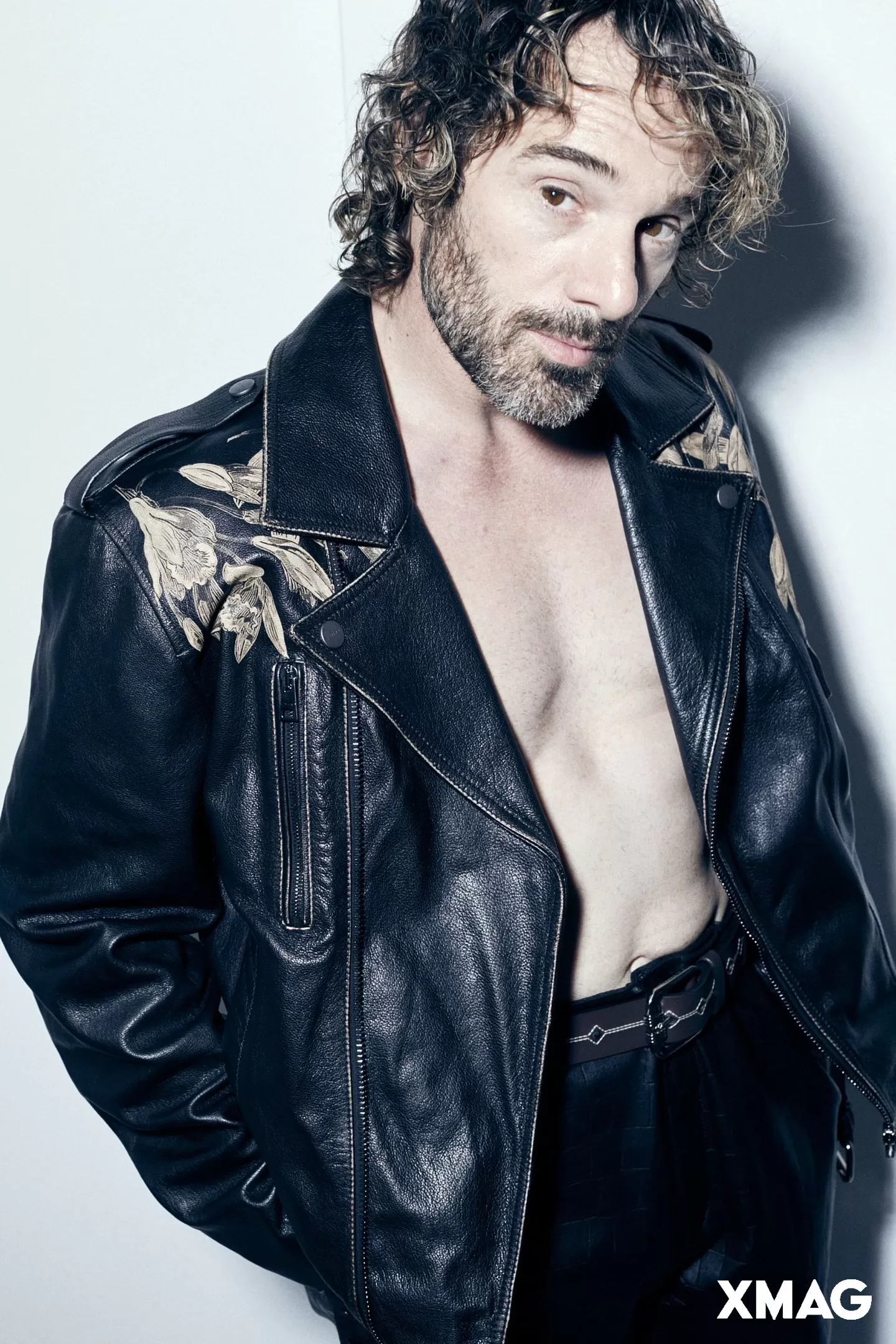

A defining role, a new creative chapter: Ludovico Fremont talks identity, ambition and the freedom to keep discovering who he can become.
Returning to a character after so many years could easily become an exercise in nostalgia. For Ludovico Fremont, however, stepping back into Walter’s world in ‘I Cesaroni’ has been as much about recognising everything that has changed as revisiting what came before. “Coming back to Walter was a little like opening an old photo album—except the photo starts talking back.”
The reunion inevitably connected him with a younger version of himself, but the actor is clear that returning to the role never felt like moving backwards. “Absolutely. But it felt like a reunion, not a step backwards. Returning to Walter meant meeting a part of myself again. Some characters grow older with you; others simply wait for you to catch up with them. Walter was waiting for me.”
For years, ‘I Cesaroni’ was one of the defining series of Italian television and an equally important part of Fremont’s career. Bringing it back, however, also creates an obvious challenge: how do you acknowledge the affection audiences still have for a character without simply recreating the version they remember? For Fremont, the distinction was essential.
“Nostalgia is lovely, but it should not be the director.” Rather than attempting to reproduce Walter as he once was, he wanted to understand what time would realistically have done to him. “I did not want to play the memory of Walter; I wanted to play the man he has become. Time changes you: disappointments, responsibilities, love, mistakes and, hopefully, a little wisdom. Walter had to carry all of that with him. Nostalgia can open the door, but it should not be the reason you stay in the room.”
“Walter has followed me for years; at this point, we probably need couples therapy”
Fremont achieved considerable visibility relatively early in his career. With time, his understanding of what that recognition actually represents has changed considerably. “When I was young, I did not really know what success was, or how to handle it. At first, it may mean being recognised in the street. Later, you understand that it also means being respected and having the freedom to make choices. Today, I measure success by the quality of the work, the people I work with and whether I still have the courage to begin again. Recognition can be gratifying, but it is not the whole story.”
Being so closely associated with one character can sometimes become restrictive for an actor, particularly when that connection lasts for years. Fremont, however, appears to have made peace with Walter’s permanent place in his career — even if he jokes about just how long the relationship has lasted. “Walter has followed me for years; at this point, we probably need couples therapy.”
There is affection rather than frustration when he talks about the character and the audience that continues to identify him with it. “I have accepted that connection, and I am grateful for what Walter has given me and for the affection people still have for him. But he is not a prison; he is one important part of my professional journey. I am proud of him, while also knowing that Ludovico is not Walter—just as he is not any other character I have played. Sometimes people see you through the role they remember most. That is part of the business.”
Technique as freedom
Long before and beyond the popularity of television, Fremont’s foundations were shaped by classical training. His time at the Silvio D’Amico Academy, alongside experiences with figures including Luca Ronconi, Mariangela Melato and Brian Cox, helped establish an approach to acting that remains with him today.
The most important lesson may sound almost contradictory: discipline ultimately creates freedom. “The first lesson is that technique gives you freedom. At the Silvio D’Amico Academy, I learned discipline; working with artists such as Luca Ronconi, Mariangela Melato, Brian Cox and many more taught me something equally important: acting is not about behaving like a star. It is about respecting the work, the character, the set and, above all, being ready to listen. I also trained with Susan Batson in Rome, among other teachers, and every experience gave me a different tool. In the end, acting is about preparing thoroughly and then having the courage to forget the preparation.”
His career has continuously moved between television, cinema and theatre, three forms that demand different things from an actor. Theatre, however, still offers him something the camera cannot reproduce. “Theatre is unforgiving—and that is precisely why I love it.”
There is a vulnerability to performing live that Fremont continues to value. “There is nowhere to hide: no second chances and no editor ready to rescue you. You have a living relationship with the audience. Cinema gives you intimacy, television gives you rhythm and theatre gives you danger. Every actor needs a little danger.”

“I am less interested in collecting credits and more interested in collecting experiences”
In recent years, projects including ‘La lunga notte’, ‘Good Vibes’, ‘Amici per caso’ and ‘Ti presento Papà’ have continued to expand his career. At this stage, however, Fremont says the number of projects matters considerably less than what each one allows him to experience. “At this stage, I am less interested in collecting credits and more interested in collecting experiences.”
What he looks for instead is something capable of challenging what he thinks he already understands. “I need curiosity. A story has to make me look at something I thought I understood and realise that I did not understand it completely. If a project challenges me, makes me slightly uncomfortable or stays with me after I leave the set, that is usually a good sign.”
That curiosity also extends beyond Italy. With both Italian and French roots, Fremont grew up accustomed to moving between different cultural perspectives — something he approaches with characteristic humour. “Being Italian and French means having two rhythms for looking at the world—and sometimes two opinions about food, wine and football.”
But beneath the joke lies an important part of how he sees his future. “Definitely. I grew up with a natural sense of cultural duality, so I have never felt limited by one language or one industry. Working abroad has strengthened that feeling. Building an international career remains an important goal: I want my identity to be a strength, not a label.”
That ambition is already present in what comes next. Fremont is currently working on another television production, although details remain under wraps. What attracted him was precisely the opportunity to step outside what audiences might instinctively associate with him. “What attracted me was the chance to do something audiences would not immediately associate with me. I have always believed that an actor should occasionally surprise the people who think they know him. I cannot say much yet, but I am enjoying the opportunity to change register.”
Writing without a character to hide behind
One of Fremont’s most personal projects, however, takes him beyond acting altogether. He is currently developing a book connected to his own experiences, reversing the dynamic that has defined much of his professional life: instead of inhabiting somebody else’s story, he is beginning to tell his own. “Writing is brutally personal because there is no character to hide behind.”
That vulnerability is also one of the reasons he waited before putting his experiences on the page. “That is probably why I waited. After years of interpreting other people’s lives, I felt ready to look at my own with a little distance and a healthy sense of humour. Acting lets you borrow another person’s truth; writing asks you to confront your own.”
The material may eventually make its way to the stage too. Fremont is developing the idea of transforming these personal experiences into a theatrical monologue, placing himself alone in front of an audience without the usual protection provided by a fictional role.
His reaction to the prospect is succinct. “It is terrifying—which is encouraging.”
For an actor accustomed to speaking through characters, the shift changes everything. “As an actor, you can always say, ‘It was not me; it was the character.’ In a monologue about your own life, that excuse disappears rather quickly. I like the idea of turning personal experiences, including the ridiculous ones, into something universal. If people laugh, recognise themselves and leave the theatre with a thought, then the embarrassment will have been worth it.”
“At sea, arrogance has a very short life expectancy”
Away from acting, the sea has become another significant part of Fremont’s life. He has even earned his Yachtmaster Offshore qualification, an experience that requires a very particular relationship with control: preparation is essential, but so is accepting that some forces will always remain beyond it. “At sea, arrogance has a very short life expectancy.”
It is a lesson that has travelled with him beyond sailing. “Completely. You can prepare everything—the weather, navigation, equipment and route—and then the sea reminds you who is really in charge. It has taught me to prepare seriously and remain flexible. The same is true of acting and life: control is useful, but the ability to adapt is what allows you to move forward.”
That relationship with the sea has also strengthened his interest in sustainability and a more conscious relationship with nature, although Fremont deliberately avoids portraying himself as an example of perfection. “I am not trying to become a saint—just a slightly less careless human being.”
For him, responsibility begins with practical behaviour rather than grand statements. “For me, it starts with behaviour, not slogans: respecting the sea, reducing waste, consuming more consciously and remembering that nature is not a backdrop to our lives; it is the environment that makes them possible. Entertainment involves travel and production, so I do not claim to be perfect. I am simply trying to be more responsible.”

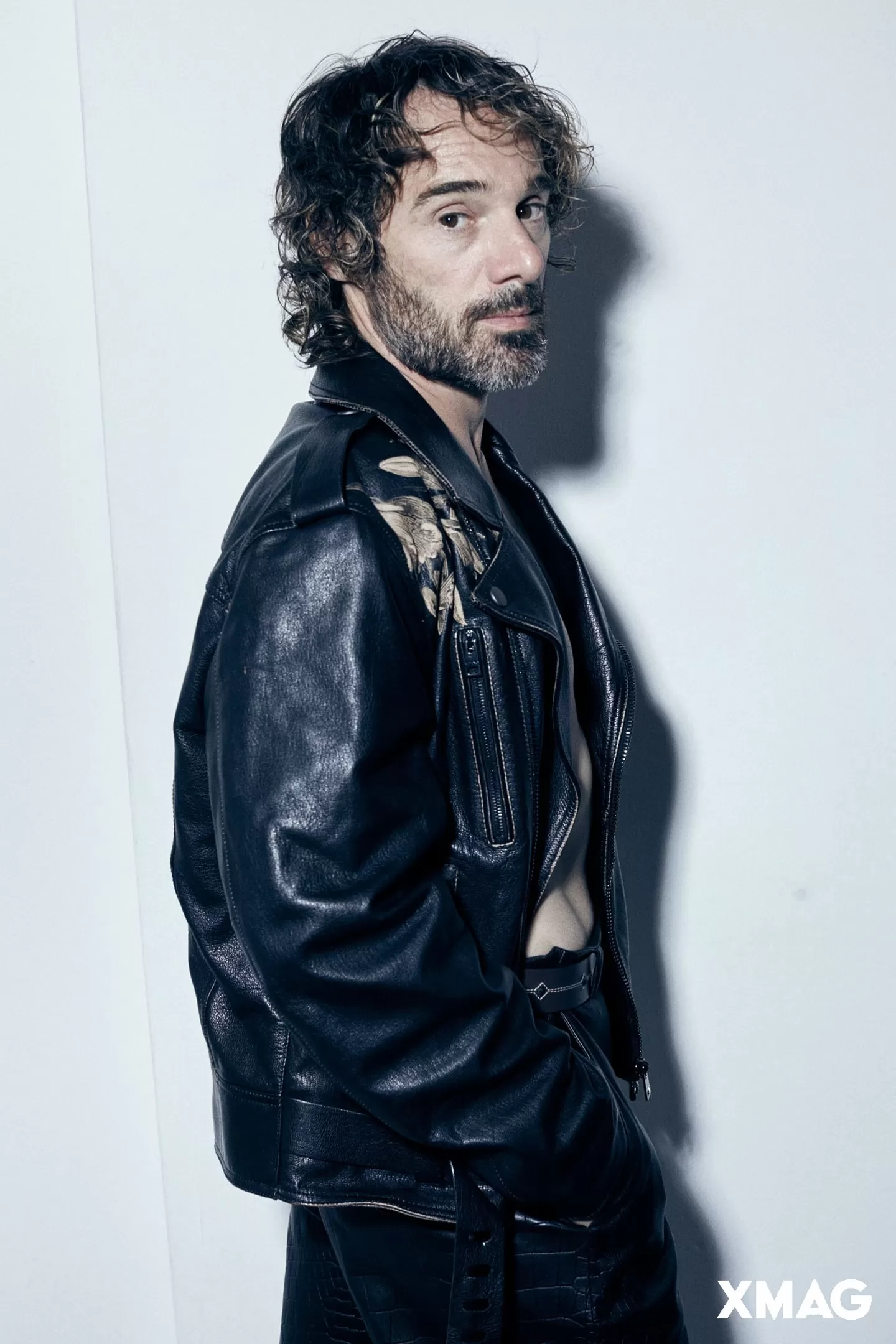

A new chapter
There is something particularly fitting about Ludovico returning to one of the characters audiences know him best for at the same time as he develops some of the most personal work of his career. Rather than simply closing a circle, the experience appears to have helped open another one. “I am less interested in proving who I am and more interested in discovering what I can still become.”
It is perhaps the clearest description of where he finds himself today: able to acknowledge the roles and experiences that brought him here without allowing them to determine what happens next. “I do feel I have entered a new phase. Today I am interested in building work with a deeper identity—internationally, creatively and personally. Working abroad remains important to me because other cultures and industries continue to make me grow. I still want the characters to surprise me, and I hope I can surprise the audience too.”