
Naomi Campbell fronts Pucci’s FW25 campaign, breathing new life into iconic archives with a futuristic vision of glamour and reinvention.
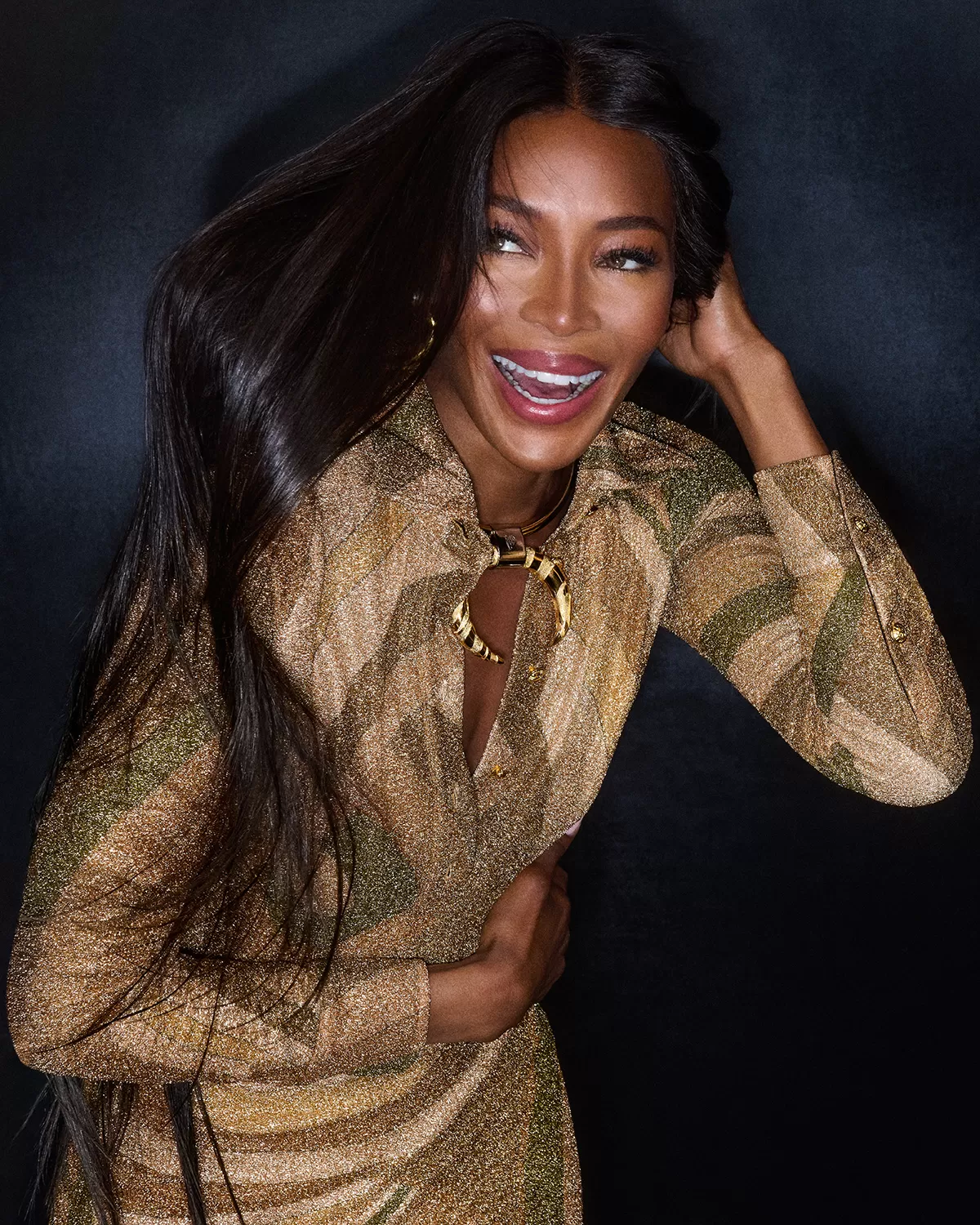
Naomi Campbell moves like a whirlwind of contained energy. Captured by Oliver Hadlee Pearch, the legendary British muse embodies Pucci’s timeless spirit, setting a new milestone with the Passepartout campaign for Autumn 2025. Conceived by Camille Miceli, the proposal takes inspiration from the legendary Italian programme of the same name, embracing the idea that wearing Pucci is more than an aesthetic choice—it is a key: the promise that anything is possible.
“I imagined a woman stepping into a gallery or a club. Perhaps she buys a Picasso, perhaps she dances all night,” reflects Miceli. With that vision, Passepartout unfolds as a celebration of the house’s historic archive, where prints pulse through new materials, proportions and textures: from the hypnotic 1969 Labirinto to the enveloping Astro and the vibrant Hawaii.
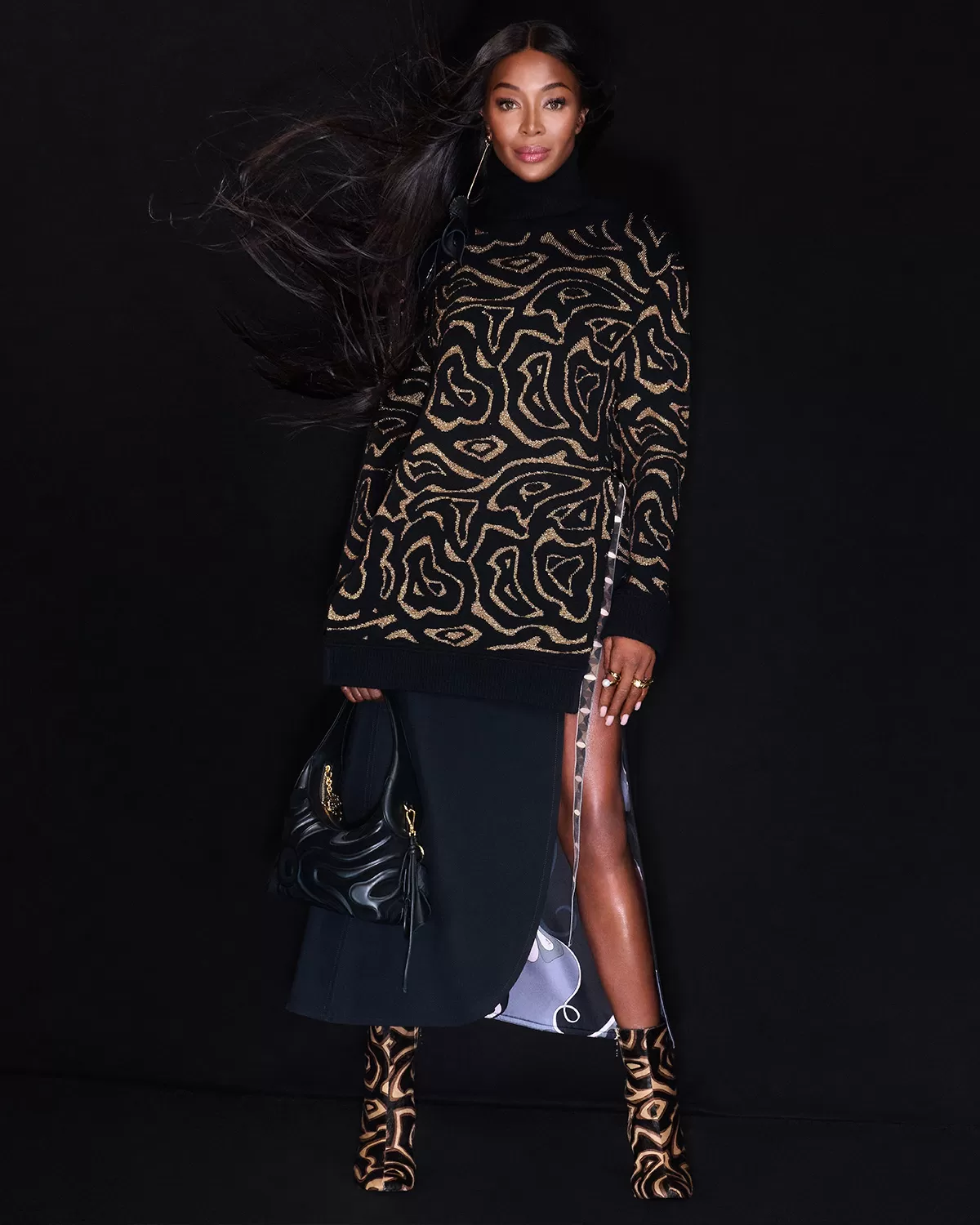
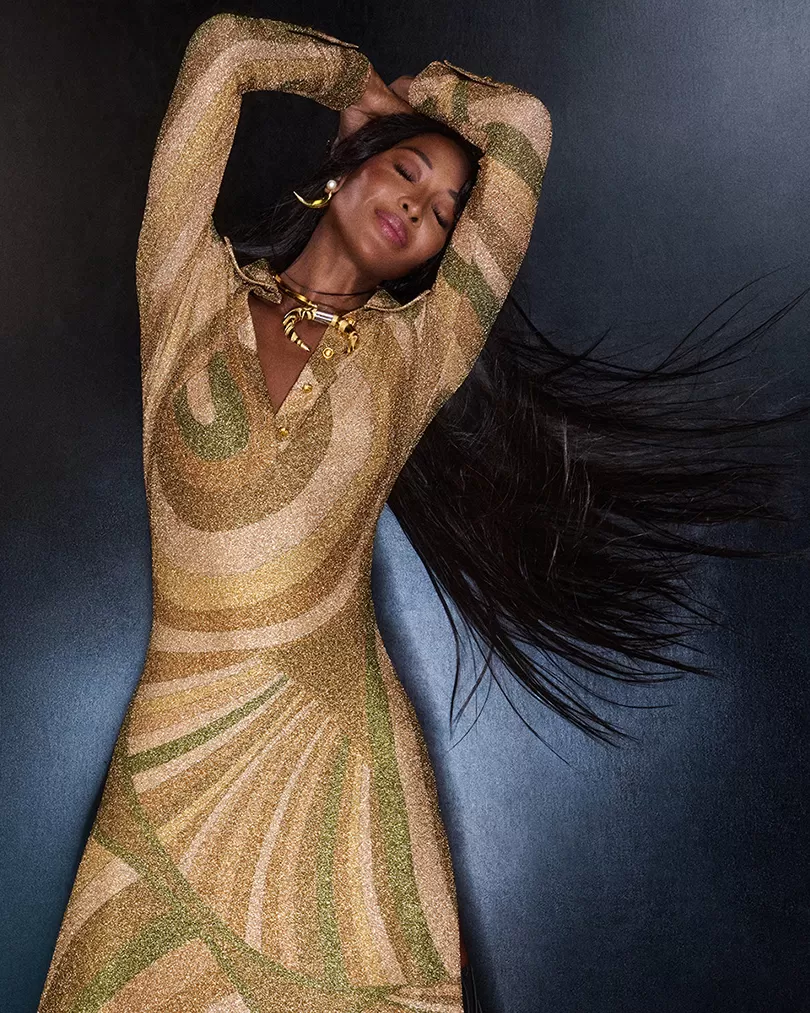
Naomi shines in lurex, sculpted velvet and jewel-like dresses with silhouettes that transcend decades and codes. The Iride dress, crafted from metallic jersey, sets the visual opening of the campaign. It is followed by pieces adorned with iconic prints, such as a black and gold sweater-and-skirt set or a velvet suit reinterpreting Orchidee in a kaleidoscopic key. Every detail enhances the narrative: thigh-high boots, bold red handbags and sculptural jewellery that oscillates between statement and delicacy.
The collection also leaps into lifestyle. A shoulder-strap umbrella, a poolside neck pillow, or a jewellery box wrapped in the Iride print expand the Pucci universe with a hedonistic yet functional gesture. Each object and garment holds the perfect tension between heritage and reinvention.
Miceli does not shy away from the archive—she embraces it, redraws it, and projects it forward. And Naomi—eternal and in motion—is her ideal accomplice in charting this new map of access to luxury, where retro does not gaze backwards but towards a future rich in texture, colour and presence.