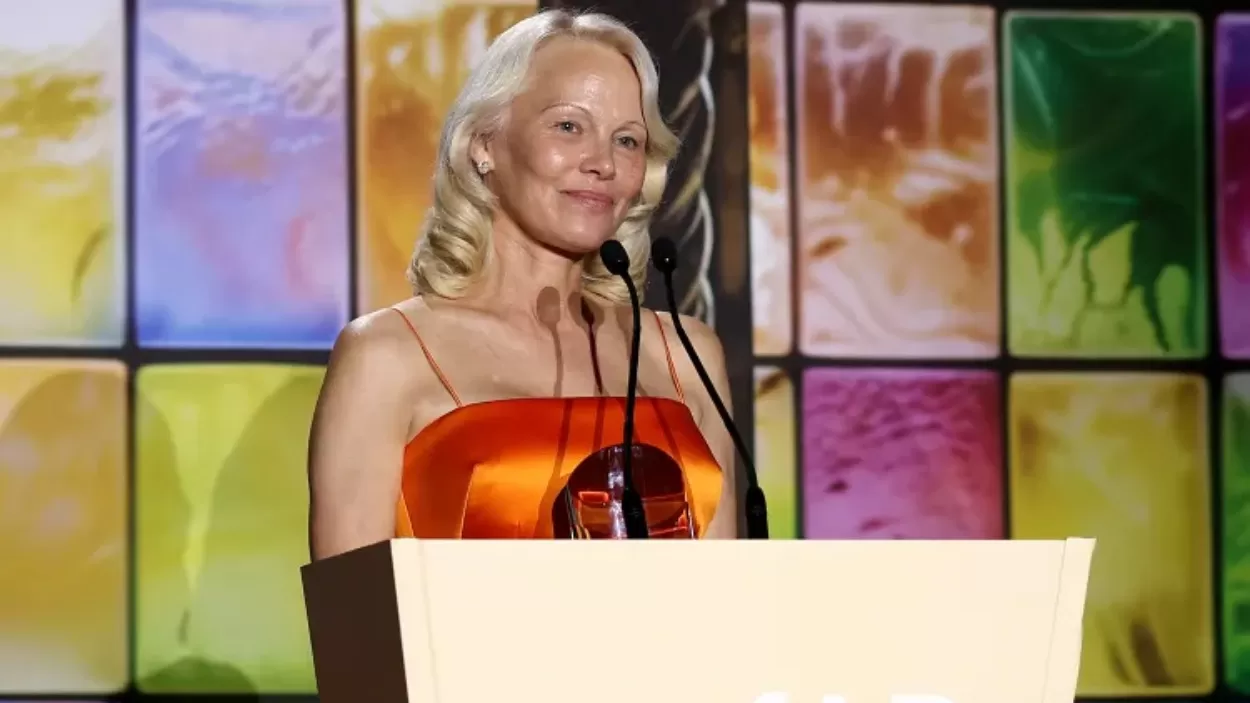

Pamela Anderson reflects on overcoming hepatitis C as she receives amfAR’s Award of Courage in Venice and celebrates a remarkable new chapter.
Pamela Anderson has opened up about one of the most frightening periods of her life, recalling the moment she was diagnosed with hepatitis C and told she might have only a decade left to live. More than 20 years later, the actress has transformed that painful experience into a story of resilience, choosing to describe herself not as a victim but as a survivor who has emerged stronger.
The 59-year-old star delivered an emotional speech at the amfAR Gala Venezia 2026 on 6 September, held at the Hilton Molino Stucky during the Venice Film Festival. Anderson was presented with the organisation’s Award of Courage, recognising both her personal journey and the strength with which she has faced some of the most difficult chapters of her life.
Looking back at her diagnosis in 2002, the Baywatch star revealed just how devastating the original prognosis had been. “It was a death sentence. That’s what my doctor told me — that I probably had around 10 years to live,” she told guests.
Anderson has previously said that she contracted the hepatitis C virus after sharing tattoo needles with her former husband Tommy Lee. The diagnosis affected far more than her physical health. At the time, she was raising their two sons, Brandon Thomas and Dylan Jagger, and the possibility of not being there for them profoundly altered the way she approached her future.
The actress explained that the prognosis “coloured and corrupted my decisions”, adding that her greatest concern was not dying itself, but what could happen to her children if she were no longer there. “It was not fear of death, but fear of what might happen to my young children. It turned my life inside out,” she said.
Treatment also came with an enormous financial cost. Anderson recalled that fighting the illness “took everything I had in my bank”, illustrating the personal and economic consequences of a diagnosis that remained part of her life for years.
Her story eventually took a dramatically different direction. In 2015, Pamela Anderson announced that she was free of hepatitis C, marking the end of a battle that had once appeared to have no hopeful conclusion. Advances in medicine had transformed treatment possibilities, allowing the actress to leave behind the prognosis that had shaped so many of her decisions.
Her speech in Venice therefore became less about revisiting suffering than reclaiming the narrative surrounding it.
“I’m not a victim, I’m a victor. I am strong and capable, more now than I could ever dream of,” Anderson declared. She finished with another powerful statement: “I’m not the damsel in distress, no matter how easy that role is to play.”
The words feel particularly significant at this point in her career. After decades in which her public image was frequently dominated by her appearance and her Baywatch fame, Anderson has experienced a notable professional reinvention, embracing more dramatic acting roles and a public image built increasingly around authenticity and creative independence.
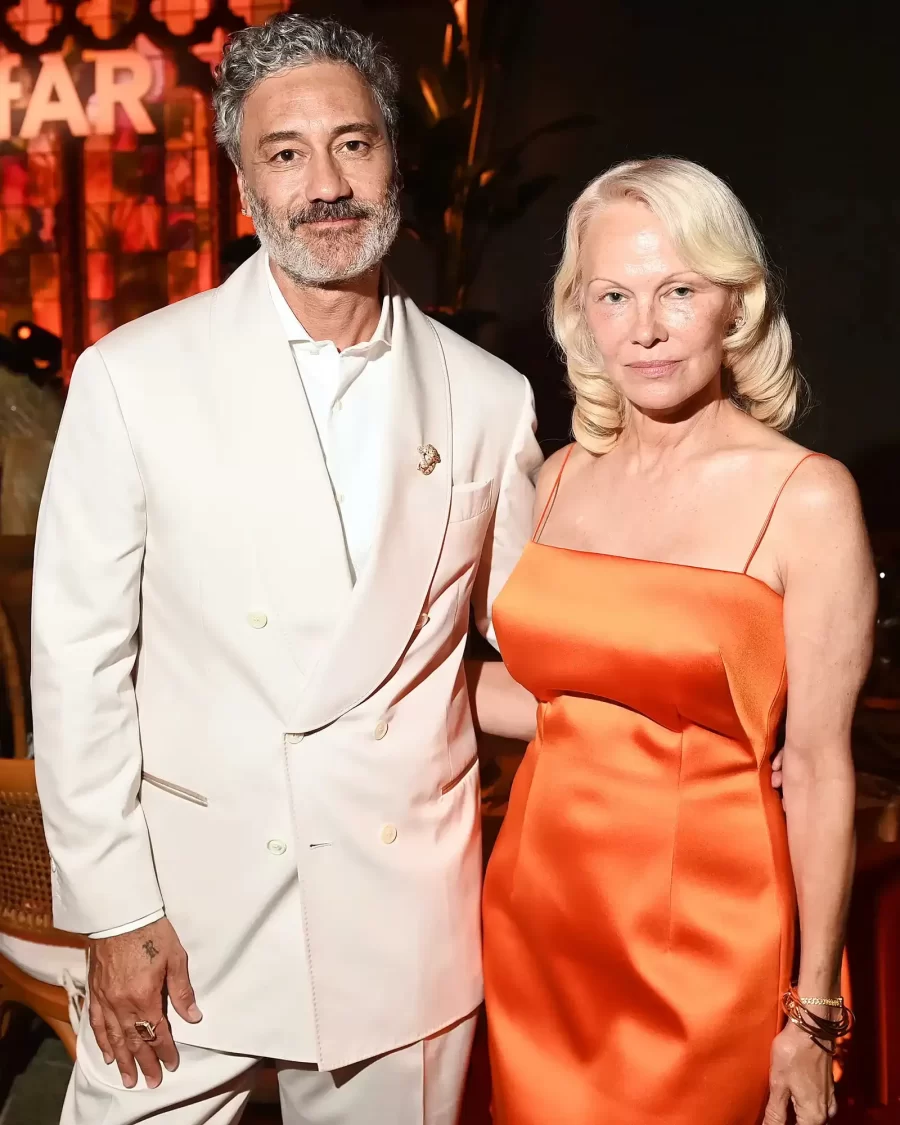
Presenting her with the award was Taika Waititi, her co-star in the forthcoming drama Place to Be. Directed by Kornél Mundruczó, the film also stars Ellen Burstyn, Édgar Ramírez, Lena Waithe, Murray Bartlett and Maika Monroe, and is set to premiere at the Venice Film Festival on 9 September.
The evening also recognised performance artist Marina Abramović with the Award of Inspiration, presented by Orlando Bloom, while Mimi Webb and Bebe Rexha performed during the gala. The event supported amfAR’s work against HIV/AIDS, alongside its research and advocacy related to hepatitis C.