
Harry reveals he spent years emotionally shut down because he associated grief with proving how much he still missed Diana.
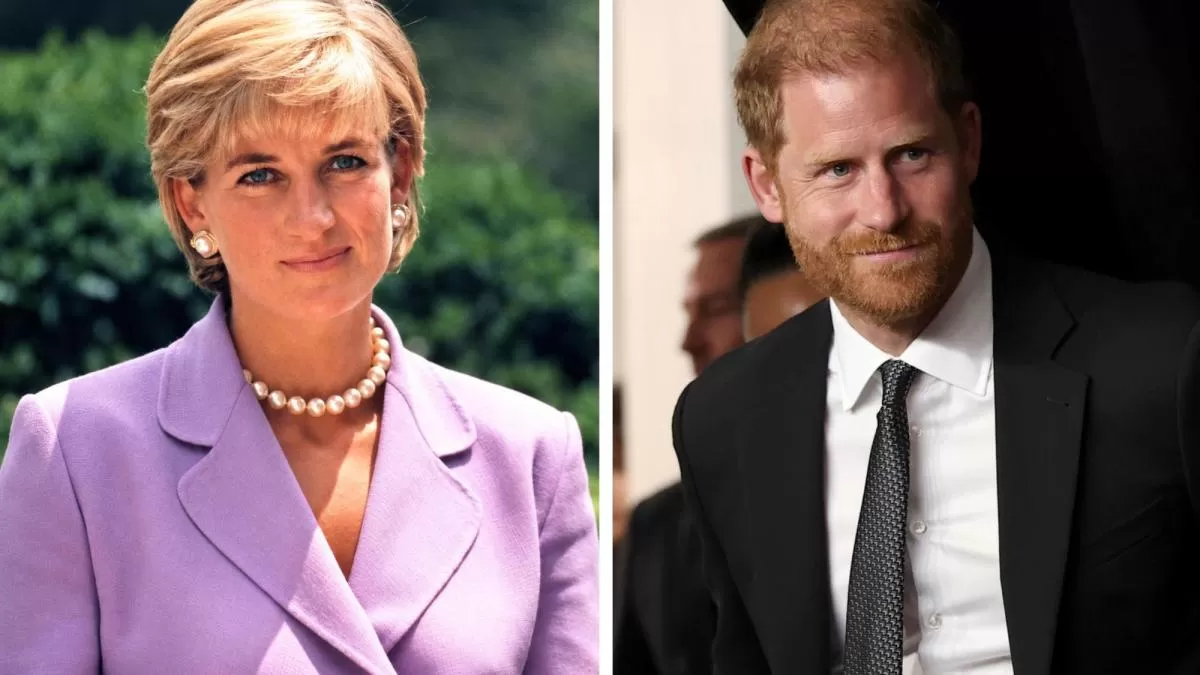
Prince Harry was just 12 years old when the death of Diana, Princess of Wales changed his life completely. Almost three decades later, the Duke of Sussex continues to put into words a grief he spent years experiencing through silence, denial and an emotional disconnection he once regarded as a strength. In a new appearance for MasterClass, Harry has spoken particularly candidly about that experience, revealing something he struggled to admit for years: feeling happy without his mother made him feel guilty.
The younger son of King Charles III explains that, following the car crash that claimed Diana’s life in Paris in 1997, he developed an almost automatic ability to suppress his emotions. This coping mechanism allowed him to focus on whatever was in front of him without stopping to process what had happened. For a long time, he even considered it a kind of “superpower”, particularly useful during his years in the Army.
Over time, however, he realised that this apparent strength was also preventing him from truly confronting his loss.
Harry spent years believing that sadness was a way of staying connected to Diana
“I had spent so long feeling emotionally numb, largely because I felt disloyal and guilty at the thought of being happy and experiencing joy without her,” Harry explains during the programme.
His relationship with grief reached the point where he associated suffering with proof of his love for his mother.
“I felt I had to be sad and emotionally shut down to prove to her how much I missed her.”
The Duke acknowledges that even when he began to understand where his ability to disconnect emotionally came from, another fear emerged: that healing would mean losing part of the connection he still had with Diana.
“Once I understood where that superpower came from and how it was connected to everything, my fear was: if I heal, if I find a solution, will I lose it? Will I lose the superpower? Does that mean I’ll lose my connection with my mother?” he recalls.
The turning point came when he managed to reverse that way of thinking and ask himself what Diana would really have wanted for him. Realising that his mother would have wanted to see him enjoying his life brought about what he describes as a “huge mental shift”.
“It freed me and gave me a completely different perspective on life,” he says.
Harry explains that he now tries to recognise the physical signs associated with stress and heightened alertness, particularly moments when he experiences a sudden surge of adrenaline. Breathing techniques have become one of the tools he uses to regain his balance, although he acknowledges that it remains an ongoing process.
“It’s still a work in progress for me,” he admits, before mentioning shallow breathing, tightness in his chest and other physical responses that can still occur.
Diana’s funeral and the memories Harry came to suppress
One of the most personal moments of his appearance comes when he recalls Diana’s funeral. Harry says it was during the burial, away from the cameras and the enormous crowds that had gathered to bid the princess farewell, that he was finally able to cry.
“Then came the burial, and surrounded only by family, away from the tearful eyes, the cameras and the expectations or judgements of the world, I broke down and cried,” he recalls. “I remember thinking, or feeling, that crying actually felt really good.”
However, fully accepting his mother’s death took much longer. The Prince reveals that, for years, he held on to the belief that Diana might have faked her disappearance to escape the intense pressure surrounding her life.
Harry even imagined that one day his mother would reappear in disguise and take both him and his brother, Prince William, away with her. According to Harry, that fantasy remained in his mind for approximately a decade.
The protective mechanism eventually affected his memories, too. It was not only the traumatic images associated with the loss that became buried, but also many of the happy moments he had shared with Diana.
“The mind and body’s defence mechanism was to shut down emotions and memories. Not just the bad memories, but the good ones too,” he explains.
“I forgot what my mother’s voice sounded like. I forgot her laugh. I genuinely couldn’t picture what she looked like without looking at a photograph of her.”
His words reveal just how much deeper that emotional shutdown went than simply avoiding talking about what had happened.
Meghan, Archie and Lilibet have become an essential part of his emotional wellbeing
Harry says he now finds much of his happiness in two very different but equally important areas of his life: his philanthropic work and the family he has built with Meghan Markle.
The couple live with their two children, Archie and Lilibet, and the Duke admits that being present in their everyday lives has become one of his priorities. He has even established a personal boundary to help maintain a balance between his professional commitments and his role as a father and husband.
“The biggest factor for me is the energy, joy and happiness I get from being with my family, especially our children, and the happiness I get from being out in the field doing my work,” he explains.
His approach, he says, involves trying not to spend more than ten days away from Meghan and their children. For Harry, this combination of family life, professional purpose and the different aspects of his identity allows him to maintain a sense of balance that was much harder to achieve throughout much of his youth.
The MasterClass appearance was released to coincide with World Mental Health Day, observed on 10 October. The project will also benefit Comfort Zone Camp and Scotty’s Little Soldiers, two organisations dedicated to supporting people experiencing bereavement.