The Fendi Selleria Technique, renowned for its detailed hand-stitching, enhances traditional Italian craftsmanship in its exclusive designs.
The Selleria technique of Fendi, a creation of excellence, is both an ode to meticulous work and a representation of the fashion house’s equestrian heritage. This method’s legacy in their accessories began in the 1930s with Adele Casagrande and her husband Edoardo Fendi, who opened the first boutique in Rome.
This is where Selleria was born, a technique that became the foundation of Fendi’s initial leather goods designs. Both learned from saddlers to craft Fendi’s line of handbags. ‘Selleria’ is an Italian word that means ‘saddle.’
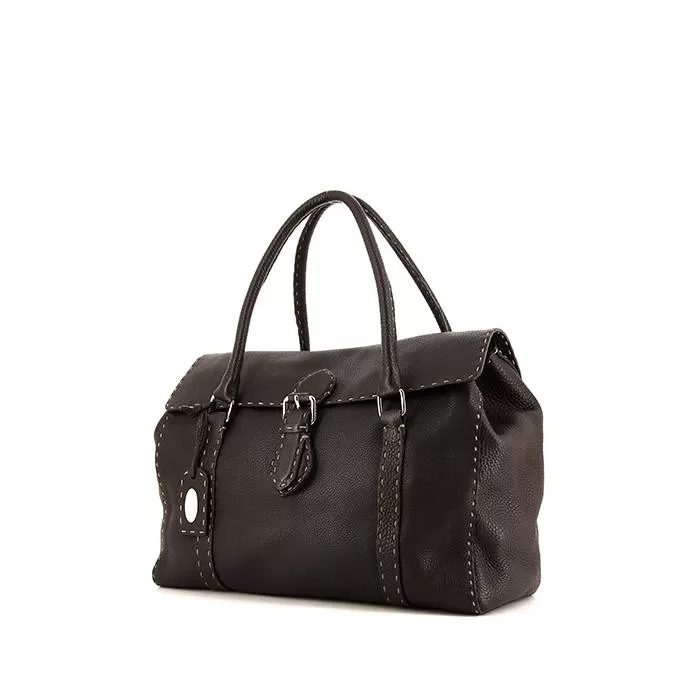
They began to combine saddlery techniques with the creation of luxury leather products, each piece hand-stitched using the Selleria stitch, which enhances the finish and durability of these accessories. The evolution from the brand’s beginnings saw this stitch applied to various pieces in their collections, moving from the initial projects’ manufacturing phase.
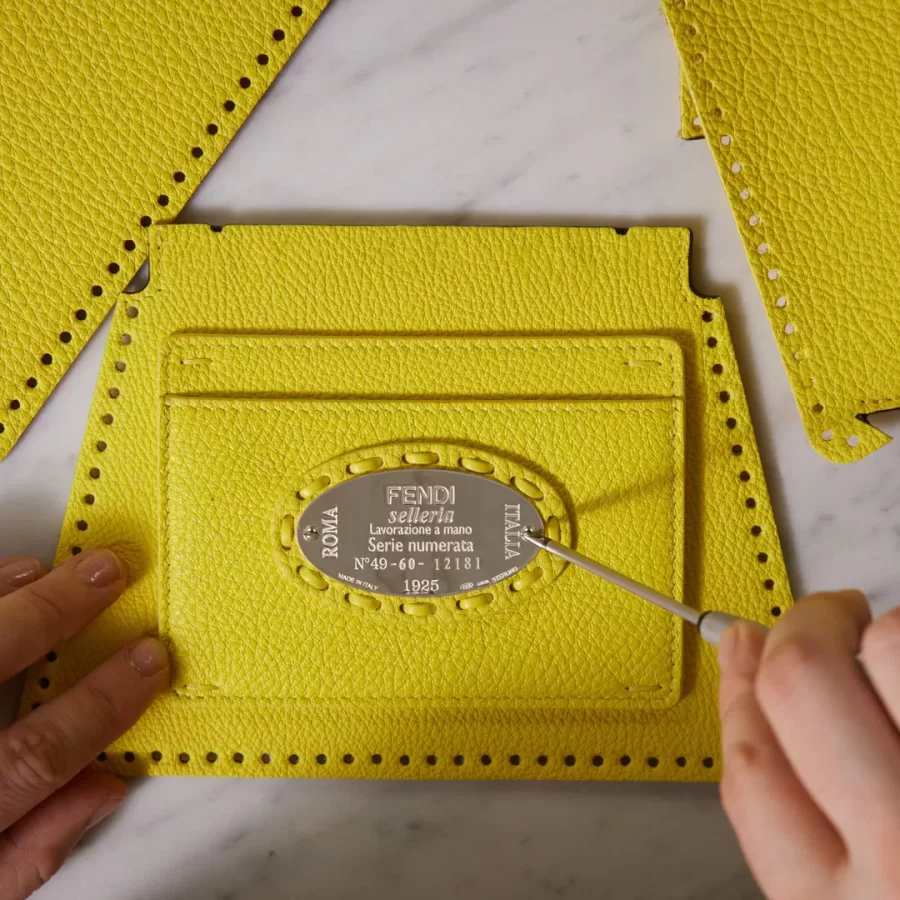
To add the final touch, each item crafted with the Selleria technique bears a final stamp: a sterling silver tag engraved with a unique serial number and the year the technique began, 1925, as a mark of its characteristic artisanal tradition.
In the recent launch for the Spring/Summer 2024 collection, the stitch has been replaced with a thicker variant, applied tone-on-tone on the leather.
The application of the Selleria technique has thus paved its way among the brand’s various accessories, setting them apart with this technique, from handbags to garments made of the same material, as a distinctive element of the prêt-à-porter collection. It is also applied to metal hardware on shoes and in Fendi Filo jewelry, including bracelets and bangles.