
Since the creation of the first rainbow flag in 1978, Pride flags have been a symbol of beautiful color for many people in the LGBTIQ+ community.
Today, there are flags for practically everyone to feel included and accepted, but they are still in constant evolution.
There are dozens of LGBTIQ+ flags representing gender identities, sexualities, and intersections of communities, but they all have one thing in common: the use of vibrant and bright colors that loudly and clearly proclaim pride.
The history of pride flags is vast and deep. Often, there isn’t a single person, group, or organization responsible for creating official flags. Instead, most of the time, new designs emerge from individuals seeking to make flags that better represent their own identity. Forums and websites (such as Tumblr) are filled with pride flag designs shared by people from all over the world.
Here’s a brief overview of some of the LGBTIQ+ flags that have been created over the years:
- Starting with the original pride flag created in 1978 by Gilbert Baker and Harvey Milk (activist, gay military veteran, and drag queen), along with a group of collaborating artists and volunteers, they created a celebratory symbol for the gay community with the eight colors of the rainbow.

- The current Gay Pride flag is similar to the original but with the variation of now having only six colors.

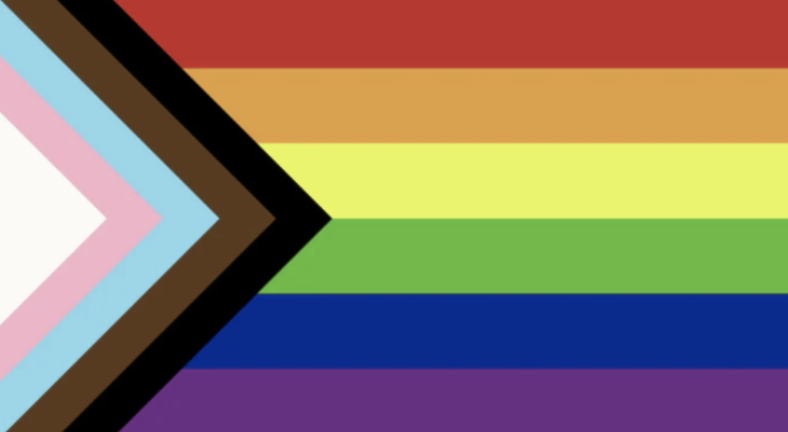
- Daniel Quasar, a queer non-binary graphic designer in Oregon, created a version of the flag that would further uplift marginalized queer identities. In 2018, their “Progress” Pride flag incorporated the colors of the Trans Pride flag and, in its black stripe, also honored those living with HIV/AIDS.

- Created by bi-activist Michael Page in 1998, the Bisexual Pride flag has three colors (pink, lavender, and blue), each symbolizing a different type of attraction.

- On the other hand, the Pansexual flag was created by Jasper V, a queer non-binary person living in England. It consists of three colors: yellow, pink, and blue.

- In 1999, Monica Helms, a trans woman and Navy veteran, designed a flag to represent the Trans community with the support of Michael Page, the creator of the bisexual flag.

- In 2010, AVEN (Asexual Visibility and Education Network) created the Asexual flag with four colors: black, gray, white, and purple.

- In 2018, artist Emily Gwen created the Lesbian Pride flag with seven colors representing: gender nonconformity, independence, community, unique relationships with femininity, serenity and peace, love and sex, and femininity.

- The Non-Binary Pride flag was created by Kye Rowan in 2014 with the colors yellow, white, purple, and black.

- This flag started being used in the late 2000s by direct allies of the LGBTQIA+ community.

- In 1995, Jim Evans designed the Polyamory Pride flag. The Greek letter pi is featured in the center, surrounded by the colors blue, red, and black. Some variations of the flag have removed the pi symbol, replacing it with an infinity heart symbol.