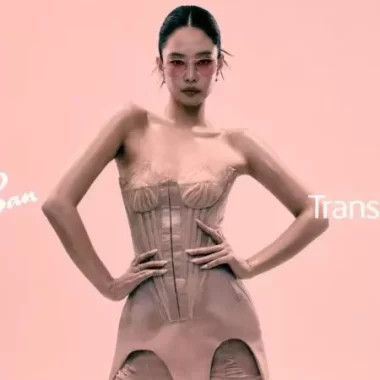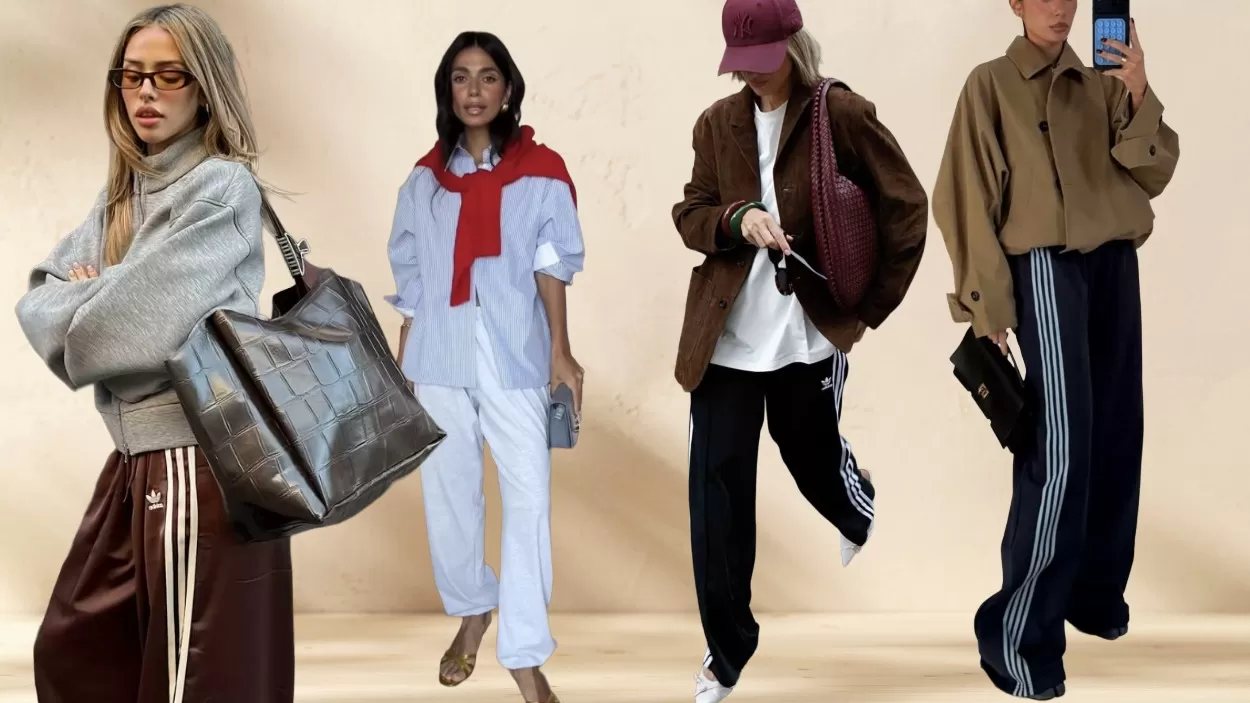


The tracksuit officially leaves the sportswear universe behind to establish itself within contemporary luxury through styling formulas that work at any age.
For years, fashion insisted on drawing a sharp line between comfort and elegance. There was a very clear divide between clothes designed for everyday streetwear and those reserved for building a polished, sophisticated look. Yet few garments have challenged that idea as powerfully as the tracksuit. What once belonged exclusively to the gym or the sofa now holds a privileged place within the most refined contemporary wardrobe.
But the real transformation lies not in the garment itself, but in the way it is worn. In 2026, the tracksuit no longer operates through traditional sportswear codes, but through a far more curated, understated and intentional aesthetic. The goal is not to look casual. The goal is to master contrast.
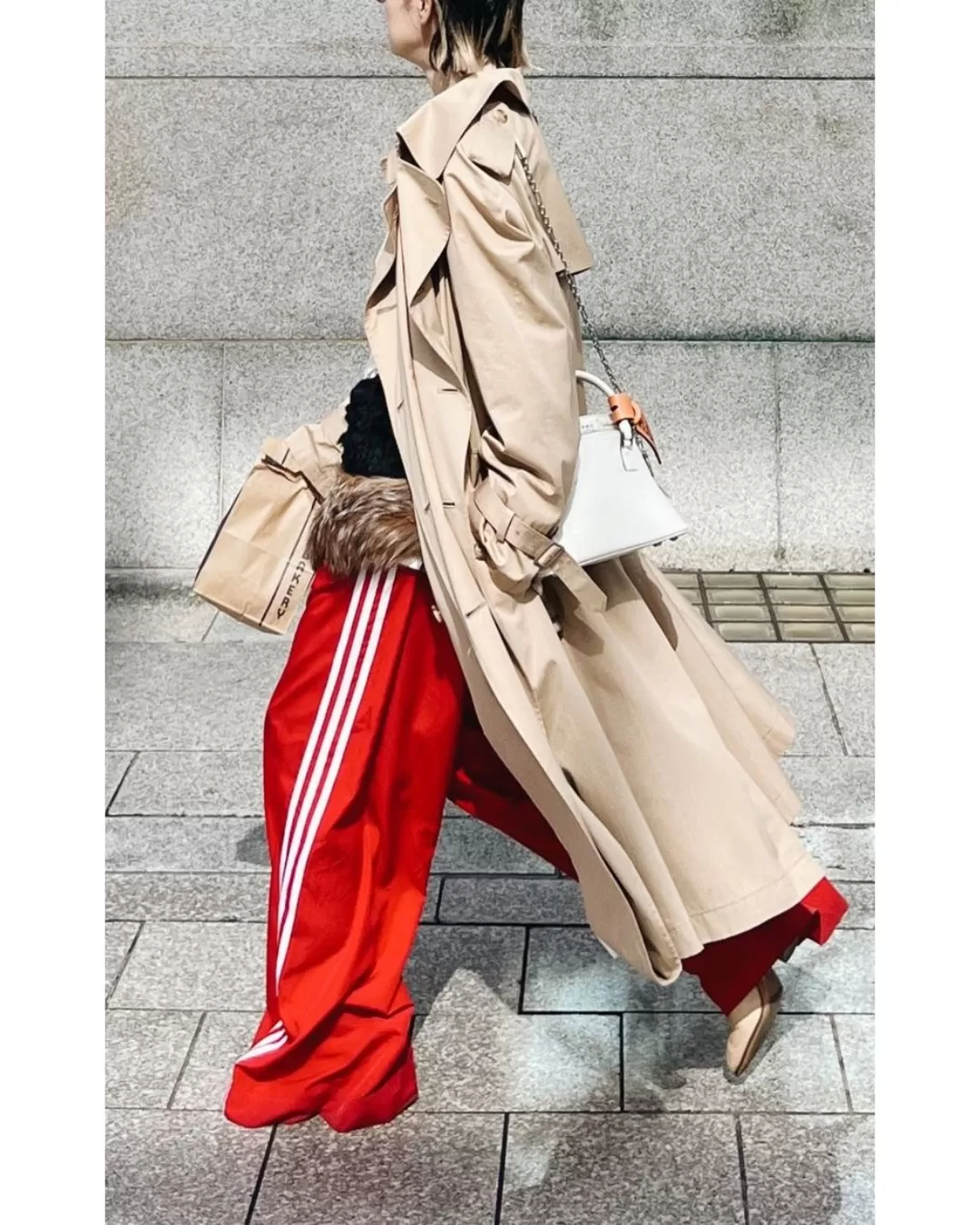
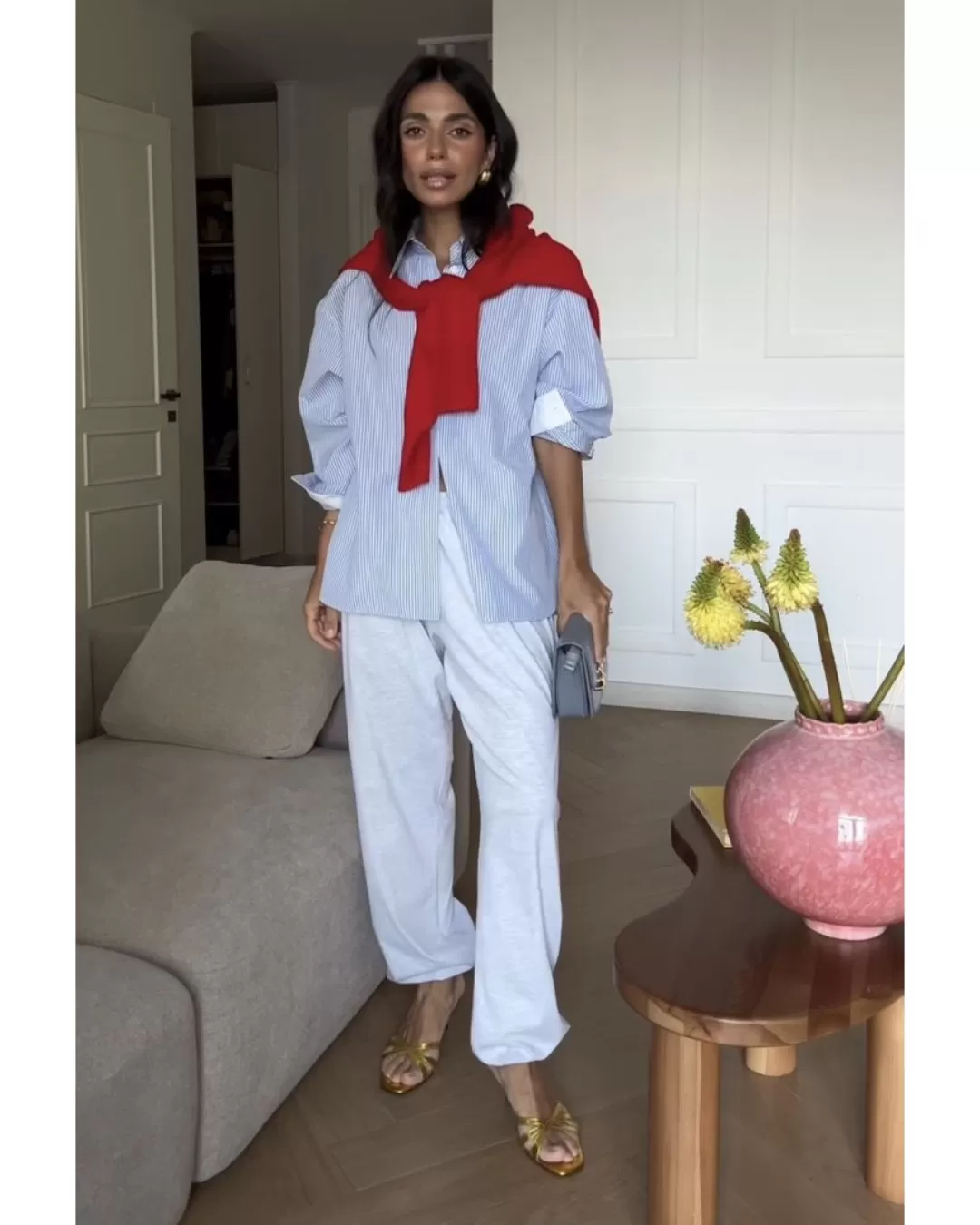
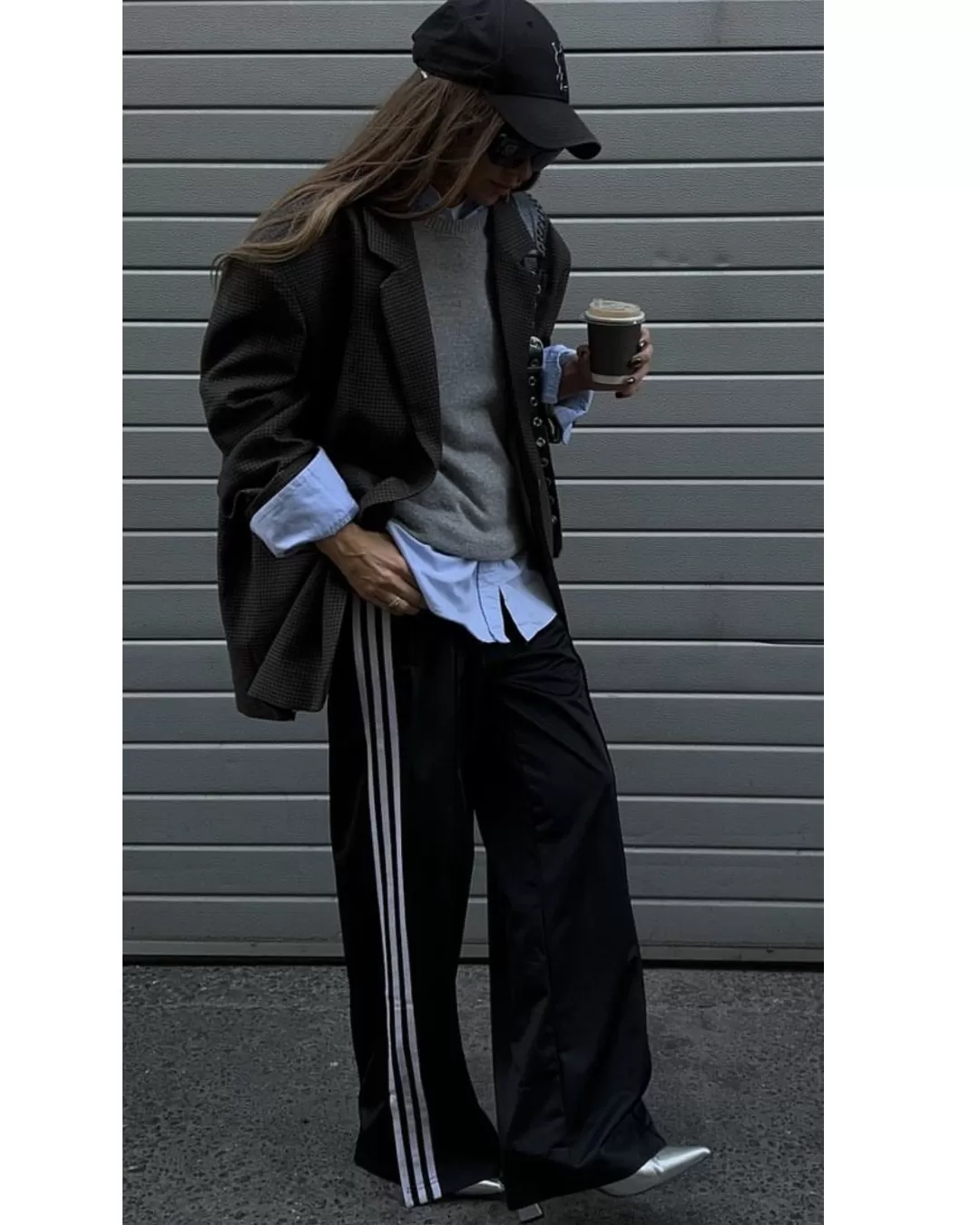
The most common mistake remains trying to make tracksuit trousers look overly elegant or, conversely, leaning too heavily into their athleisure origins. The women who best understand modern relaxed luxury do exactly the opposite: they balance. They introduce visual tension. They mix seemingly incompatible references until the final result feels modern, clean and entirely current.
The new formula for sophisticated tracksuit dressing always begins with silhouette. Extremely fitted cuts have lost ground to wider trousers with fluid movement and lightly structured fabrics. The objective is no longer to sculpt the body, but to create movement. That sense of controlled comfort is precisely what makes the styling work.
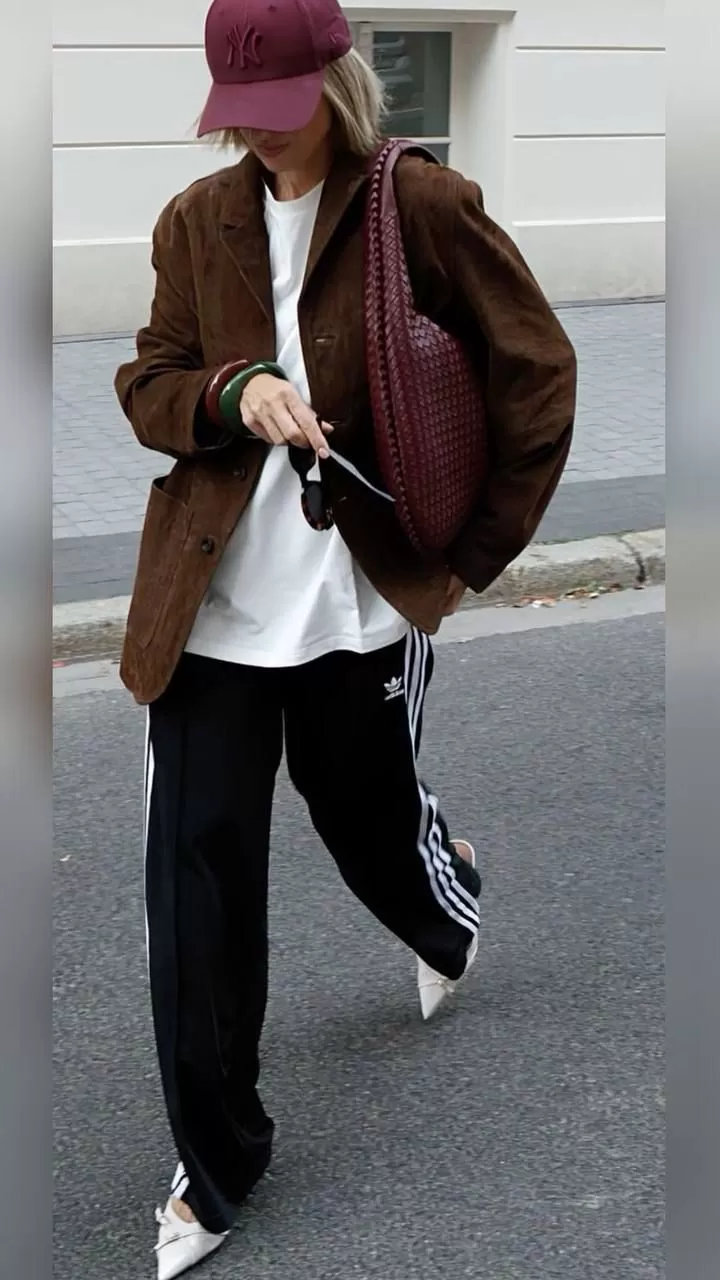
The second essential element is footwear. And this is probably where the aesthetic direction of the outfit is fully defined. Trainers are no longer the most interesting option. The real shift happens when sportswear trousers coexist with unexpected pieces: minimalist thong sandals, polished loafers, kitten heels or even classic court shoes. That collision of codes is what instantly elevates the entire look.
The approach to layering has also changed dramatically. Hoodies have almost completely disappeared from the more sophisticated fashion language. In their place come slightly oversized masculine shirts, structured tops, relaxed tailoring or ultra-fine knitwear. Everything revolves around one central idea: the outfit should never appear overworked.
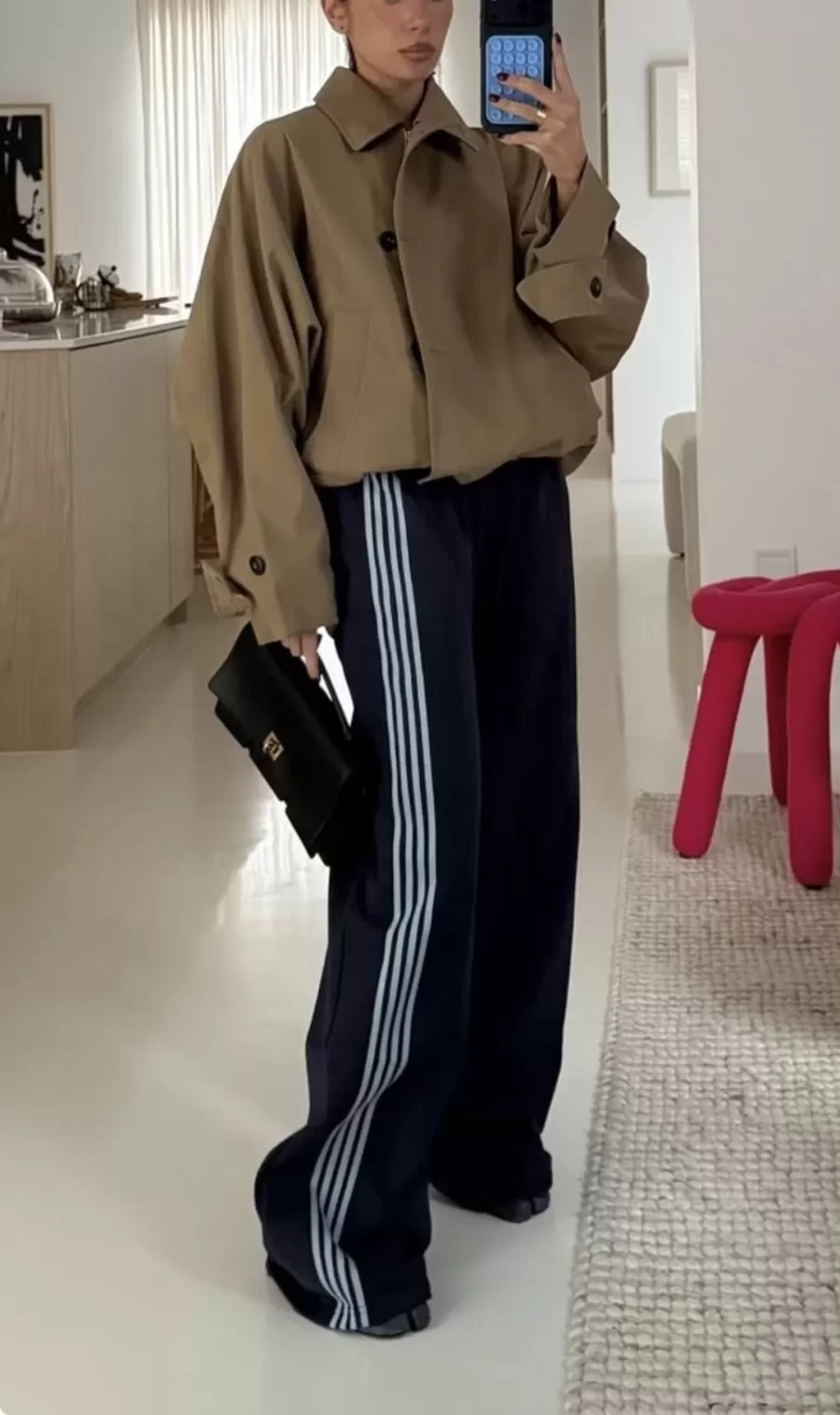
That is where completely different generations find common ground. Whether at 20 or 50, the tracksuit works when approached through aesthetic confidence rather than obvious trend-chasing. The difference no longer lies in age, but in how each person interprets proportions, accessories and attitude.
Today’s strongest style references understand perfectly that contemporary luxury does not need to scream sophistication. That is why accessories play a quieter yet strategic role: clean-lined XL bags, dark sunglasses, minimal jewellery and sports caps integrated through an editorial rather than urban lens.
Even the colour palette has evolved. Traditional athletic greys are giving way to butter tones, soft browns, washed black, smoky blue and off-white shades. Colours that instantly elevate the outfit and connect directly with the visual sensibility currently dominating luxury street style.
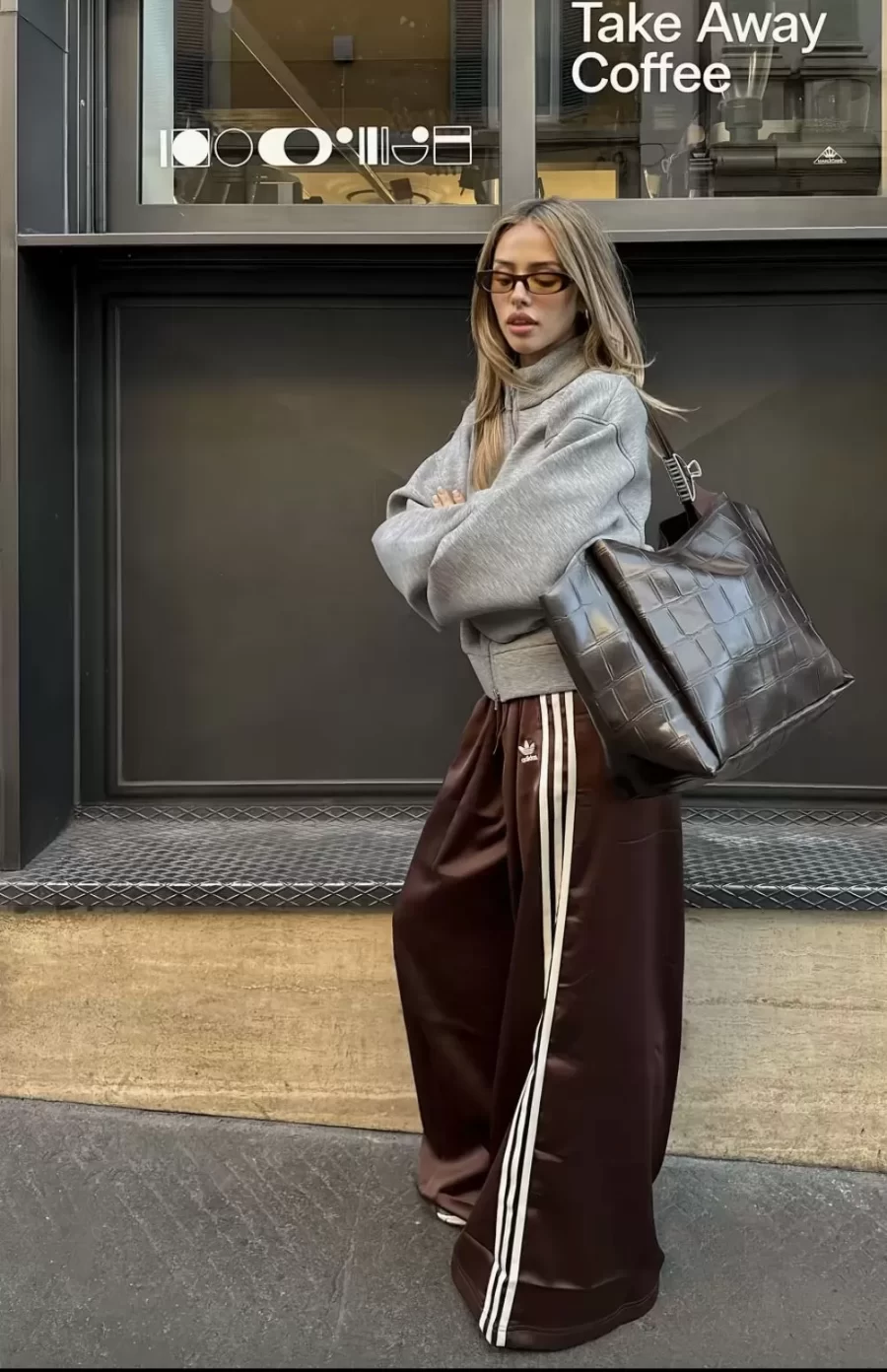
What makes the phenomenon truly interesting is that the tracksuit no longer represents rebellion against classic elegance. It has become part of it. It is no longer simply a “comfortable” garment, but an extremely sophisticated styling tool.
Because in 2026, true elegance no longer looks rigid, uncomfortable or overly produced. It looks effortless. And very few garments embody that new idea of luxury better than a perfectly styled pair of tracksuit trousers.