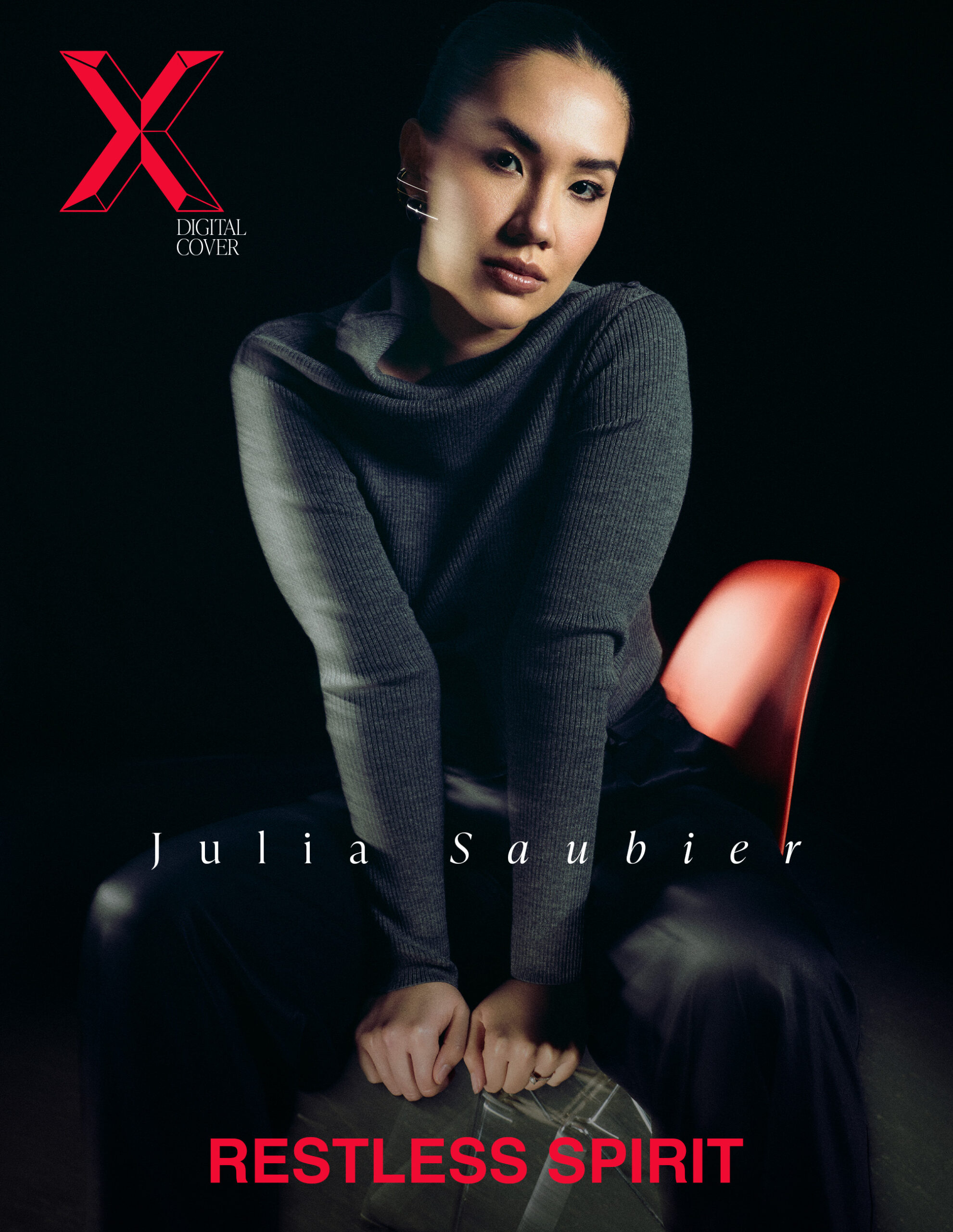

Julia Saubier reflects on instinct, discipline and identity, revealing a career shaped by movement, intellect and fearless creative exploration across worlds.
The actress, whose path spans politics, journalism, economics, film production and martial arts, is shaping a career where intellect, instinct and physicality converge.
“If you’d asked me in high school what I’d be doing now, I never would have predicted this path,” begins Julia Saubier, reflecting on a journey that has never followed one fixed direction. Before acting took centre stage, her life had already moved through theatre, politics, film, economics and global affairs — a constellation of interests that, rather than pulling her away from performance, slowly guided her towards it.
Even though she had done school plays, pursued IB Higher Level Theatre and later studied a dual degree in Politics and Film at NYU Abu Dhabi, followed by a Master’s in film finance at Peking University, Saubier initially imagined a different future for herself. “I always assumed I’d pursue an academic career,” she says. “I saw film and theatre as extracurricular, like ‘side quests’, as Gen Z would put it.”
That sense of gradual revelation is central to how she understands her career. Working across film, television and entertainment did not arrive as a sudden rupture, but as a process of following curiosity, refining purpose and asking what her personal “why” might look like in practice. Acting, in that sense, was not a destination she planned from the beginning. It was something that became clearer the more she allowed her interests to intersect.
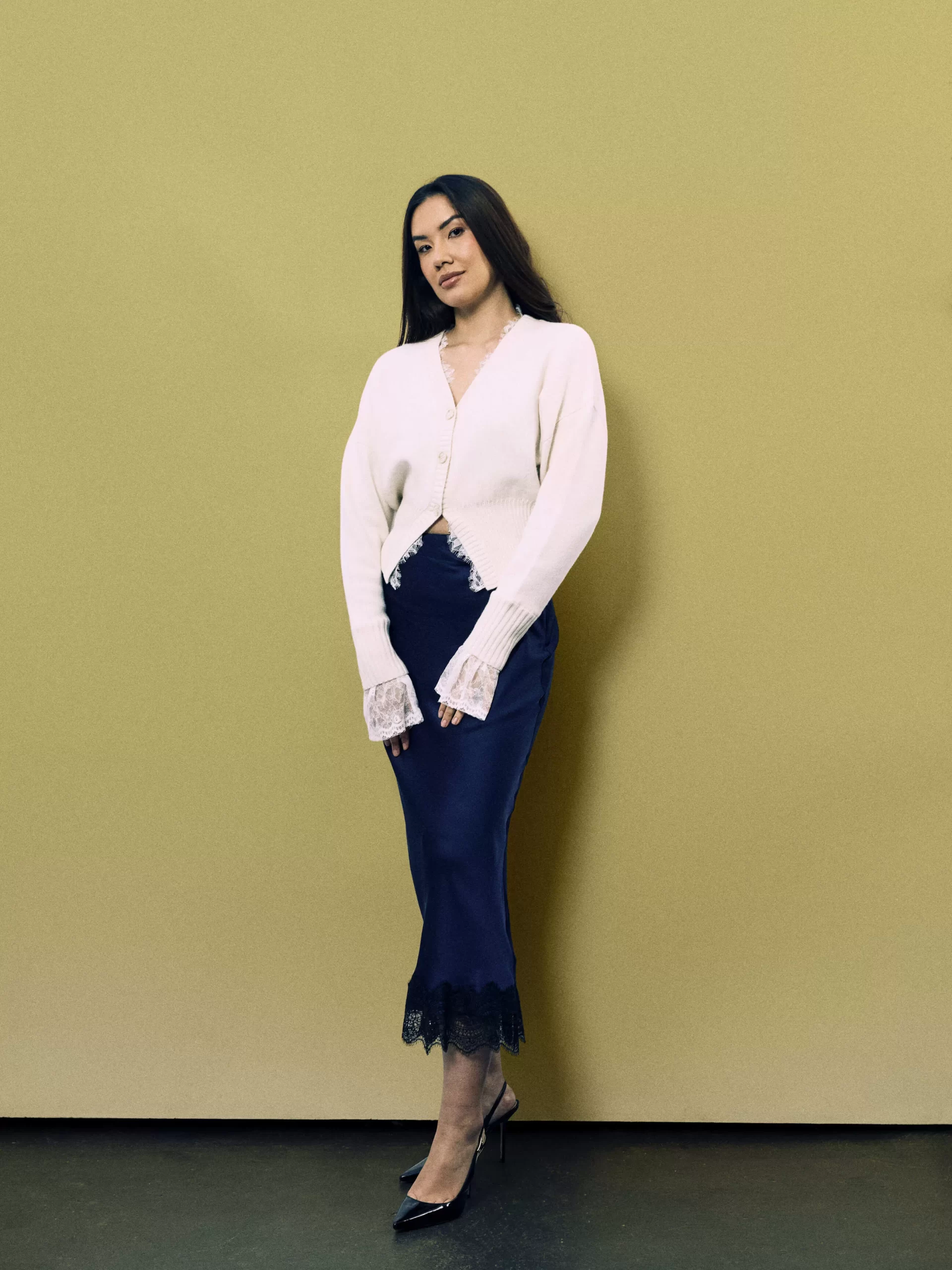
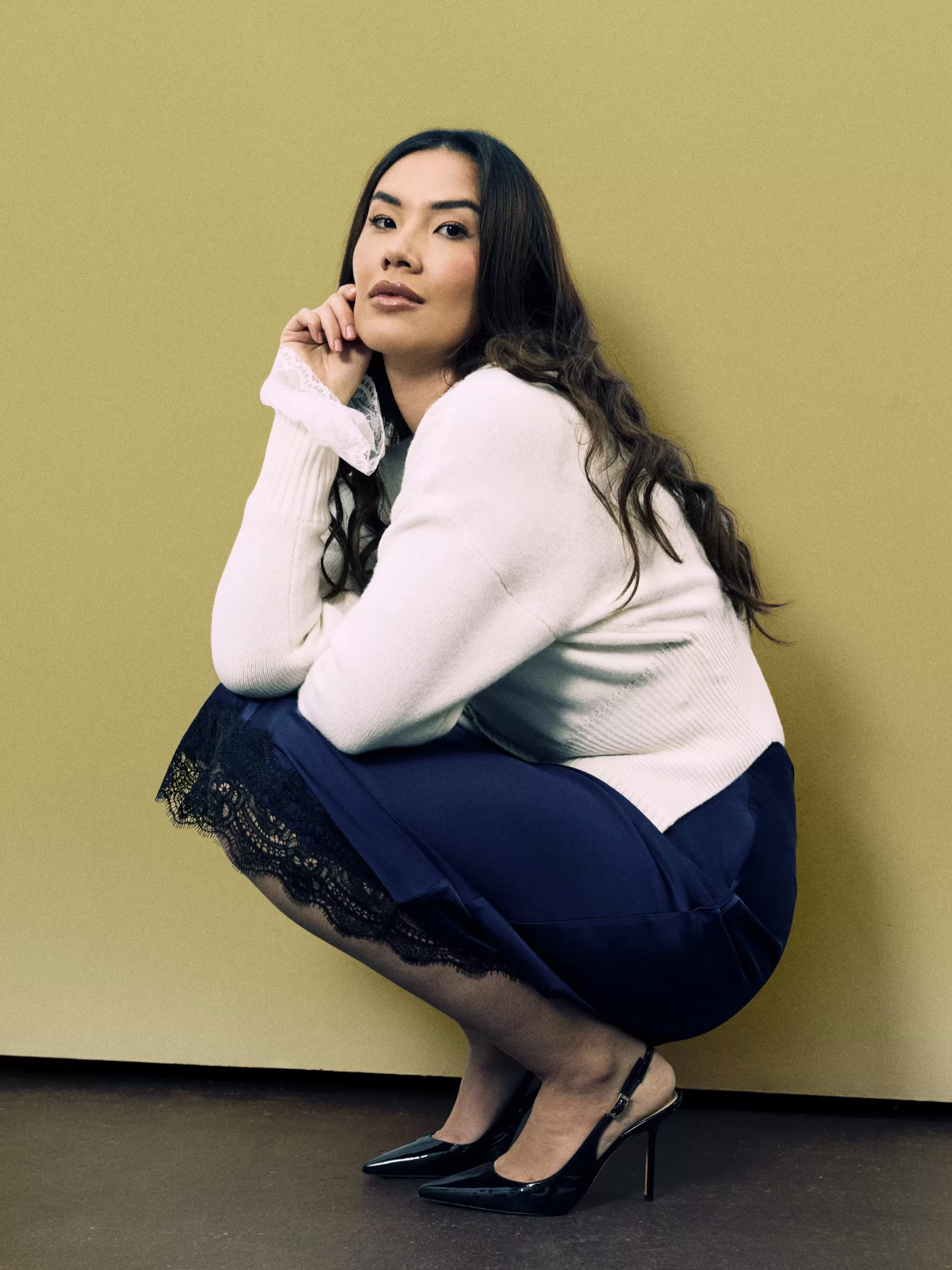
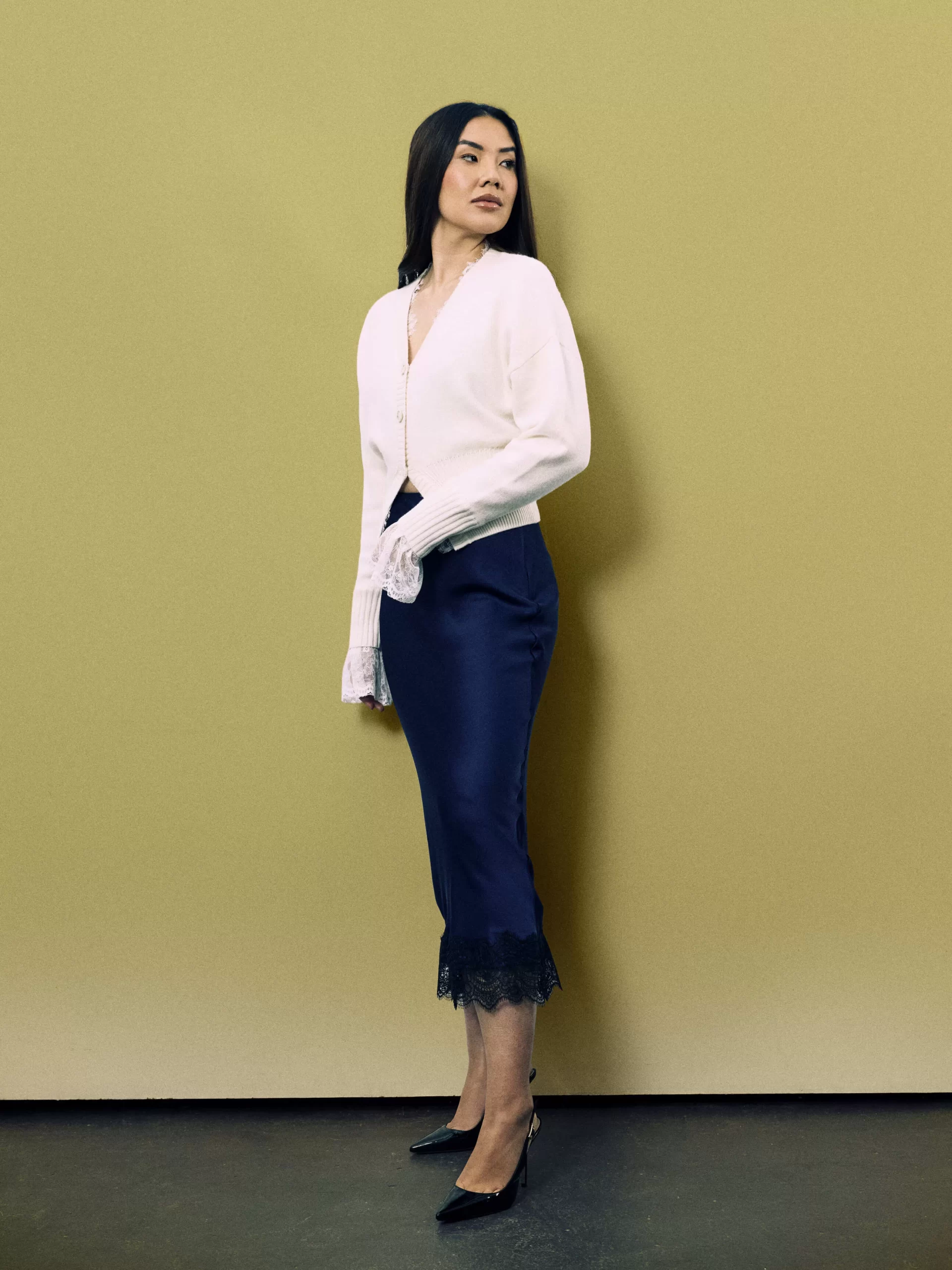
Saubier’s life has also been shaped by movement. Having lived across France, the Philippines, Australia, the UAE, China and the UK, she describes change as the only constant of her upbringing. Rather than making her search for a fixed home, that experience made her more comfortable with reinvention. “Living in such different environments has made me adaptable, curious, and willing to start over,” she says. The trade-off, she admits, is a less fixed sense of place. “The idea of spending an entire life in one country feels very foreign to me.”
Before stepping fully into acting, Saubier spent years observing the world through policy, reporting and global affairs. That lens has inevitably shaped the kind of characters and stories that draw her attention. “It’s made me very aware of the systems of power that shape our world,” she explains. She is interested in characters who resist those systems, or exist in tension with them, and in work that can expand how people see themselves. For her, storytelling has the capacity to imagine more just and expansive futures, especially for marginalised communities.
That commitment feels particularly present in the way she speaks about Asian representation. When asked what kind of Asian female presence she still feels is missing from screen storytelling, her answer is direct: “More of everything.” As a mother to a mixed Filipino-Nigerian-French-British son, Saubier is especially interested in Afro-Asian intersectionality. She points to ‘Sinners’ as a significant example, particularly through its inclusion of an Asian family in the Jim Crow-era Mississippi Delta, inspired by the Delta Chinese American community.
For Saubier, the significance of that project also lies in who is shaping the story. She highlights Ryan Coogler and Proximity Media, the company he runs with his wife, Zinzi Coogler, who is of Filipino and Black heritage. “Their creative partnership is powerful, particularly in how they are able to shape what gets centred on screen, whose stories are told, and whose presence is made visible,” she says.
“Discipline starts with the personal and extends outwards.”
Julia Saubier
Within that same space, Afro-Asian futurism is a concept that excites her deeply. She describes it as an artistic and political framework that reimagines more expansive futures for marginalised communities, bridging Black and Asian diasporic experiences and opening up new forms of solidarity. It is also a creative direction she hopes to explore further. “I’d love to work with Proximity Media on a project grounded in that philosophy,” she adds.
Her artistic identity is not only intellectual or political. It is also deeply physical. Saubier’s time training in Shaolin kung-fu and Filipino martial arts became a turning point in how she understood acting. “It made me want to pursue acting because I realised I wanted a career that allowed me to use my body — and martial arts — as a storytelling and even political tool,” she says.
The training was intense. Her shifu would conduct random room checks, and everything had to be spotless or the students would be punished. One lesson stayed with her: “Discipline starts with the personal and extends outwards.” But the experience also taught her that mastery comes with sacrifice. “Being excellent does demand that of you, but life is also about joy and experiences,” she reflects. As an actor, she believes that joy and humanity are essential. The craft requires discipline, but it is also an exploration of what it means to be human.
That balance between rigour and openness carries into her process. When she first reads material, Saubier tries to think as little as possible. “I just go on instincts,” she says. After that, she intellectualises, dissects and prepares the character in detail. Then comes the most important part: letting go. “When I’m so embodied it really does feel like I’m flying.”
Having worked across large-scale studio productions and independent projects, Saubier is less interested in scale alone than in the people behind the work. What excites her most is the material, specific directors and production companies. “The actor-director relationship is incredibly important to me,” she says. She is drawn to collaborators who challenge her and bring out something unexpected.
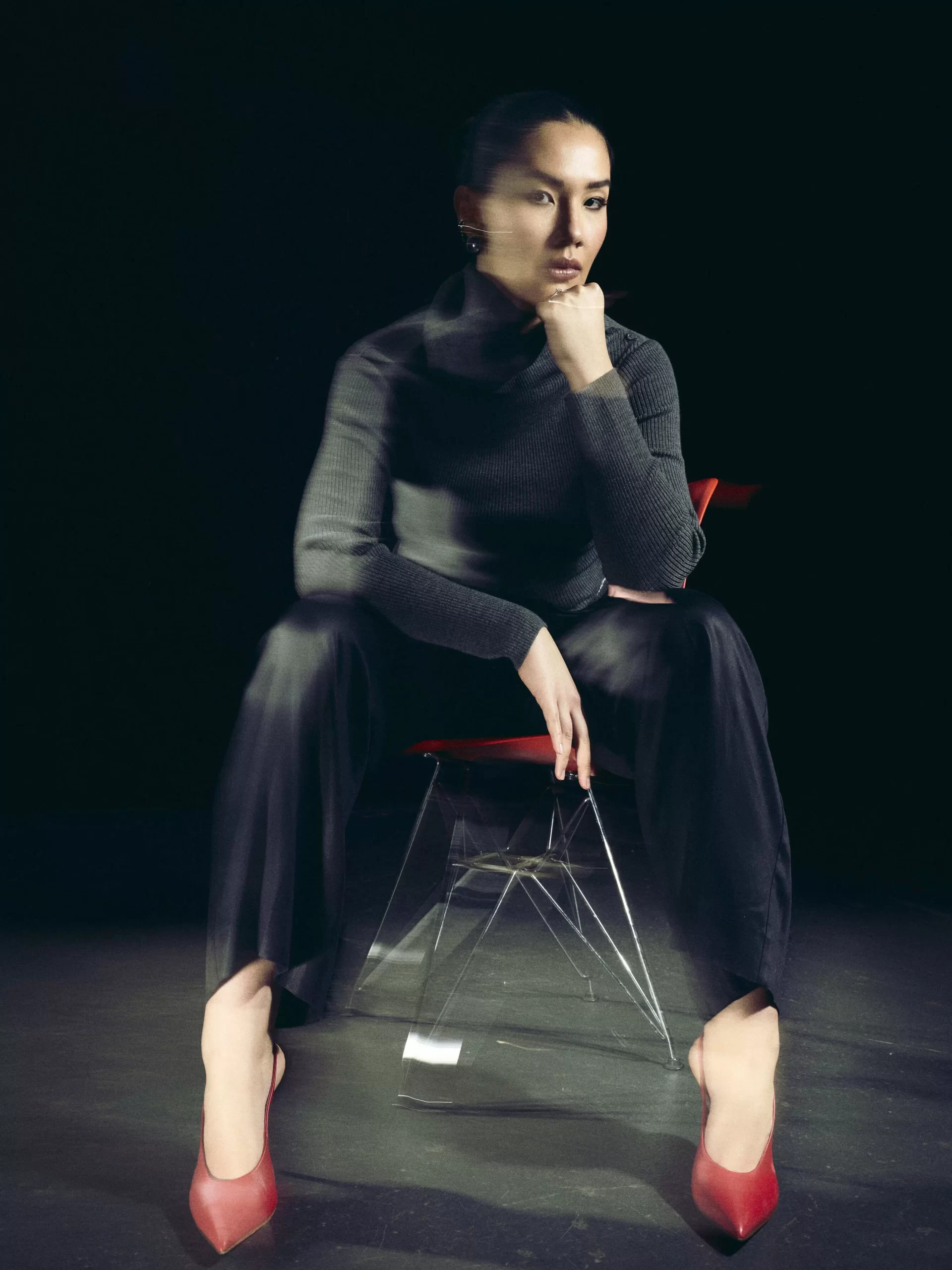
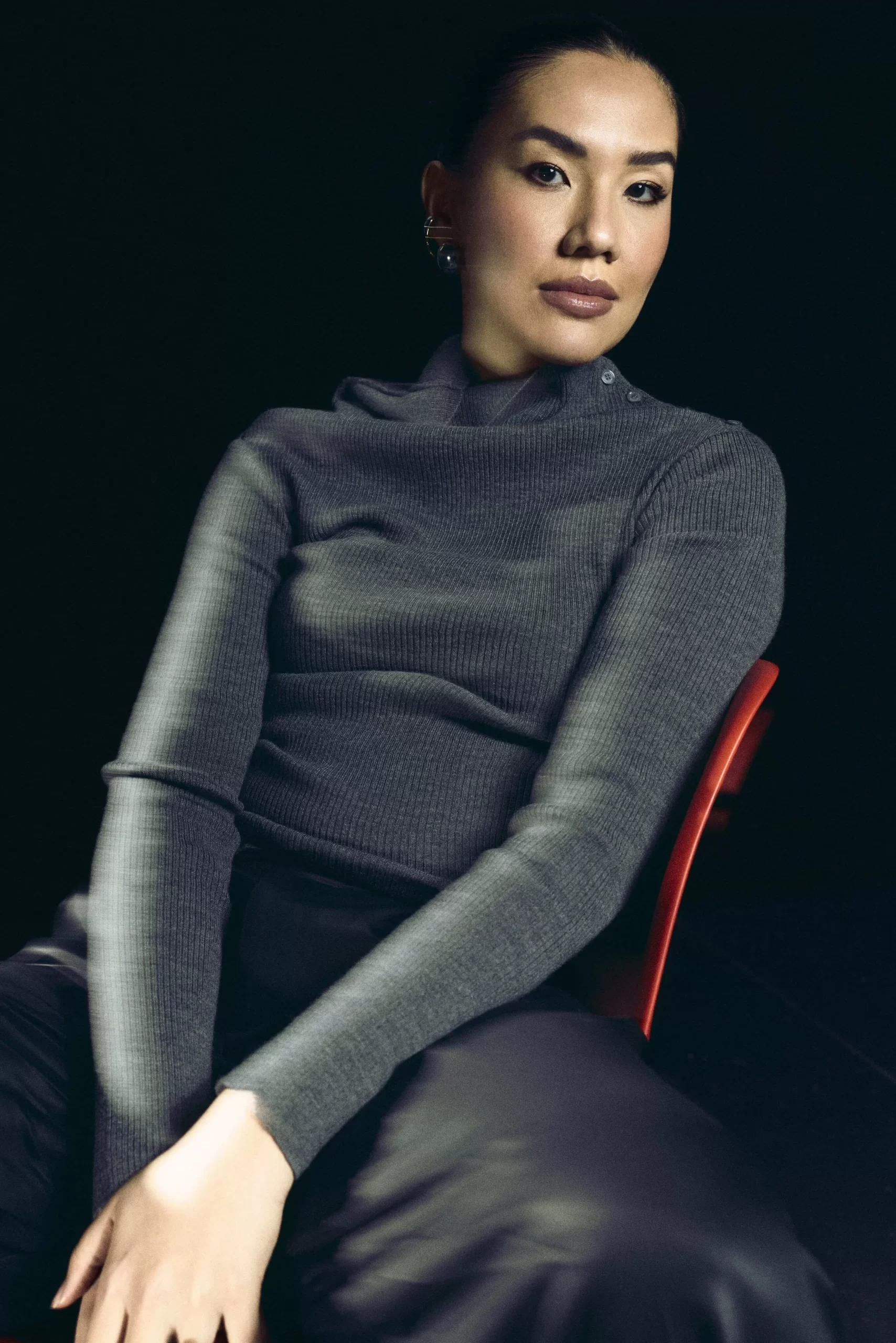
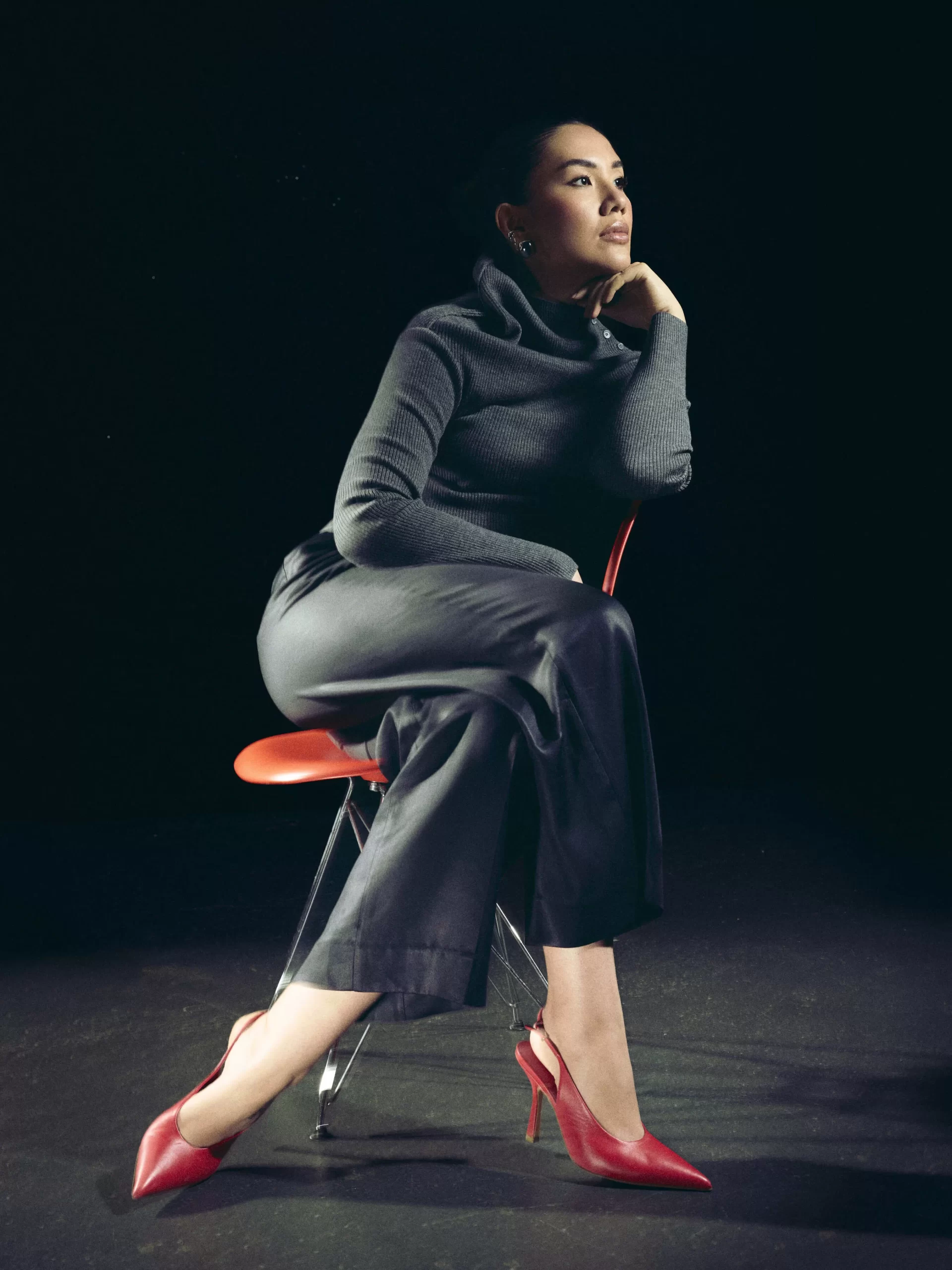
Her relationship with fiction has also changed over time. When she was younger, she saw film and television as superficial, which is why she never imagined herself in the industry. Then, at 12, she watched ‘The Prestige’ by Christopher Nolan, and something shifted. As she grew older, she began to understand how deeply culture and media shape people’s sense of self and their relationship to the world.
Journalism initially felt like a way to ask urgent questions and make a difference, but she also saw how quickly people could become exhausted, numb or apathetic to the news cycle. Film offered a different possibility: a way to ask those same questions while still moving people, shifting perspectives and inspiring change. She thinks of works such as ‘Get Out’, ‘Ex Machina’, ‘Parasite’, ‘12 Years a Slave’ and ‘Hamnet’ as reminders of why this work matters. “In the age of AI, that feels more important than ever,” she says. “We need our humanity.”
Saubier’s career does not fit neatly into one box: actor, researcher, athlete, advocate. She recognises that the industry can prefer simpler, more singular identities, with a clear character type or brand. Still, she sees her varied life experiences, worldview and interests as her greatest strengths. “I will never really be just one thing,” she says. It is something she has struggled with, but also something she is learning to accept. “I guess it’s who I am and I have to just lean in.”
As her profile continues to grow, Saubier is not trying to be remembered for one easily defined quality. Not only strength, intelligence, sensuality or vulnerability, but something more instinctive and total. Her answer is simple: “I want to be remembered as somebody who just really goes for it.”
And perhaps that is the clearest way to understand Julia Saubier: an artist shaped by discipline, movement, intellect and multiplicity, still refusing to become just one thing.
TEAM CREDITS:
Photography: Joe Whitmore
Stylist: Prue Fisher
Makeup & Hair: Megan McPhilemy