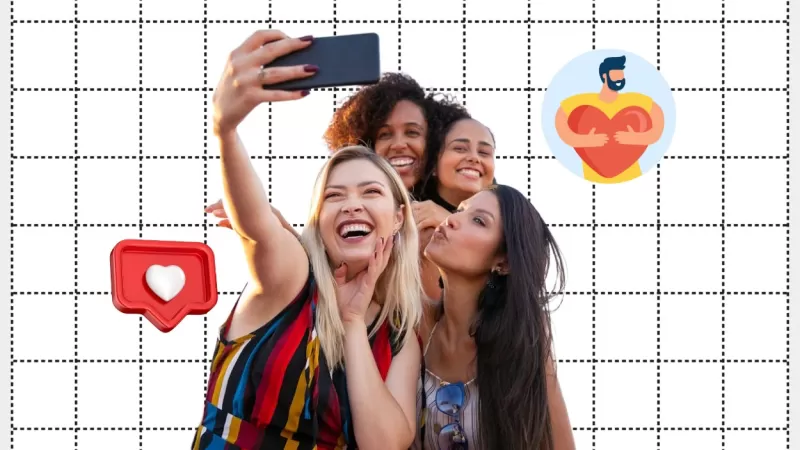

Social media, constant validation and anxiety: how hyperconnectivity is affecting our emotional health and what we can do to restore balance.
We are living in the era of the like, of continuous exposure and the feeling that everything must be shared in order to exist. Social media has become an extension of everyday life: we show what we eat, what we buy, where we travel, how we feel and even how we believe we should appear to others. In that seemingly harmless gesture, something essential often fades — intimacy.
When everything is visible, everything becomes open to opinion. Comments, comparisons and external judgement become part of personal experience. The consequences are not always immediate, but they run deep. Diffuse anxiety, restless sleep or growing irritability rarely appear without reason; they often stem from living in a state of constant exposure.
The mobile phone is no longer just a tool — it is a permanent presence. It accompanies our waking moments, meals, silences and even our rest. For many people, setting it aside creates discomfort. The fear of missing out surfaces: missing a message, a trend, a conversation, an update. Disconnection can feel like exclusion from the collective pulse. The inevitable question follows: what are we losing when we never switch off? Most likely, the present moment.
Even leisure has changed. We plan trips to unwind, count down the days to a long-awaited escape, yet once there, attention shifts to capturing the perfect image. We take the photo, upload the story and wait for the response. What could have been a fully lived experience becomes content. The memory shifts from something internal to something dependent on external validation.
This is not about rejecting technology. Social platforms can foster community, inspiration and learning. The problem arises when outside approval replaces personal perception. When other people’s reactions carry more weight than our own experience, the inner voice begins to lose strength. Emotional fatigue follows — a sense of saturation that is difficult to articulate but unmistakably present.
At the same time, subtle cultural shifts are emerging. There is a growing appreciation for imperfection, spontaneity and unedited moments. Creators and users alike are sharing pauses, processes and contradictions. Silence is slowly regaining meaning. Not everything needs to be documented to be valuable.
Caring for mental health does not require disappearing from the internet; it requires engaging with it consciously. It means reclaiming private moments, creating spaces without cameras and allowing emotions to exist without spectators. It involves choosing when to share — and when simply to live.
Perhaps the true contemporary luxury is not showing everything, but inhabiting one’s own life with presence. Because experience retains its worth, even when no one else is watching.