
With ‘Le Palmier’, Jacquemus embraces humour, eighties nostalgia and expressive excess, reaffirming fashion as a space for joy rather than solemnity.
For Fall 2026, Jacquemus delivers a collection that feels unapologetically joyful. Presented under the title ‘Le Palmier’, the show confirms what Simon Porte Jacquemus has been advocating for years: fashion can be playful, ironic and emotionally generous. At a time when many luxury houses lean into heavy narratives, Jacquemus looks instead to the exuberance of the 1980s, reclaiming excess as a form of creative freedom.
The tone was set even before the first look appeared. Invitations arrived with a wide-tooth comb and instructions for achieving the now-iconic palmier hairstyle — a rigid, high ponytail recalling the exaggerated nightlife glamour of eighties Paris. What could have seemed like a playful gimmick revealed itself as a clear statement of intent: theatrical, nostalgic and deliberately over-the-top.
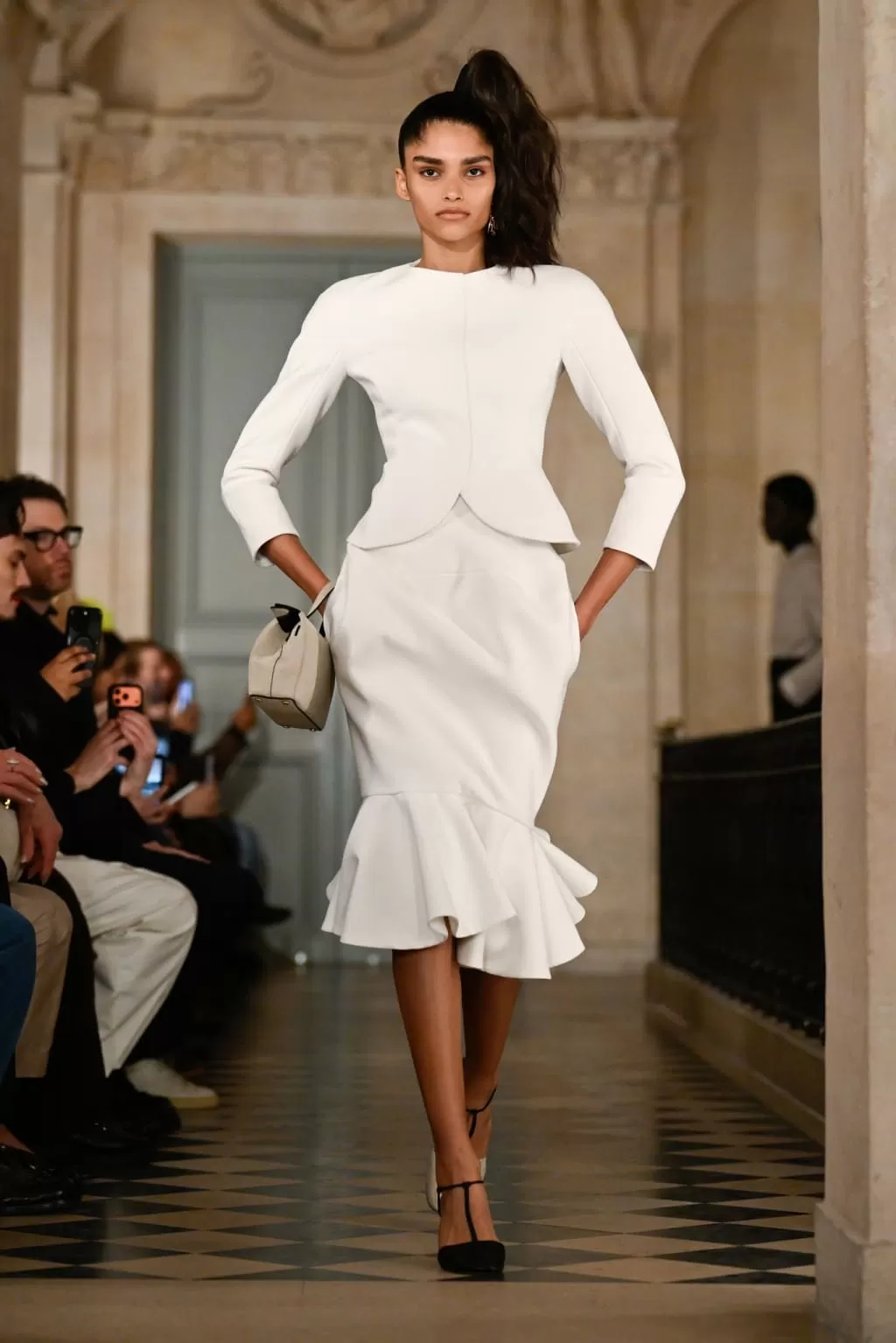
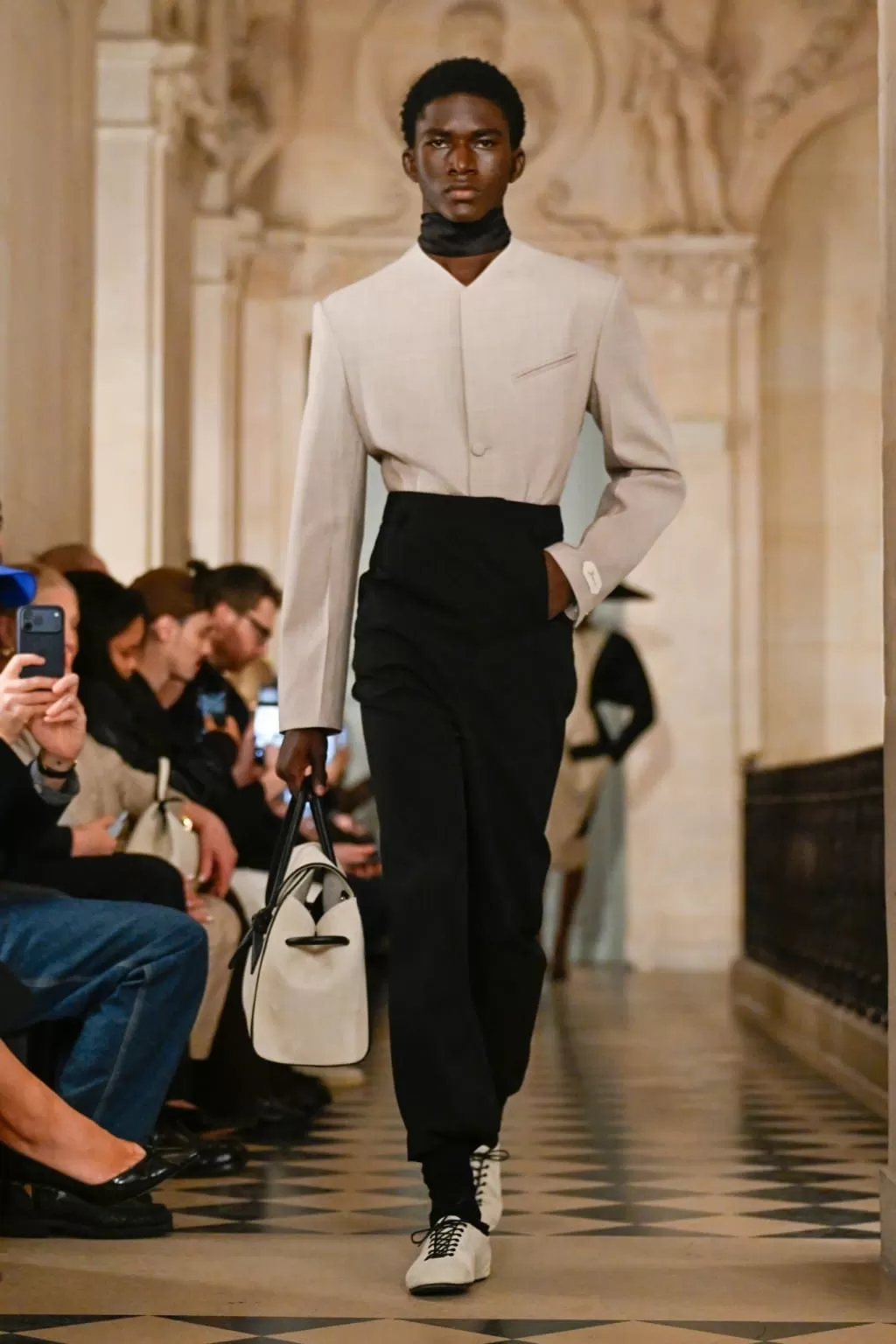
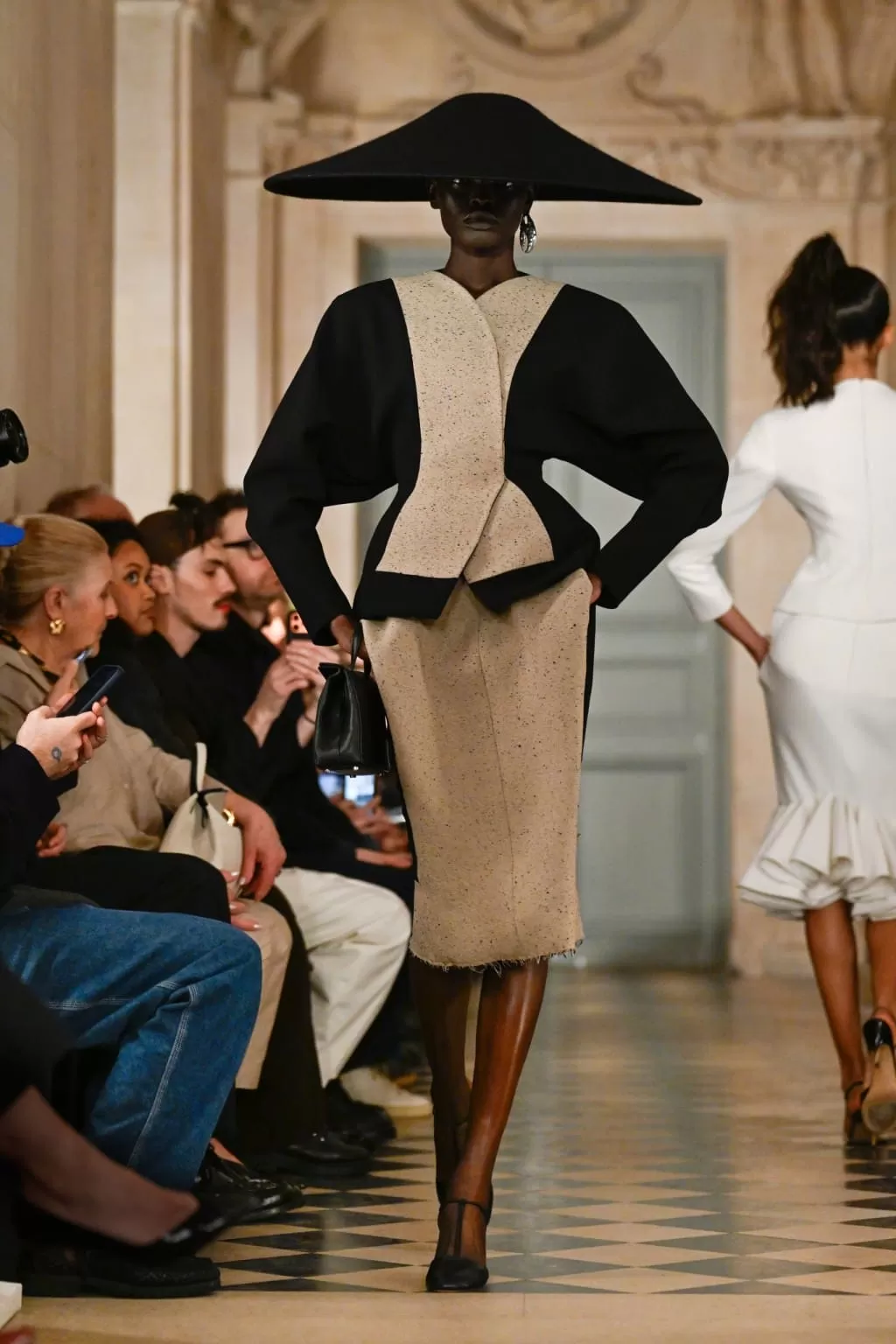
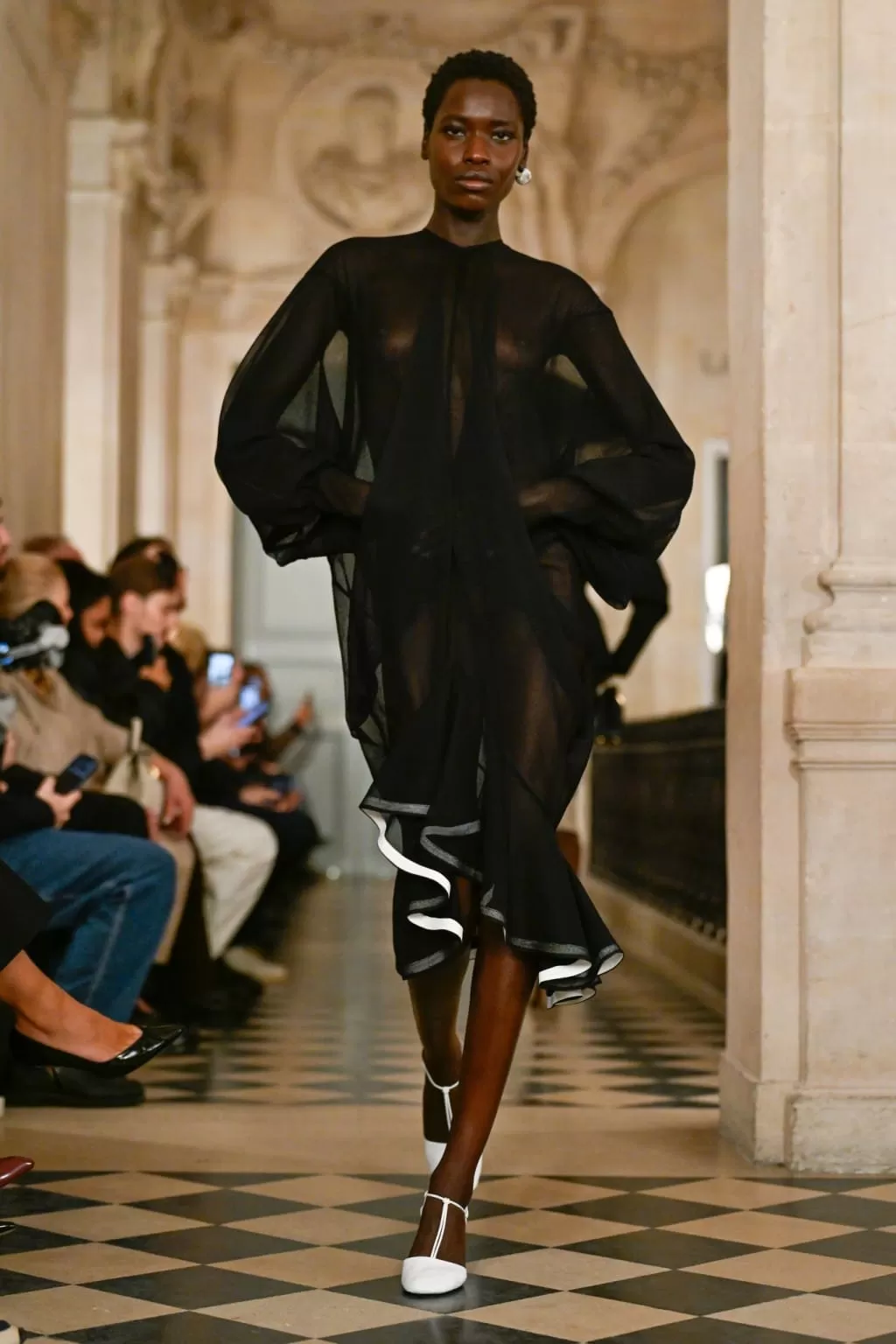
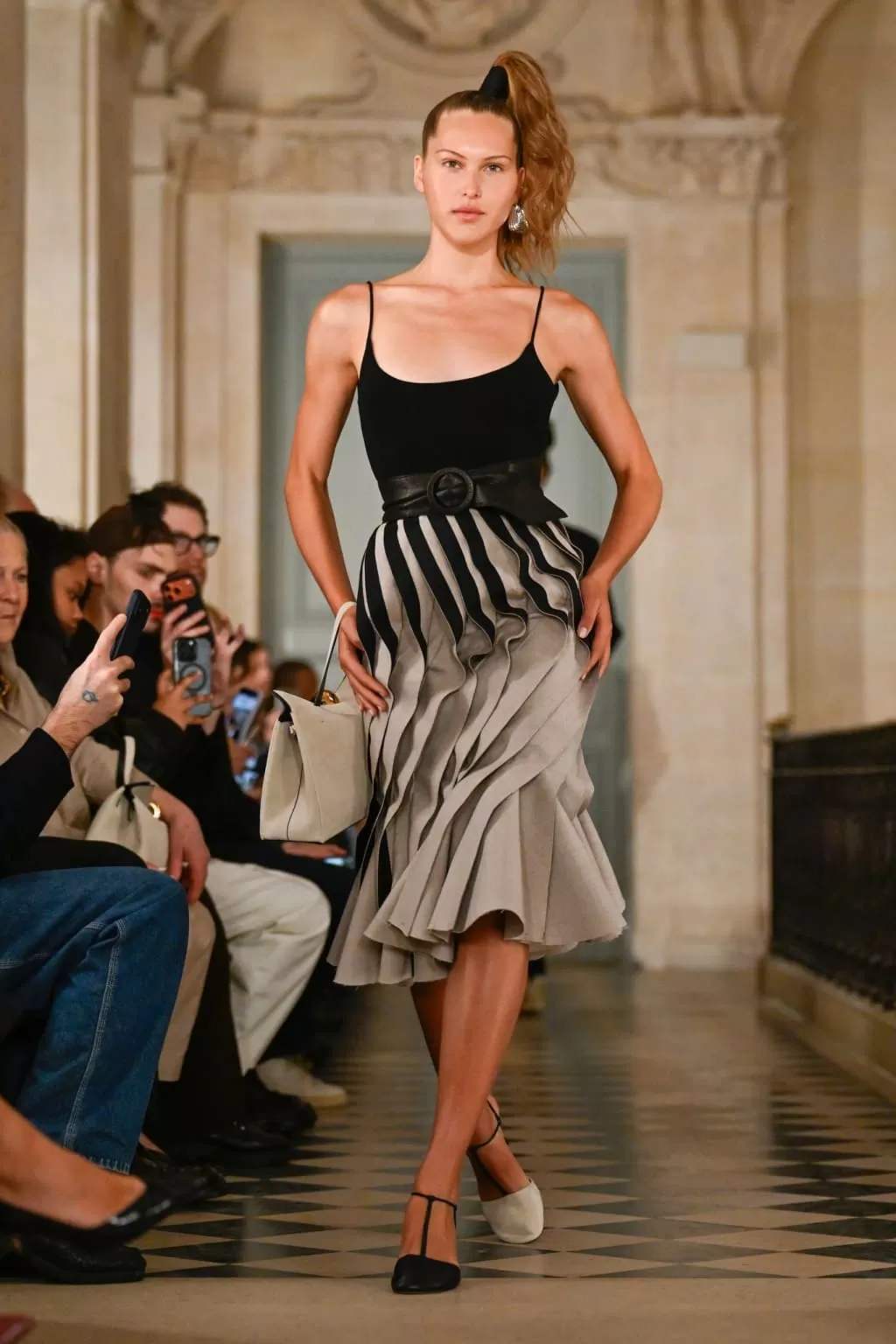
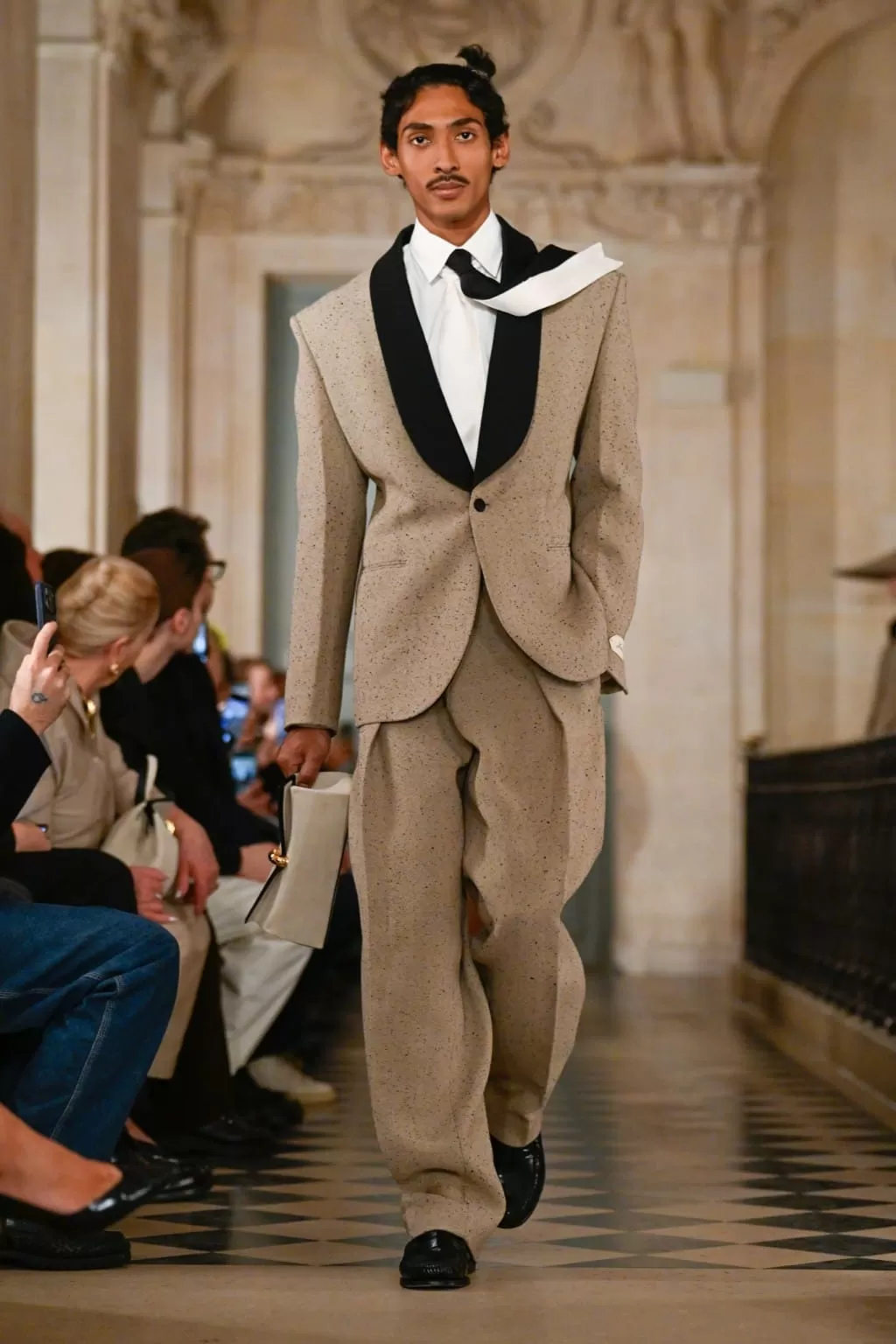
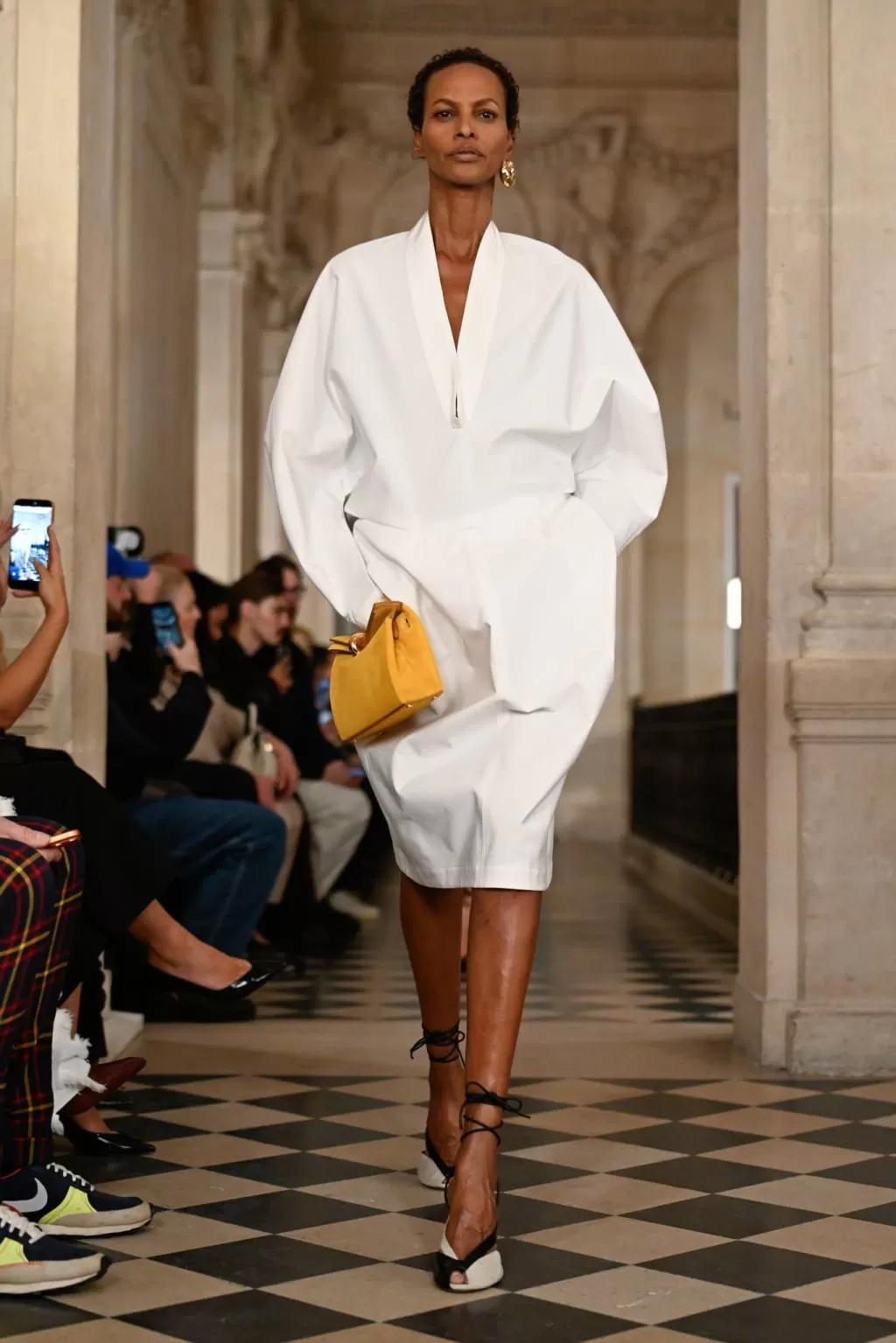
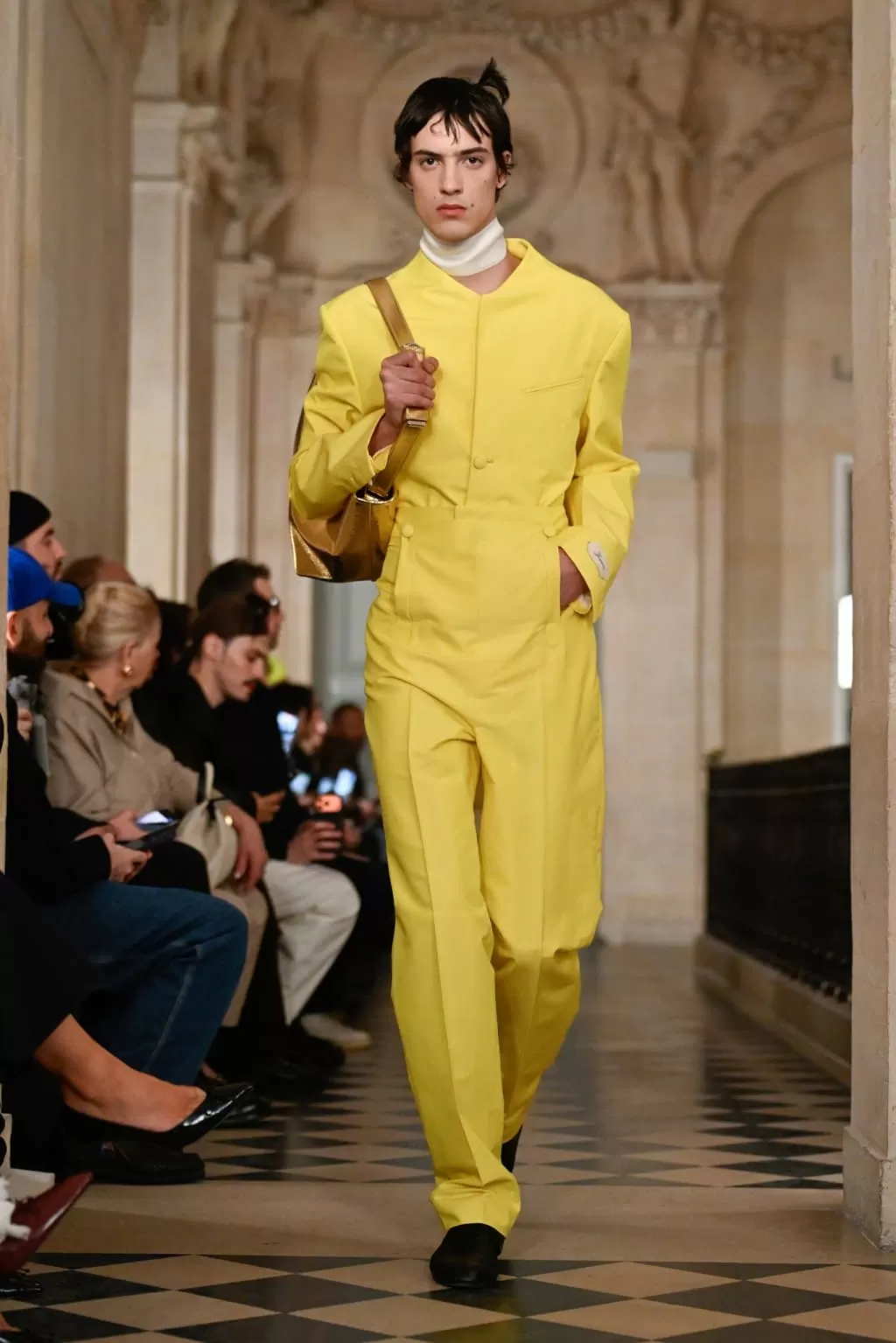
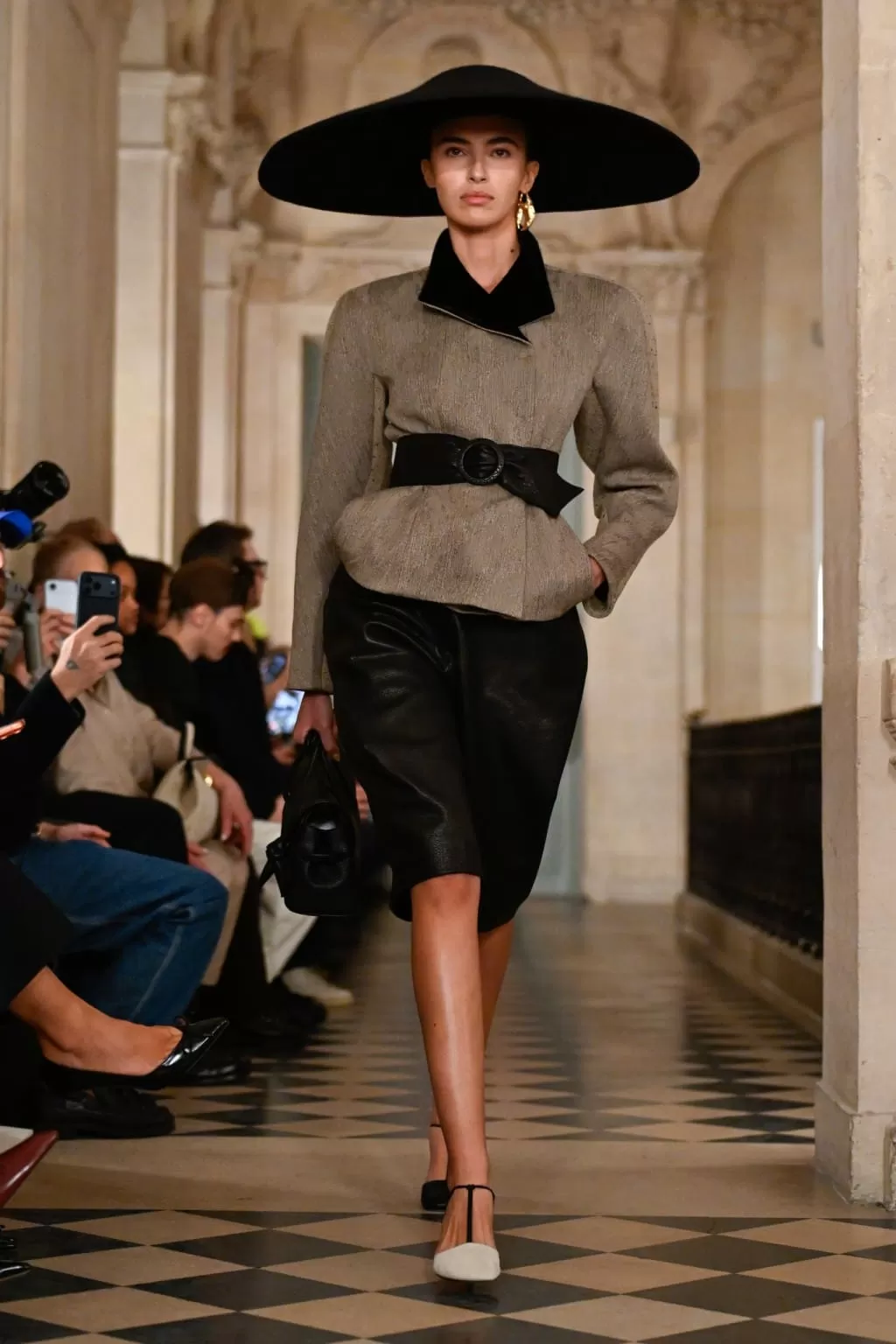
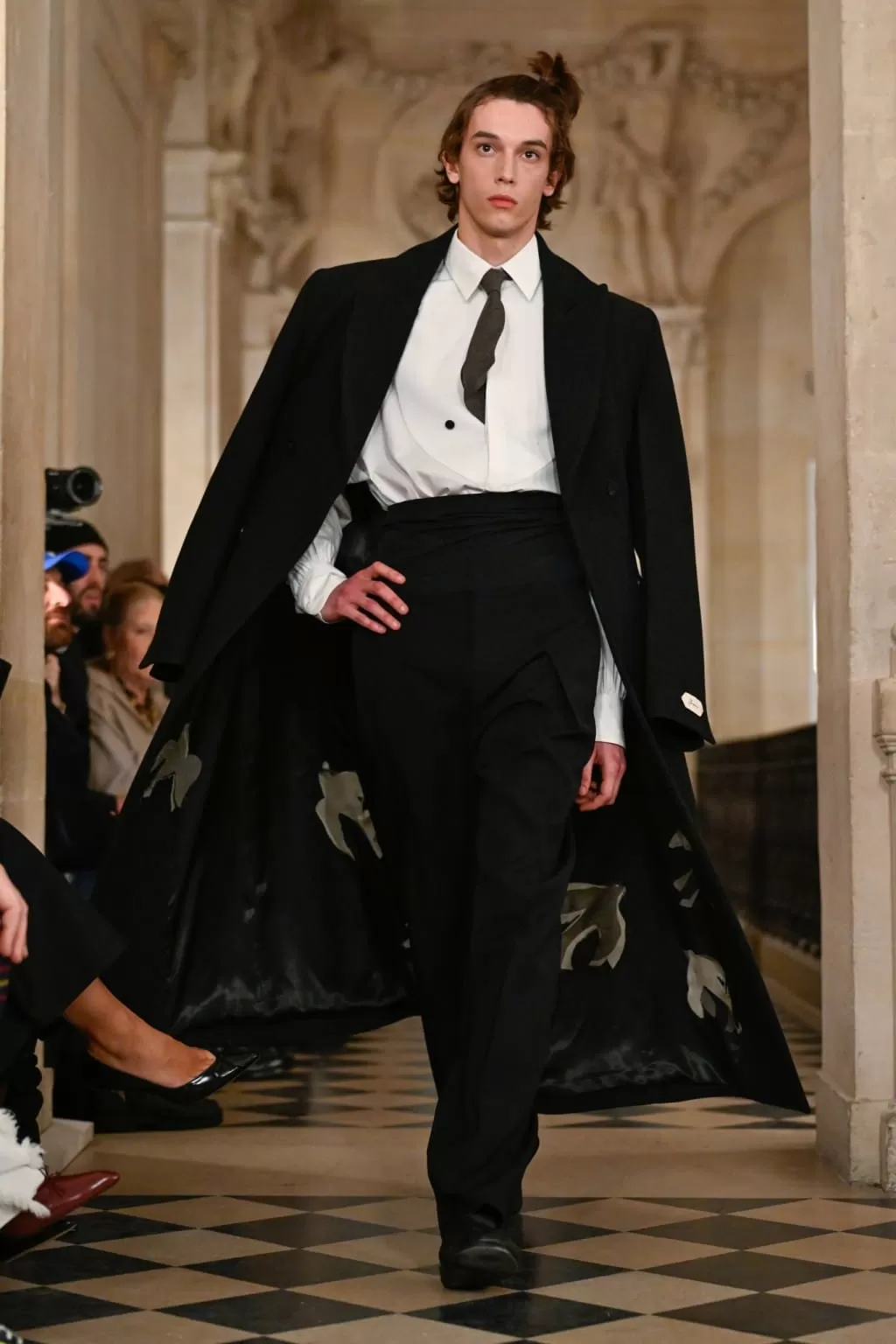
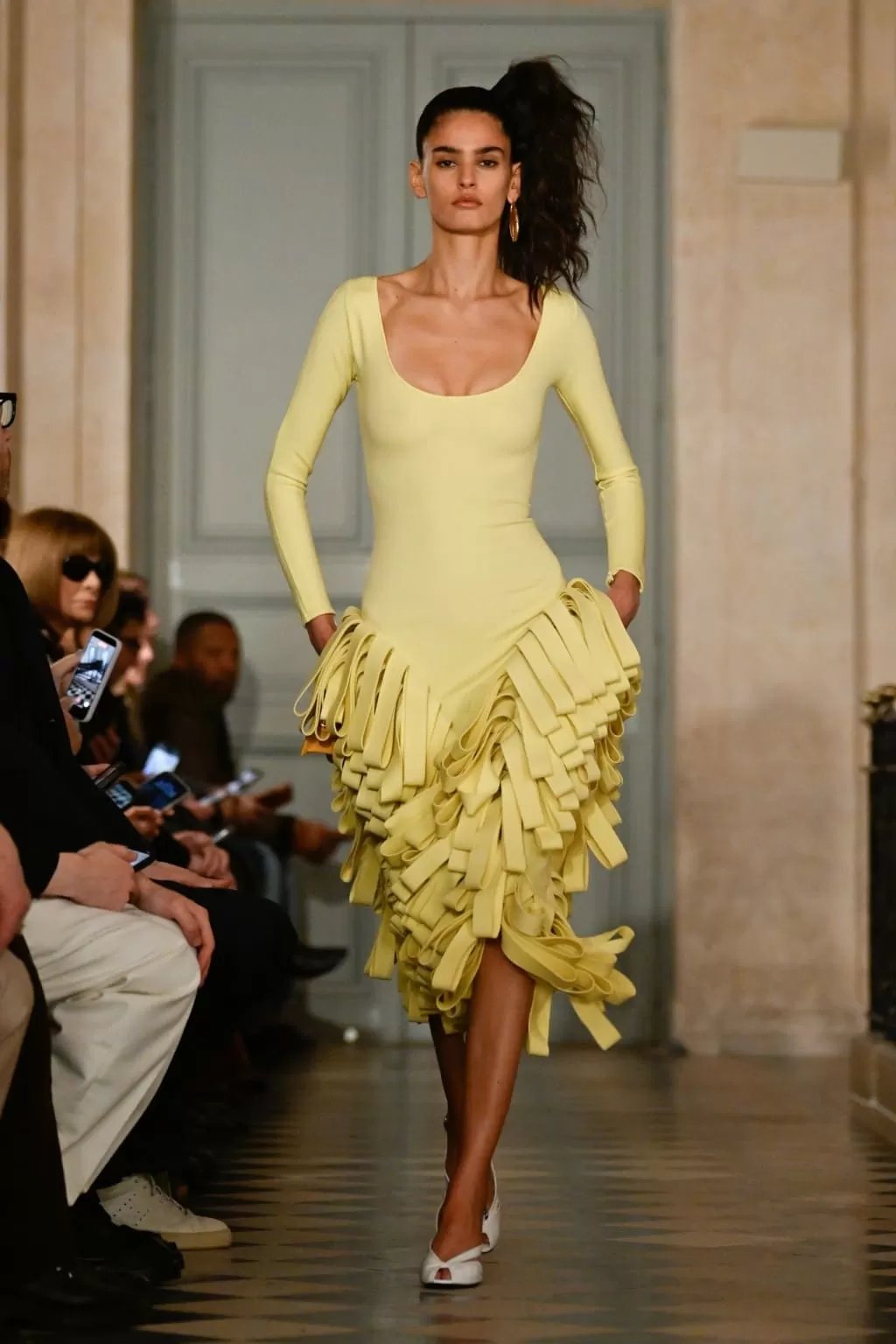
On the runway, many models wore the sculptural hairstyle, reinforcing the retro atmosphere that ran throughout the collection. Feminine silhouettes revolved around cocktail dresses with exaggerated structure, coats with batwing sleeves, elegant daytime suits and pencil skirts hugging the body before erupting into ruffles at the knee. It was an overtly expressive femininity — provocative at times — echoing the golden age of media glamour and unapologetic self-display.
Not every look landed with the same precision. Some veered close to caricature, with forced volumes and combinations that hovered between homage and parody. Yet that unevenness feels intentional. Jacquemus is not chasing perfection; he is chasing emotion. As the designer himself has stated, the aim was simple: to make something fun.
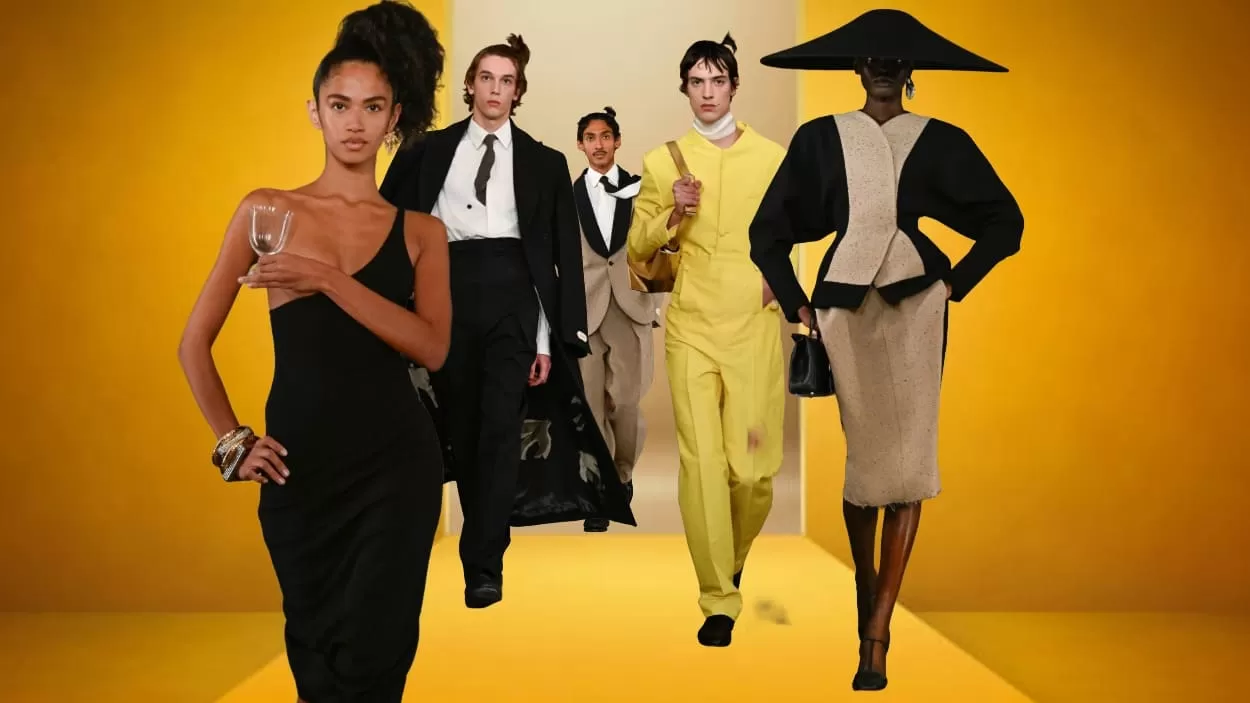
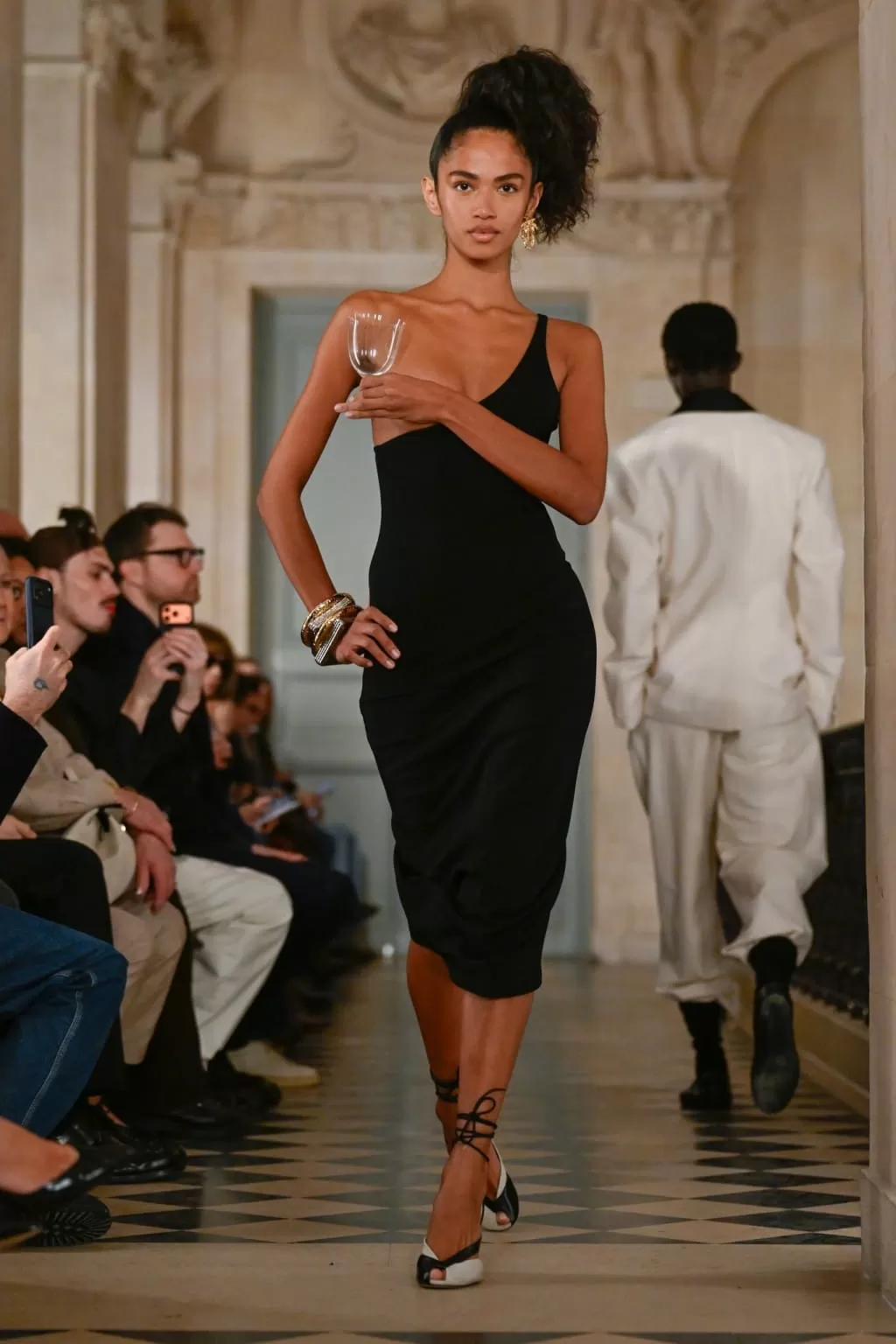
Among the clearest references was Paloma Picasso, a declared muse and emblem of a decade defined by aesthetic freedom and conscious excess. The final look — an asymmetrical one-shoulder dress with the model covering her chest with a glass of wine — directly evoked a celebrated Helmut Newton image, underlining the collection’s ongoing tension between sensuality, irony and elegant provocation.
When the collection shifted into more pared-back territory, its strength became most evident. Crisp white shirts, bra-style tops, draped knit dresses and well-constructed pencil skirts demonstrated Jacquemus’ confidence when balancing spectacle with wearability. These were the moments where the playful spirit met real-world wardrobe potential.
The menswear offering followed a similarly irregular rhythm but delivered some of the show’s freshest moments. Suits in unexpected colours, relaxed reinterpretations of classic tuxedo codes and a distinctly light-hearted attitude defined the line. According to the designer, men’s ready-to-wear now matches women’s in volume within the brand, driven especially by trousers, shirting and tailoring.
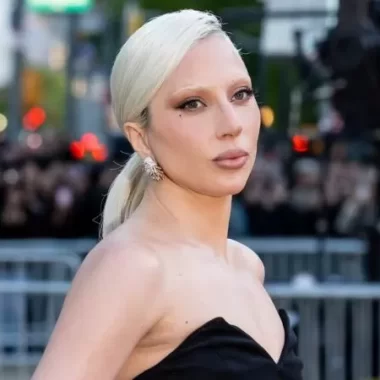
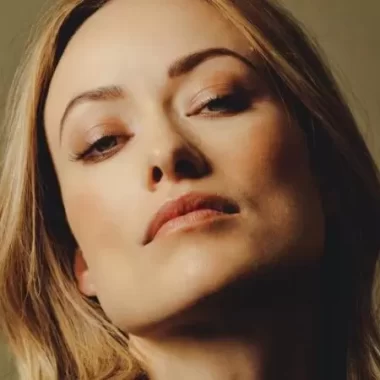
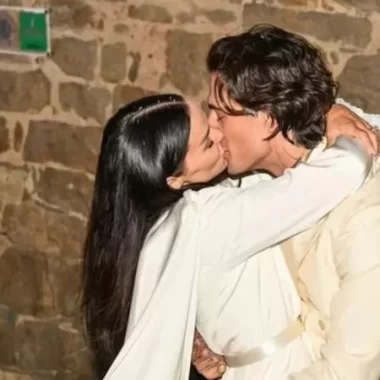
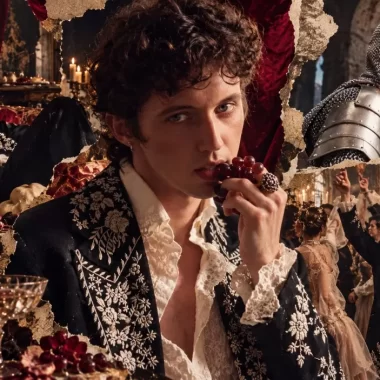
The setting amplified the narrative. Staged for the second time at the Musée Picasso, the venue was transformed into a private mansion mid-party. Feathers, sheer fabrics and looks flirting with costume coexisted within an openly celebratory atmosphere. The front row reflected the show’s cultural reach, with appearances from Elton John, Sophie Marceau, Josh Hartnett and figures from the K-pop world, reinforcing the event’s global resonance.
One of the most talked-about moments was the presence of Liline Jacquemus, the designer’s grandmother and newly appointed brand ambassador, seated proudly in the front row. Her quiet, emotional support added an intimate layer to a show defined by spectacle, reminding audiences that family, joy and fashion can comfortably share the same space.
With Fall 2026, Jacquemus does not aim to deliver a flawless manifesto or dictate fashion’s future. Instead, he offers something arguably more refreshing: permission to enjoy. A reminder that fashion can be a celebration, that nostalgia can be light rather than heavy, and that creative freedom sometimes lies in not taking everything too seriously. In an increasingly solemn fashion landscape, Jacquemus chooses play — and does so with a knowing smile.