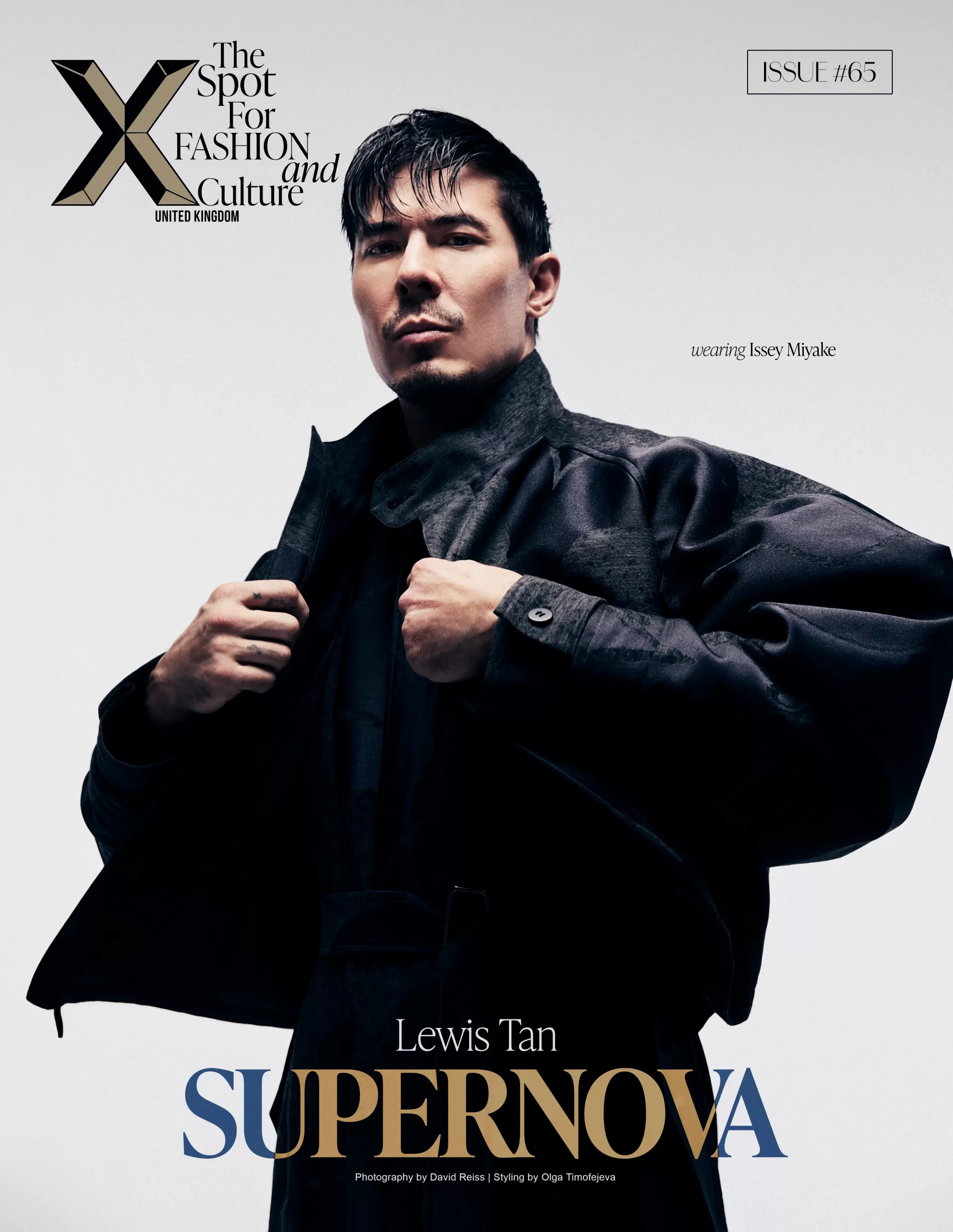

Between physical precision and a constant search for identity, Lewis Tan returns to ‘Mortal Kombat’ with a deeper, more conscious and personal perspective.
Returning to a universe like ‘Mortal Kombat’ is never just about stepping back into a character. It is about reconnecting with a physical language, a rhythm, and a global fanbase that doesn’t simply watch — it scrutinises. For Lewis Tan, this new chapter carries a heightened sense of responsibility, shaped as much by personal growth as by the voices of the audience itself.
“We learned a lot from the feedback of fans from the first film. We also saw what worked and what needed work, took all those things into deep consideration, and made big adjustments. Like you said, the universe behind this IP is huge. The fans are die-hard. I myself have been a fan since a young age, so we want to get it right and deliver one of the best action films of the year, doing justice to the characters and the things the games are most famous for. This one delivers without a doubt.”
That awareness of legacy is not only professional — it is deeply personal. Five years have passed since the first film introduced audiences to Cole Young, years marked by change, uncertainty, and a sense that the story had not yet reached its full potential. The pandemic altered the way the film met its audience, leaving behind a lingering feeling of something unfinished.
“The first film was a pivotal point in my career. I knew what the challenge was, to bring a new character into a world full of long-established characters, but I also know that I represent real martial artists who really perform their own fight scenes, and to deliver in this type of film honours the legacy of the past. A lot changed in those five years, in my life and in our world in so many ways. I did a lot of other films and also a few series, but because the first film never got a real theatrical release due to COVID, and we never really saw what the potential could have been at the box office, there was always this mystery and unfinished business I felt. On top of that, experiencing a real tour with the fans was one of my dreams, so now after all this time, it really is meaningful to see the response the film is having and just how many fans have come out for this, in full cosplay, ready to make this the proper event it deserves.”
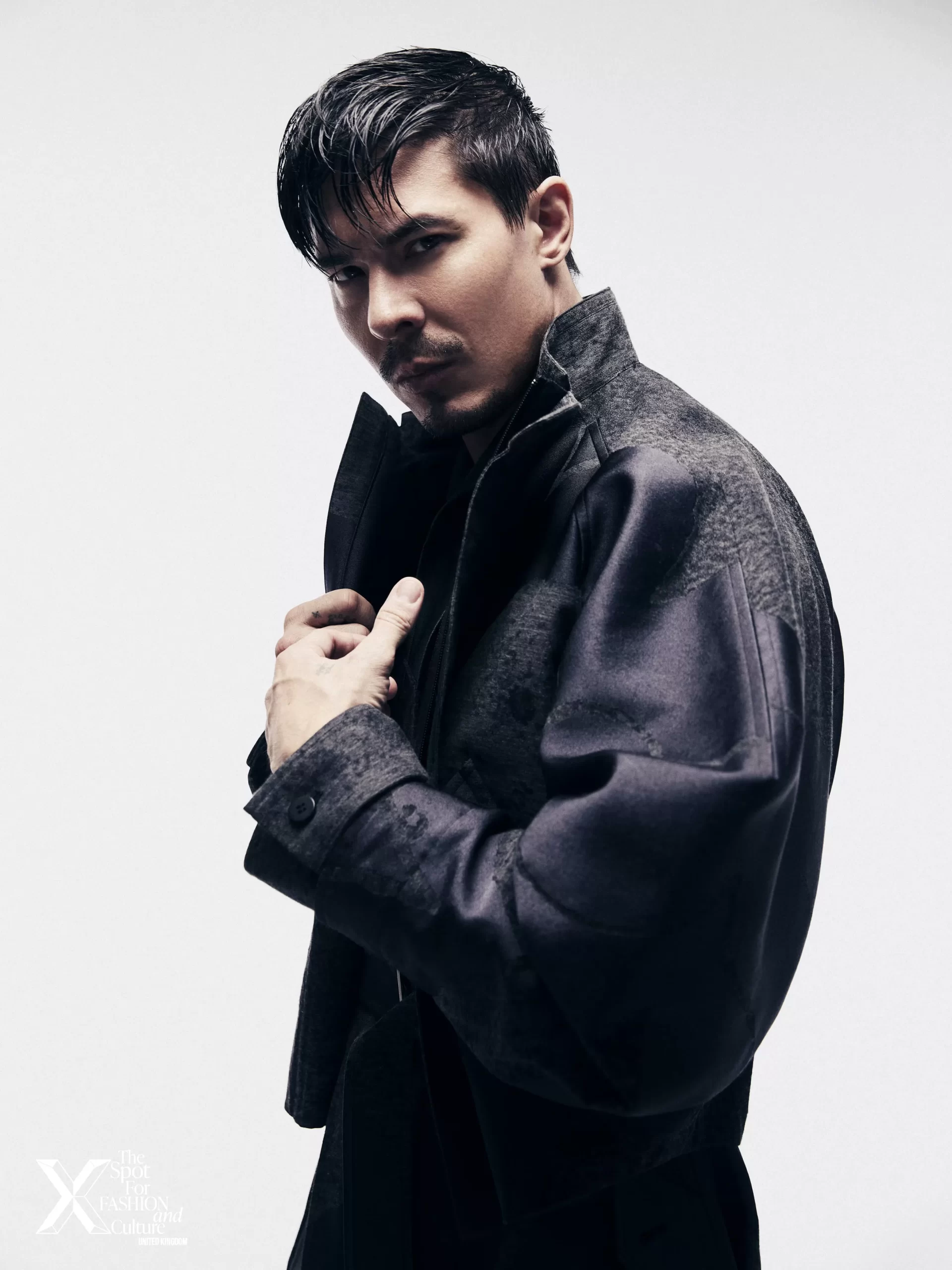
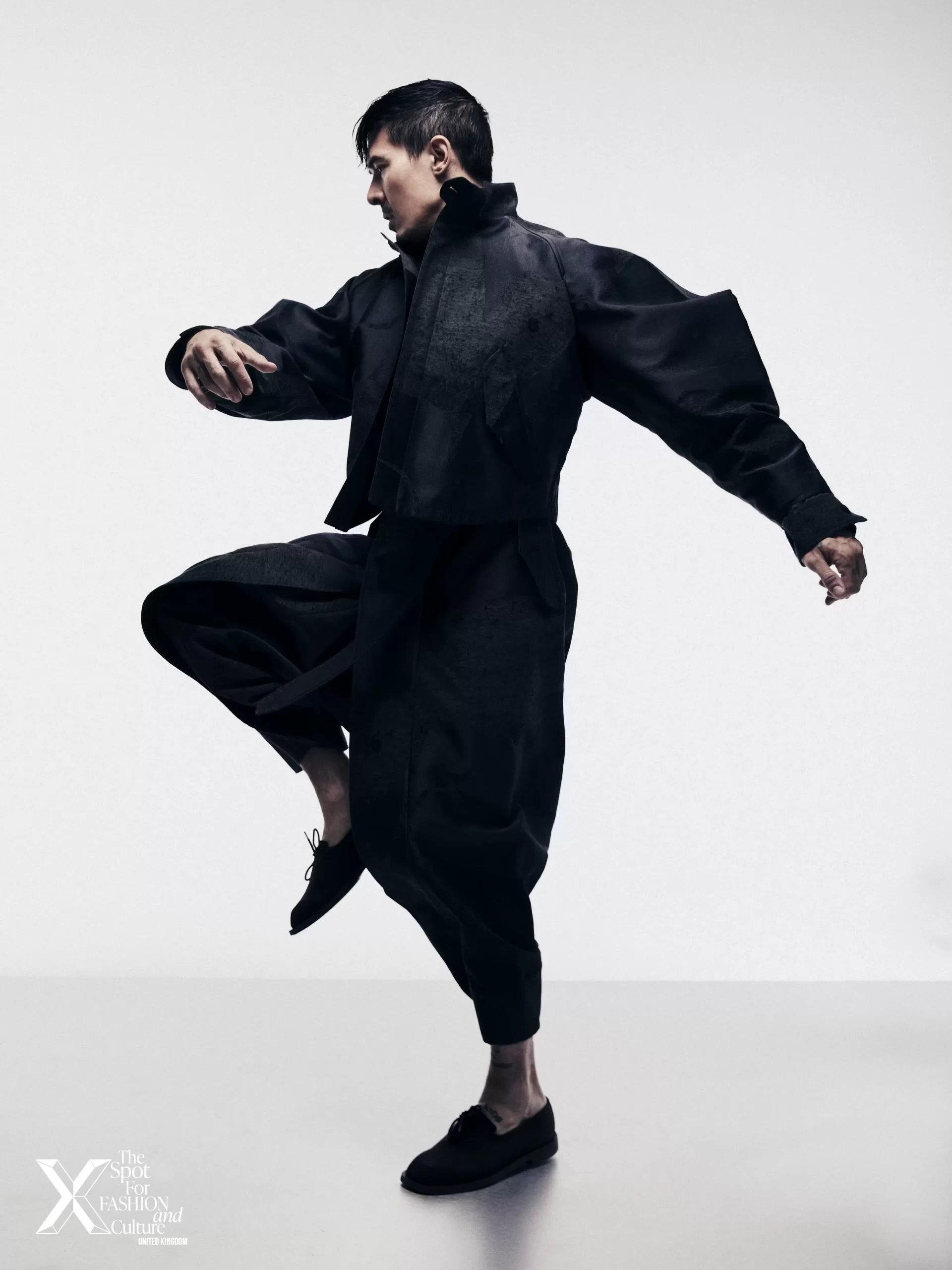
His connection to the franchise, however, goes far beyond the screen. Before embodying its protagonist, Tan was already part of its world — as a fan, as a fighter, as someone shaped by the discipline that defines the saga.
“It means a lot on many levels. It was my first lead role in a huge studio picture, it was nostalgia coming full circle as a kid that played the games obsessively, studied martial arts, fought and trained my whole life, and finally being able to show some of those skills in the movie. Hopefully I can influence the next generation of young talented kids to learn martial arts and see where it can take you. I didn’t have many of those role models as a kid in Hollywood, so to me, if a kid can see my performance and understand the beauty in the art form, this is more valuable than anything else I can get from the role.”
For Tan, preparation is not something that begins with a script — it is a constant state of being. His relationship with martial arts is not situational; it is foundational.
“Nothing was different for me because my mentality is always the same. I always stay in training, for my physical, mental, and spiritual state. I don’t train for any film because I have been doing martial arts for 20 years. I may learn the choreography, a new skill or weapon, but really martial arts is a lifestyle. Even if I am doing a comedy film with no action, I will be training after I wrap. If I am on vacation I am training — less, but still training. It is something I love that connects me to a deeper part of myself. It grounds me in my body and emotions, so the acting, the truth, can be born from there. In all parts of life, it has an effect. The beauty and the violence, the balance of peace and power. Discipline and structure, flow and endless potential.”
That philosophy is rooted in his upbringing. “My father was a national champion martial artist with many professional fights. I started when I was very young and never stopped, only grew more in understanding and passion as I got older.”
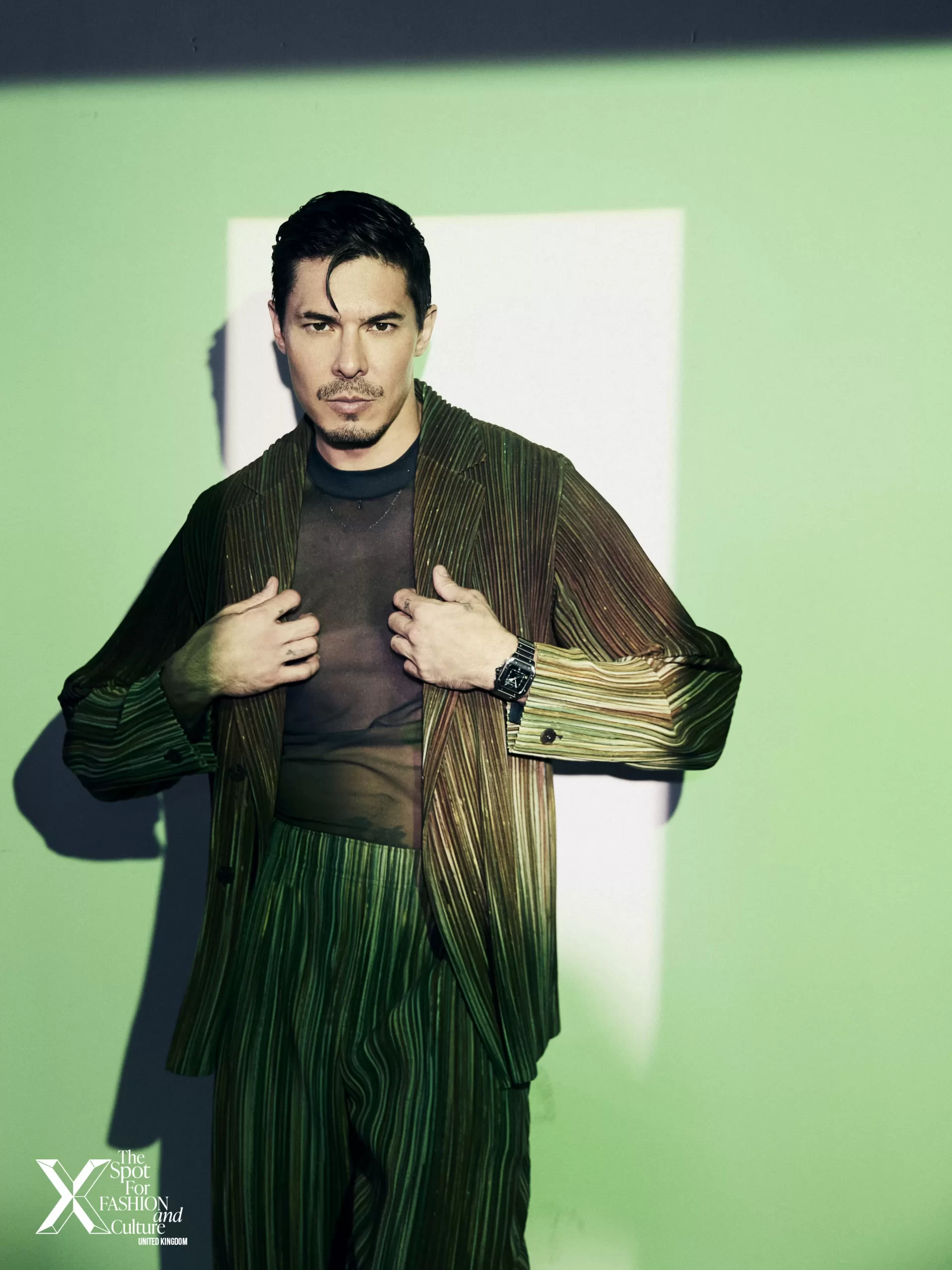
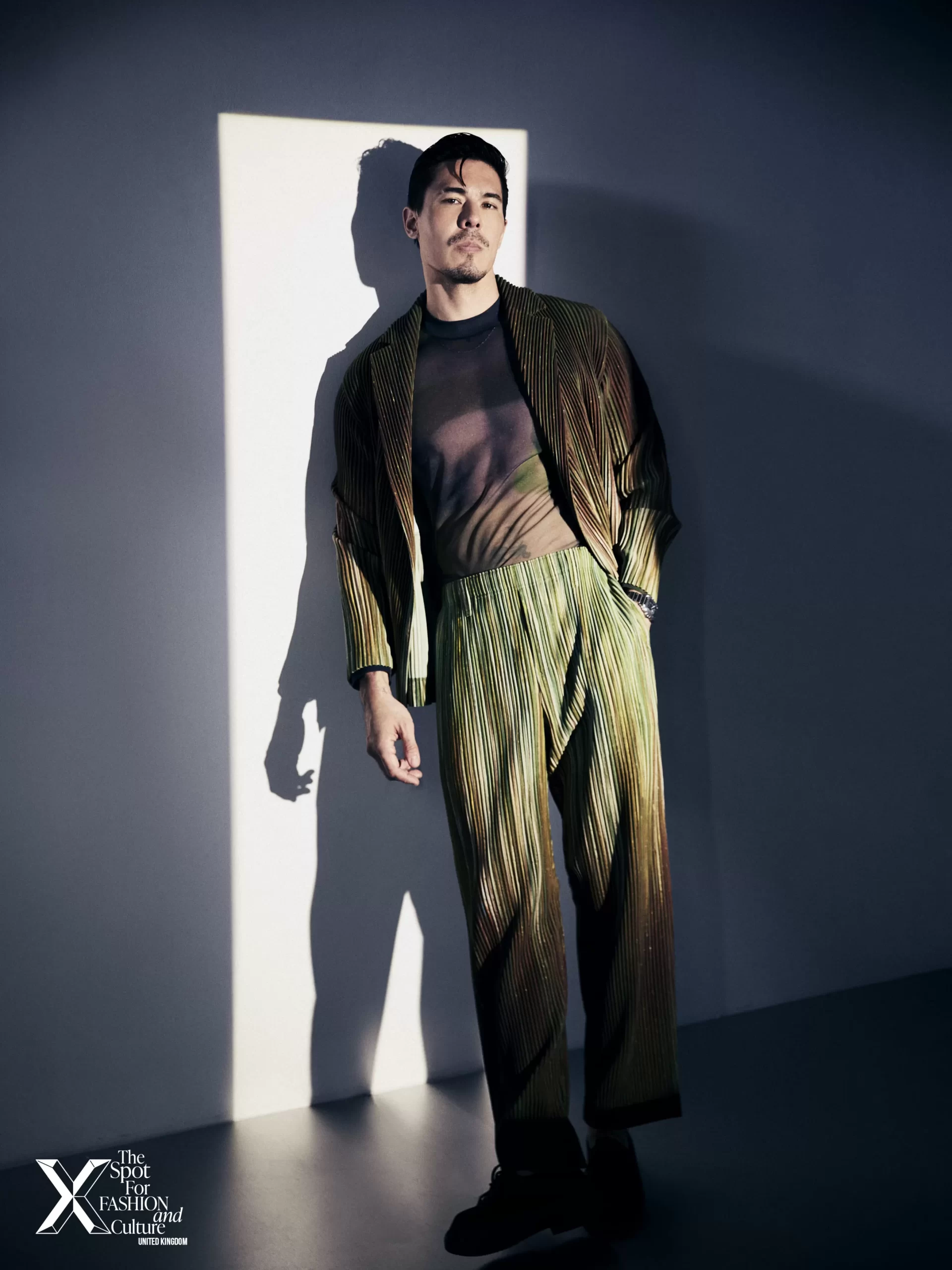
WATCH: Cartier
Even the uncertainty surrounding his casting now feels aligned with a larger sense of purpose. “There was talk about other roles, but what is meant for you will find you. It was the most challenging and risky role, and I like to take risks. Everything happened as it should.”
Still, his career has not been shaped by chance, but by persistence — and by an acute awareness of the realities of the industry. “I think that no matter what, no one really will give you an opportunity until you prove yourself worthy of it. A catch-22, maybe, but that is the business. A rare case or two you get lucky. I don’t believe in luck — I believe in outworking everyone else and proving yourself. I don’t want to bring race into it, but it is hard to explain unless I do. As an actor, you are already up against incredible odds just to be working; as an Asian actor, those odds become ridiculous. For me, I am mixed. I have had to fight for every role, from one word, to one line, to one sentence, all the way to a lead in a film. No shortcuts, and I am grateful for it.”
“Wait for no one to give you the chance — create it, and take it.”
Lewis Tan
That struggle, he insists, became his greatest education. “I learned so much from that. Maybe the best time in my career now was learning and struggling through all that, so you need patience, you need a strong grasp on who you are and what you want to say, and lastly, the will, the passion, and the drive to do it at all costs, no matter what. Wait for no one to give you the chance — create it, and take it.”
While action has defined much of his trajectory — from ‘Deadpool 2’ to the wider Marvel universe and beyond — his ambitions stretch far beyond physical roles. “I studied acting for a long time. I definitely feel there are other genres or characters I can play that I haven’t been given a shot to play yet, which is fine — the time will come. I am also really happy making the best action films and shows around, I am passionate about that, and not many people are even in that category because of the work and dedication it takes. I want to create a legacy of films I am proud of, which is most important to me, but yes — I want to do a musical, a romance, which seems to be rare in Hollywood for Asian males. I love horror, dark dramas, want to play a vampire, and a ton of next-level action films. Very few people have achieved this except maybe Tom Cruise, who is a big inspiration to me. Let’s see — I am not stopping anytime soon.”


TROUSERS: Mr. P
SHOES: Fendi
Fashion, too, becomes part of that wider language of expression. “To me, it is just another part of expression, of showing emotion. I think in the right outfit you feel different, almost like a new character, or maybe you feel really like yourself, or a way to show a different part of yourself. I think it is important in films and in life, generally. I love the art of all forms, so how you dress and feel can be an art. In that sense, I love it and want to work or collaborate with artists and brands that feel true to me and my passions. I have downsized my closet a lot, and I feel a great freedom in that, just having pieces I really love and not overdoing it.”
His sense of identity, however, is perhaps most shaped by movement — by existing between cultures rather than within a single one. “Travelling and growing up around different cultures probably shaped me more than anything. Opening your mind broadens your perspective, enriches you in culture, and gives you things to explore, things to question, and has made me feel eternally grateful to be here, this time on this earth, and get to do what I love. I am currently without a home base, but I also have many homes in different countries, so I get used to just being comfortable in the present moment. Everything can be born from that present state. I feel at home in London, LA, Asia, Spain, and a few other places where I have spent time and gotten to know the cultures.”
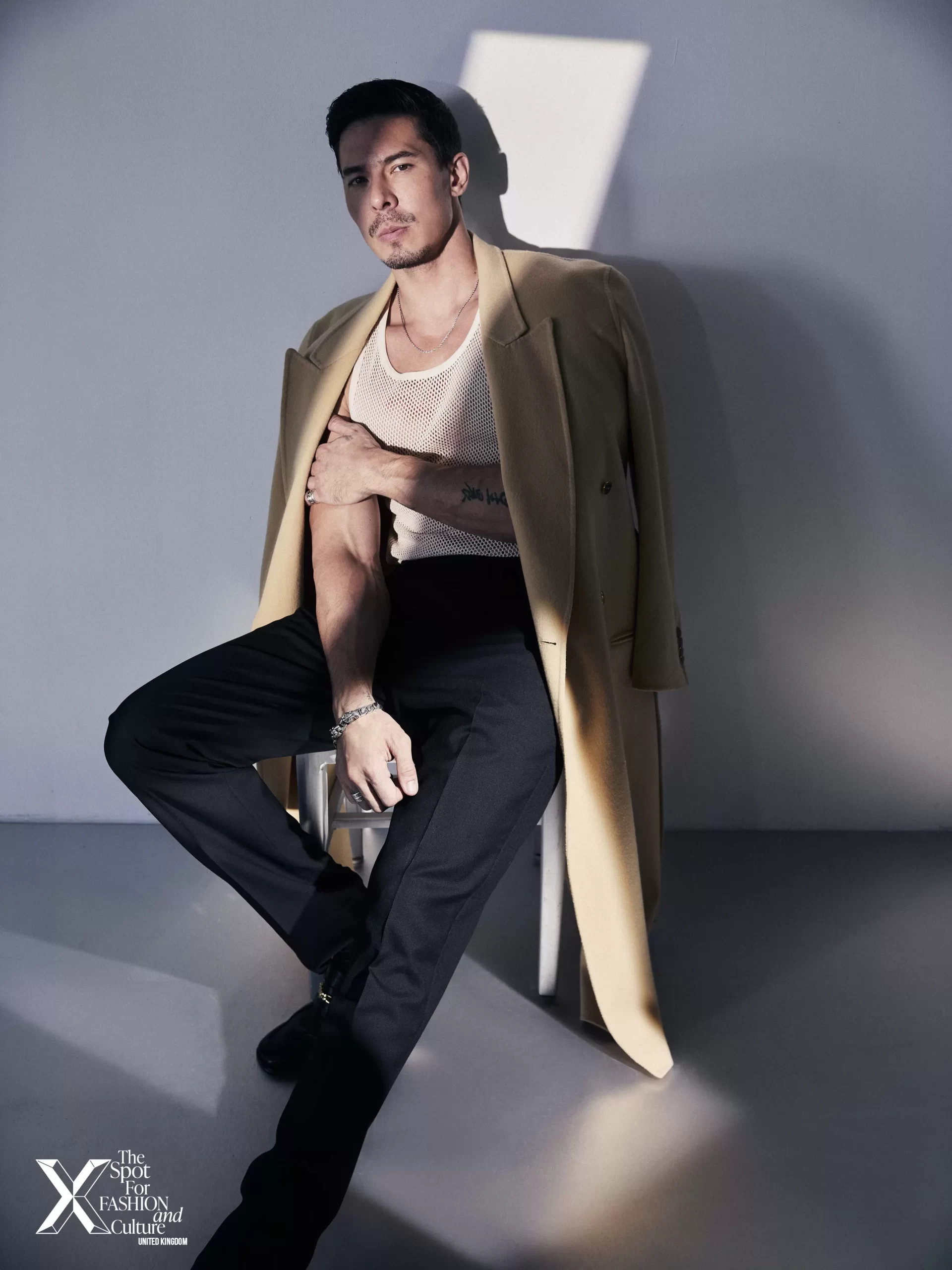
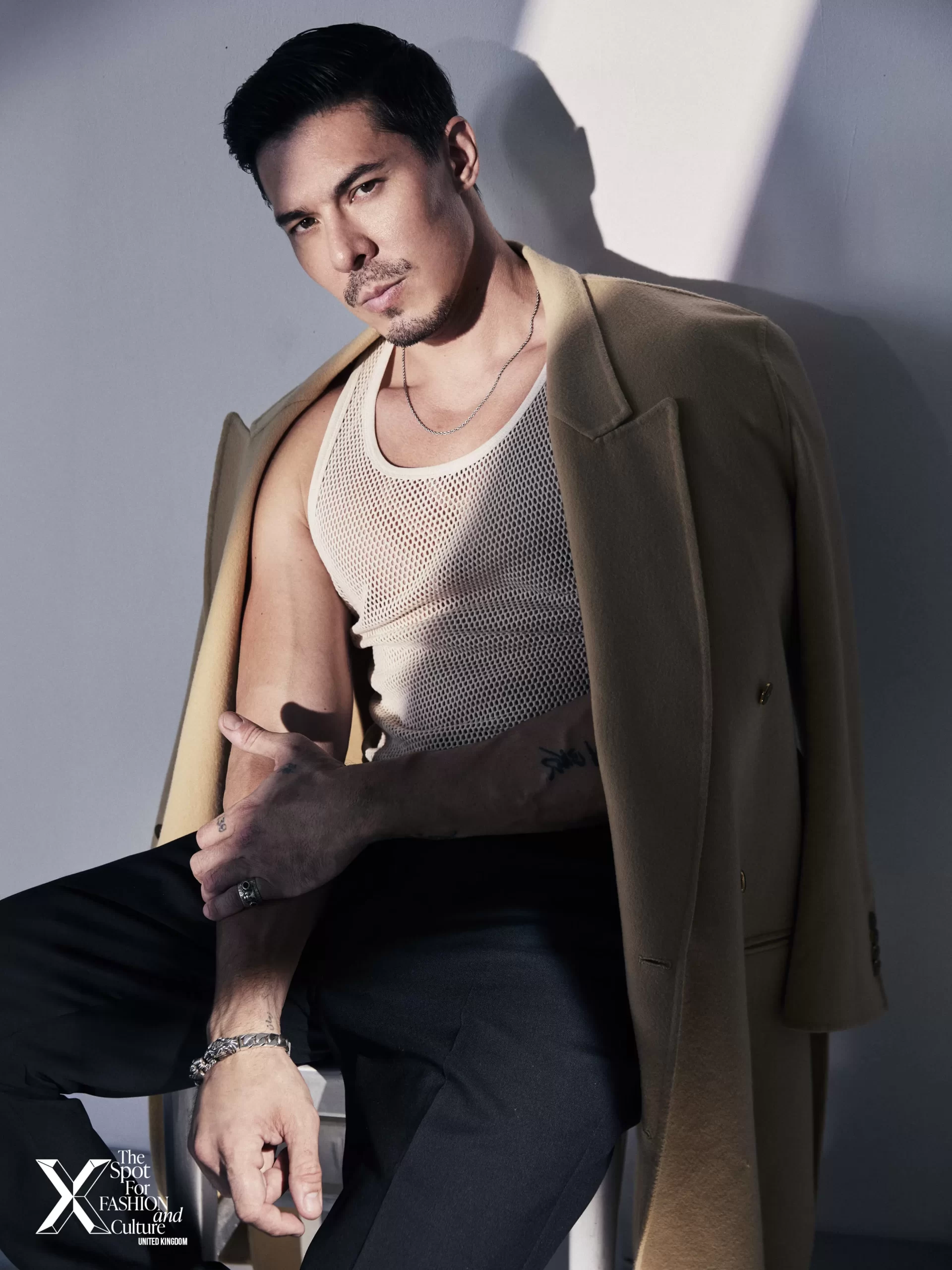
TROUSERS: Mr. P
That perspective inevitably shapes his view on broader social conversations, including immigration. “We are talking about human beings, and it turns to numbers, labels, and political talking points, and sometimes we can lose sight of the fact that we are talking about humans making decisions about their lives, their families, their futures. I don’t like the ‘us vs them’ mentality; it removes room for empathy and makes it hard to have nuanced conversations. We should have more room for dignity, context, listening, and humanity. When you hear people’s stories, it makes it harder to treat the issues as one-dimensional.”
Now, after a project of this scale, his ambitions are less about scale itself, and more about depth. “I am looking forward to becoming a more present man, a better artist, more compassion, deeper passion, and creating art that is meaningful to me in films of every genre. I want to do more behind the camera and have a lot of projects I am working on that are challenging and scary, and that is how I know it is right. I will let the work answer the rest.”
‘Mortal Kombat 2’ is currently in cinemas across the UK.