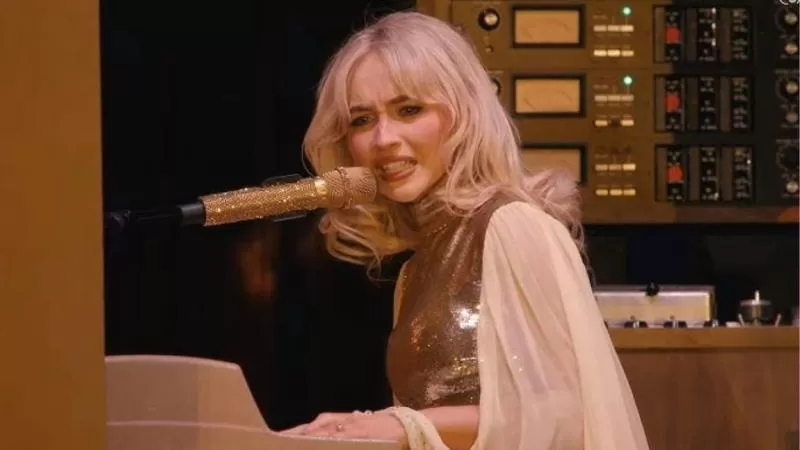

The singer addresses backlash after confusing a traditional Arabic chant during her Coachella set, sparking debate around cultural sensitivity in live performances.
Sabrina Carpenter has spoken out following the controversy surrounding her performance at Coachella, after mistakenly identifying a zaghrouta — a traditional Arabic celebratory chant — as yodelling. The moment, which took place live on stage, was captured on video and quickly went viral across social media.
During her headline set, while seated at the piano, the singer reacted to a sound coming from the crowd, saying: “I think I heard someone yodelling. Is that what you’re doing? I don’t like it.” When an audience member clarified that it was a cultural expression, Carpenter continued with remarks that were perceived as dismissive, prompting discomfort and immediate online criticism.
Just hours later, the artist took to her social platforms to issue an apology. “My apologies, I didn’t see the person and couldn’t hear clearly. My reaction came from confusion, sarcasm and no bad intention. I could have handled it better. I now know what a zaghrouta is,” she wrote, acknowledging the mistake and adopting a more reflective tone.
The reaction online was swift and divided. Many users highlighted the importance of understanding cultural context, especially in global platforms like Coachella, where audiences are diverse and highly engaged. Others, however, appreciated the speed of her response and the willingness to recognise the misstep.
The incident occurred during a performance that was otherwise one of the most talked-about of the festival. Carpenter’s set featured appearances from notable figures including Sam Elliott, Will Ferrell and Susan Sarandon, who delivered a monologue during one of the show’s transitions, adding a theatrical layer to the performance.
Her show has been described as energetic and focused on her most recognisable hits, though some critics pointed to moments of uneven pacing throughout the set. Despite this, the controversy has become one of the defining talking points surrounding her appearance at the festival.
Beyond the performance itself, the episode has reignited a broader conversation about cultural sensitivity in live entertainment. In an era where global audiences converge both physically and digitally, spontaneous interactions on stage can carry amplified consequences. What might be intended as humour or improvisation can quickly be interpreted differently depending on cultural context and awareness.
For artists operating on international stages, this moment serves as a reminder of the complexity of engaging with diverse audiences in real time. As live performances continue to prioritise authenticity and direct interaction, the balance between spontaneity and awareness becomes increasingly important.
Carpenter’s response suggests a recognition of that balance. While the moment sparked criticism, it also highlights how quickly narratives can evolve — and how accountability, when addressed directly, can shift the conversation.