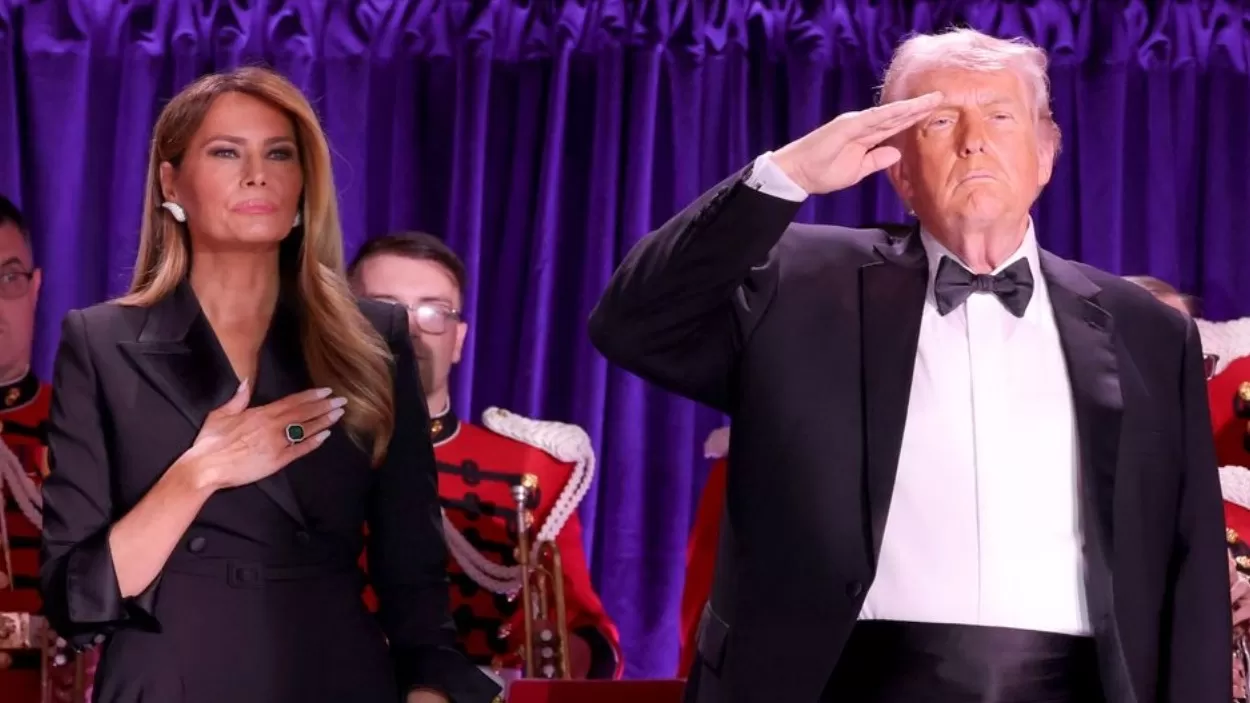

A shooting incident at the White House Correspondents’ Dinner sparked tension and revealed Melania Trump’s reaction in critical seconds.
The traditional White House Correspondents’ Dinner turned into a scene of intense tension after an unexpected episode of gunfire interrupted the evening, triggering moments of genuine panic among attendees. What was meant to be a night defined by protocol, political humour and media exposure quickly escalated into an emergency that forced immediate activation of security protocols.
According to Donald Trump, speaking shortly afterwards from the West Wing, the incident began with a noise that initially did not seem alarming. “It’s always shocking when something like that happens. The First Lady was to my right and I heard a noise… I thought it was a tray dropping,” he recalled. However, within seconds, the situation shifted dramatically as multiple gunshots were heard, setting off a chain reaction inside the Washington Hilton ballroom.
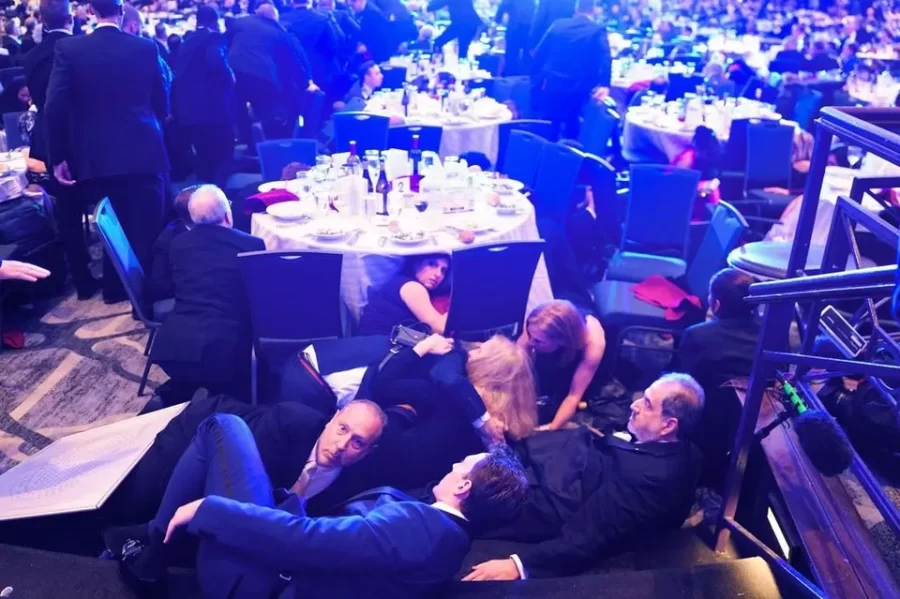
The initial confusion quickly gave way to chaos. Some guests immediately took cover under tables, while others hesitated, trying to understand what was happening. “It was a firearm and some people understood right away, while others didn’t,” the president added, describing the uncertainty that filled the room. In that moment, Melania Trump’s presence took on unexpected significance.
According to Trump, the First Lady recognised the severity of the situation almost instantly. “Melania was aware of what had happened and I think she knew,” he said, emphasising that she grasped the danger immediately. He later described her reaction as someone identifying a “strange noise”, calling it “a pretty traumatic experience for her”. His remarks have since been interpreted as one of the most striking testimonies from the incident.
Footage captured inside the venue highlights how quickly events unfolded. Within seconds, the Secret Service entered the room, launching a high-security operation. Agents equipped with tactical gear moved onto the stage and began evacuating key figures, while attendees watched in shock.
The president’s evacuation was immediate. “Within seconds we were out the door and heading to a secure location,” Trump explained, also praising the response of law enforcement: “The performance of the Secret Service and the police was very good.” The speed of the intervention proved crucial in containing the situation and preventing further consequences.
The Metropolitan Police Department of Washington, D.C. later confirmed that the alleged shooter, identified as 31-year-old Cole Tomas Allen, had been staying at the same hotel where the event was held. Authorities are now investigating how the suspect managed to get so close to the main ballroom, raising questions about security protocols.
Despite the severity of the incident, the president struck a firm tone regarding the future of the event. Rather than cancelling it altogether, he confirmed it would be rescheduled. “We expect to hold it within the next 30 days,” he said, noting that he had prepared a particularly sharp speech for the evening.
Beyond the immediate impact, the episode also revealed a more personal dimension. Trump shared his wife’s prior concerns about the risks associated with his role. “She told me many times, ‘you have a dangerous job’,” he revealed, highlighting the level of exposure faced by the presidential family.
The incident reopens the debate around security at high-profile institutional events and the effectiveness of emergency response protocols. At the same time, it humanises a moment that, beyond its political implications, reflects an instinctive reaction to danger.