
The Prince and Princess’s recent visit to Scotland revived a centuries-old tradition that explains their temporary change of title
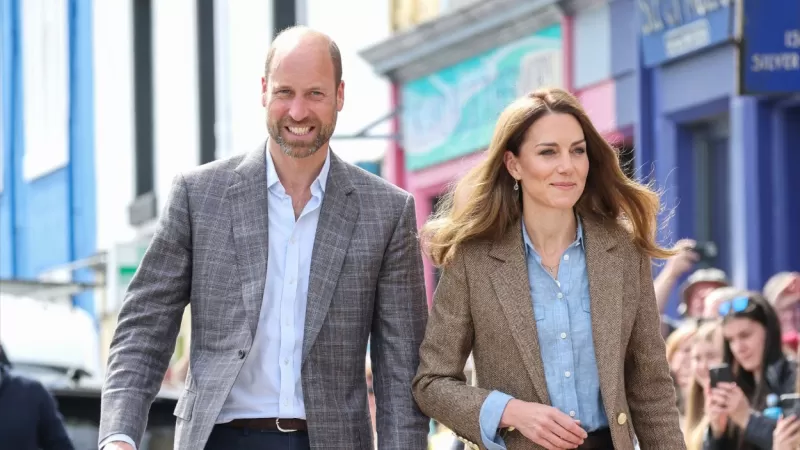
During their official visit to Scotland this week, Prince William and Catherine, Princess of Wales drew attention not only for their institutional agenda, but also for a seemingly minor detail that sparked curiosity among followers and the media: they stopped being introduced as the Prince and Princess of Wales and instead adopted the titles of Duke and Duchess of Rothesay. Far from being a recent strategic or symbolic decision, the change is rooted in a tradition that dates back more than seven centuries.
On Scottish soil, the heir to the British throne does not use the title Prince of Wales. Instead, he automatically assumes that of Duke of Rothesay, a designation created in 1398, when Scotland was still an independent kingdom and long before its union with England. This convention has remained intact across generations and is activated every time the future monarch crosses the northern border.
Since becoming Prince and Princess of Wales in 2022, William and Kate have held multiple noble titles that adapt according to the territory they are visiting. In addition to Rothesay in Scotland, they are Duke and Duchess of Cornwall in England and also hold the titles of Earl and Countess of Chester. This system is not merely decorative; it forms part of the historical architecture of the British monarchy and its relationship with the different nations of the United Kingdom.
The use of the Scottish title during their time in cities such as Stirling and Falkirk was not only correct from a protocol standpoint, but also particularly significant at a moment when the Crown is seeking to reinforce its institutional presence in Scotland. A quiet gesture, yet one rich in symbolism, underscoring continuity, territorial respect and tradition.
The visit also comes at a pivotal stage for the couple. In recent months, Prince William and Princess Kate have consolidated their position as the most visible face of the British Royal Family, expanding their public engagements and taking on an increasingly central role ahead of the structural changes anticipated for 2026. From their move to Forest Lodge to the broadening of their official duties, everything points towards a gradual preparation to assume greater responsibilities.
In this context, the change of title was neither an isolated gesture nor an anecdotal curiosity, but rather a clear example of how the British monarchy continues to operate according to historical codes that, though discreet, still shape every move it makes. For William and Kate, every detail matters.