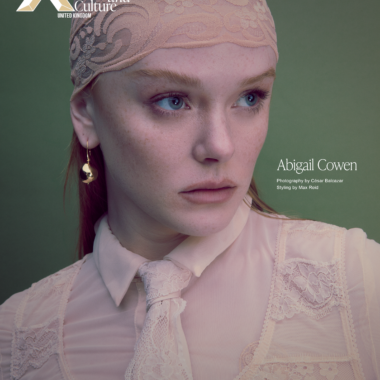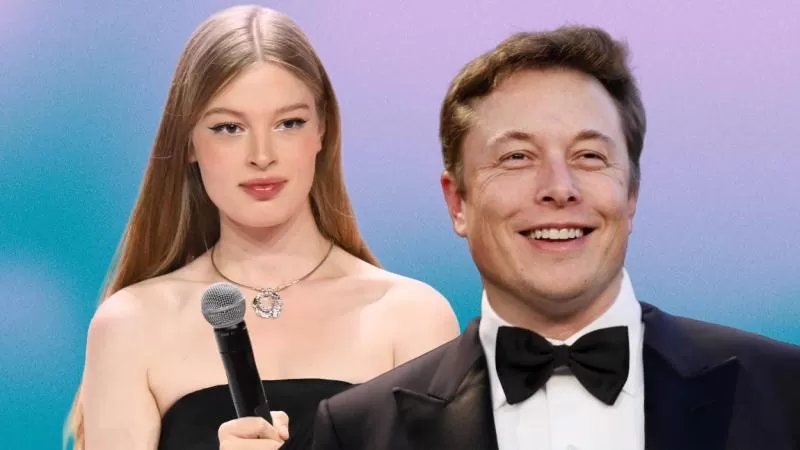

Vivian Wilson, daughter of Elon Musk, reveals in Cosmopolitan what it was like growing up in elite circles and critiques the impact of extreme wealth on people.
Vivian Jenna Wilson, daughter of entrepreneur Elon Musk, has spoken candidly about her childhood in a recent interview with Cosmopolitan, describing her experience of growing up in an environment of extreme wealth as “very isolating”. At 21, the young woman — who publicly came out as transgender in 2020 — offers a critical perspective on the world she was raised in, shaped by privilege but also marked by a deep sense of social disconnection.
According to Wilson, being part of upper-class circles meant existing within closed environments: private schools, highly curated social spaces and a perception of reality filtered through money. “The upper classes have their own schools, their own social circles,” she explains, pointing to a dynamic that reinforces distance from the wider society.
One of the most striking aspects of her account is the early awareness she developed regarding inequality. Wilson recalls how, as a child, she was deeply affected by witnessing poverty. “I remember seeing homeless people and feeling sick,” she says, acknowledging that her environment often downplayed or dismissed those reactions.
Her reflections highlight the idea of an elite disconnected from everyday reality. She describes an “illusion” in which wealth is perceived as inherently deserved, even when it coexists with visible inequality. According to Wilson, this disconnect is not incidental, but structural within certain privileged environments. She also reflects on her own personal journey, admitting that she has had to “unlearn” many of the ideas associated with that upbringing. “I know I was a rich child; I shouldn’t be lecturing people about materialism,” she adds, introducing a layer of self-awareness that underscores the complexity of her perspective.
Her most direct comments come when addressing the psychological impact of extreme wealth. Asked whether money can distort perception, Wilson is unequivocal: “Yes, absolutely.” She describes a pattern in which the accumulation of power and resources creates a cycle that is difficult to escape, driven by constant dissatisfaction. “It’s an endless cycle… where nothing is ever enough,” she explains.
Although she does not directly mention her father in these remarks, her statements emerge within a context in which Elon Musk remains one of the wealthiest individuals in the world. This inevitably places her testimony at the centre of a broader conversation about the social consequences of extreme wealth.
Beyond her personal experience, Vivian Wilson’s intervention opens up a more uncomfortable reflection on the limits of privilege and the long-term effects of growing up in environments that are largely disconnected from everyday life.