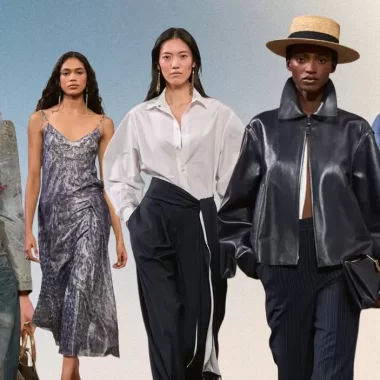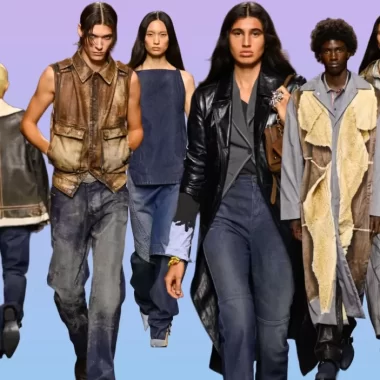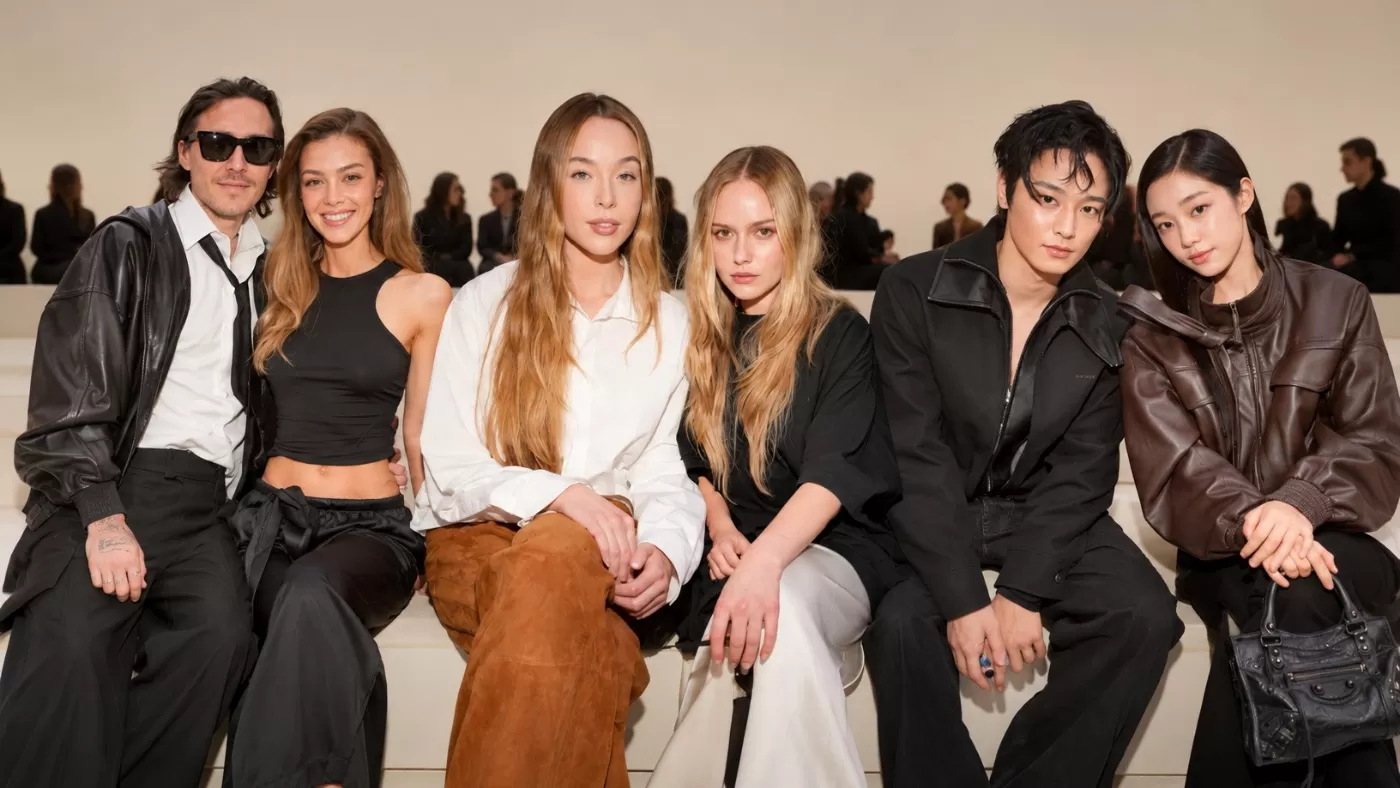


Pierpaolo Piccioli redefines Balenciaga with a Spring/Summer 2027 collection where haute couture techniques transform everyday garments and refresh the house’s codes.
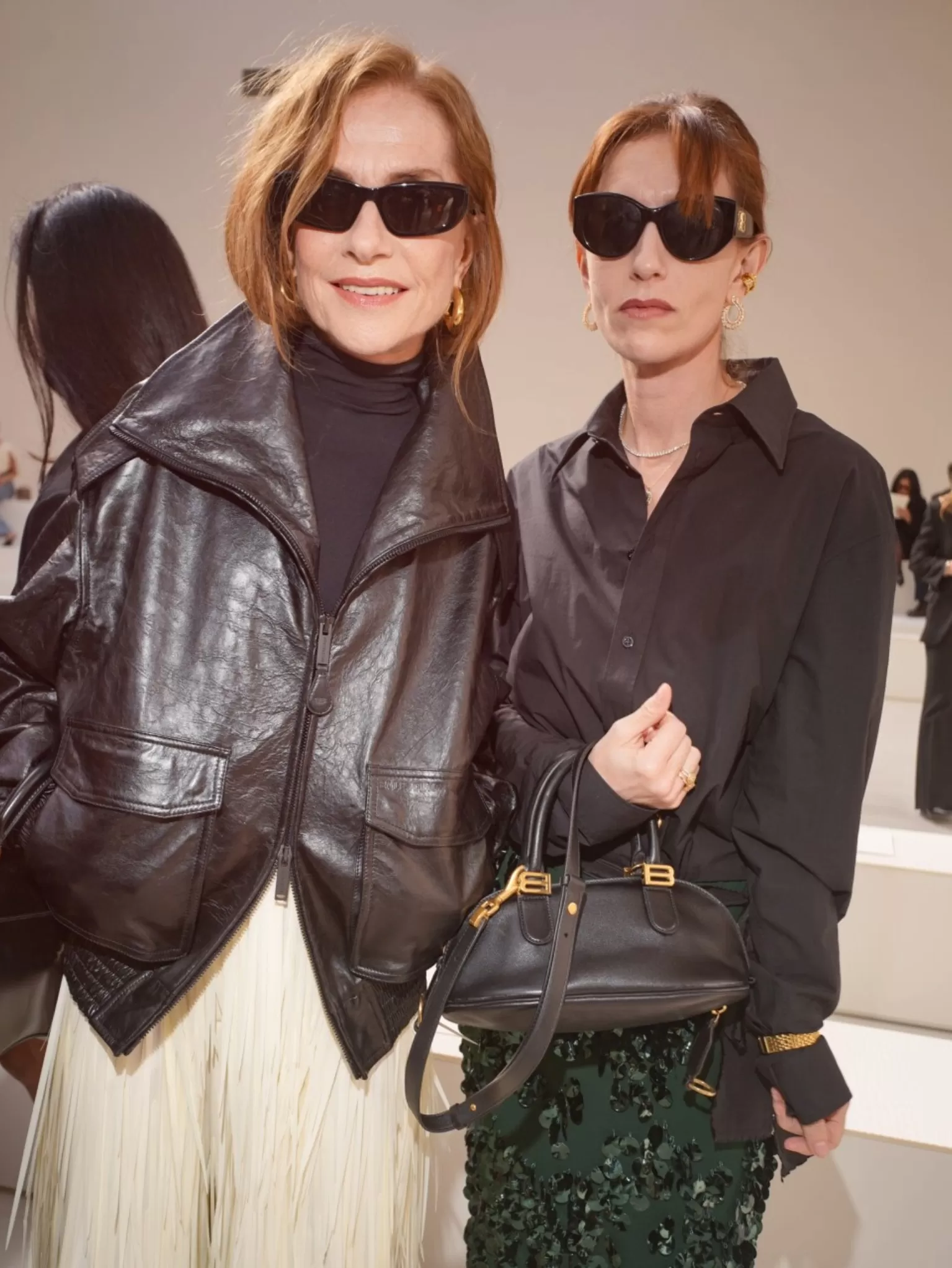
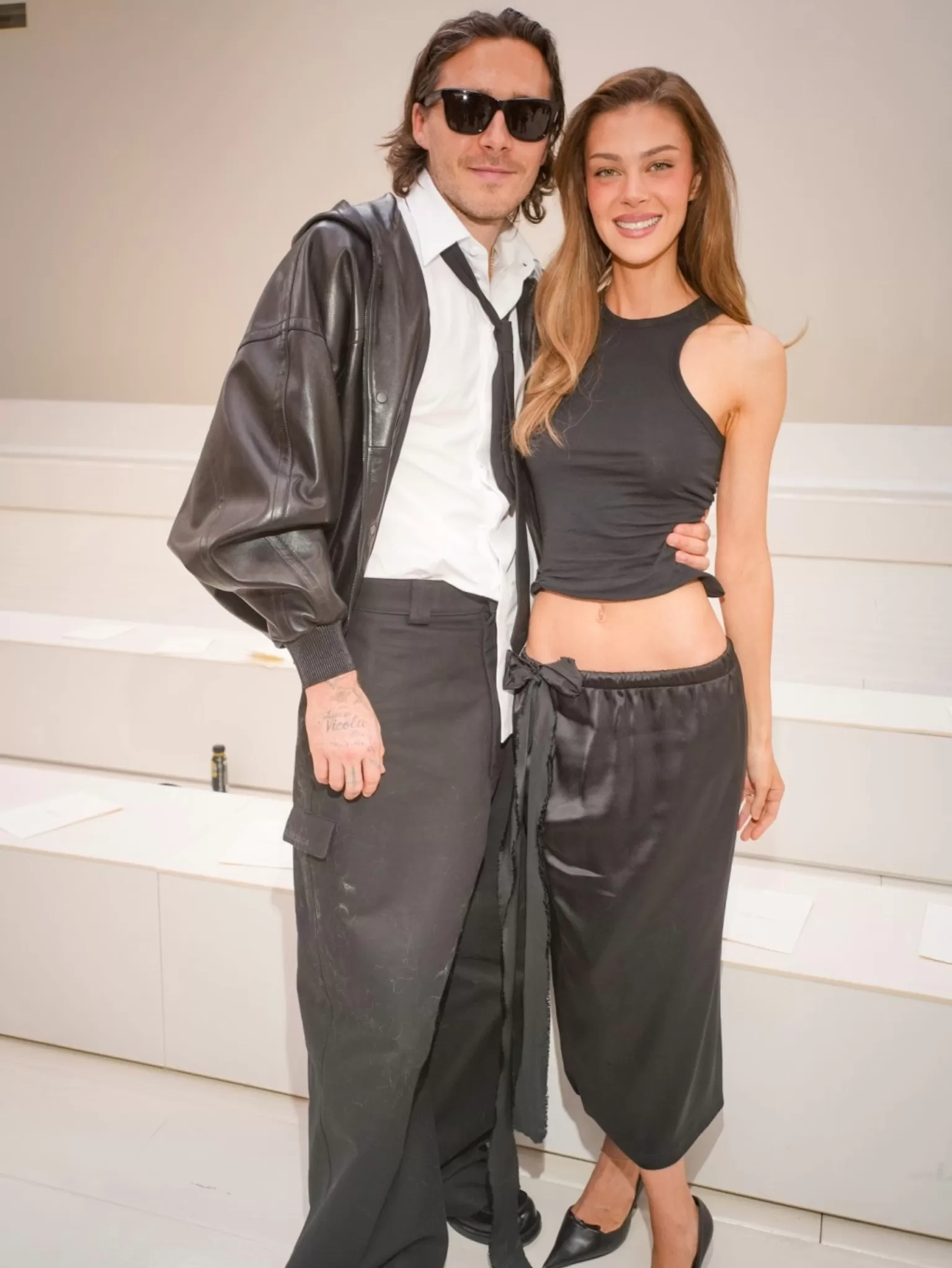
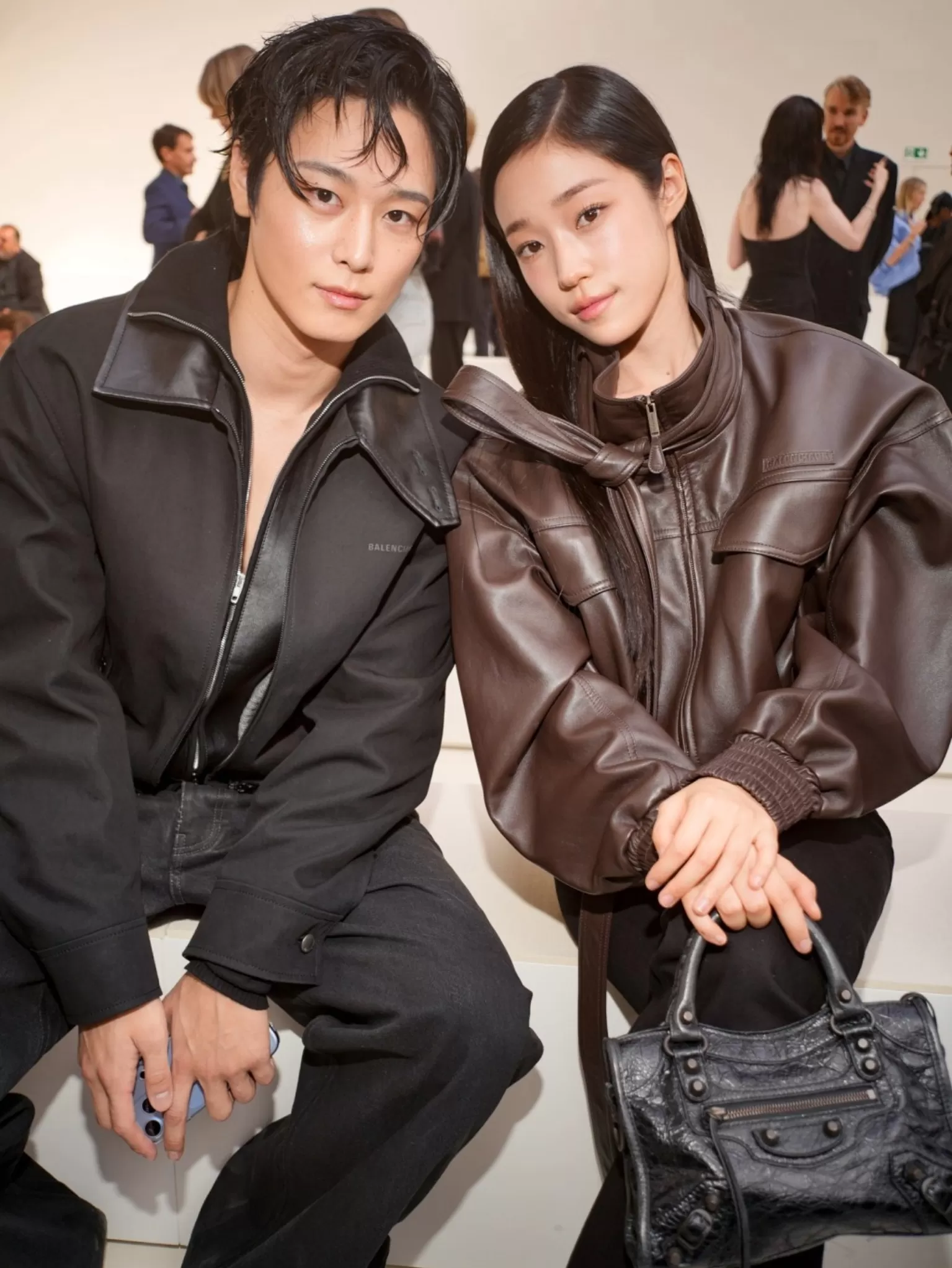
Balenciaga continues to shape its new identity under the creative direction of Pierpaolo Piccioli. For Spring/Summer 2027, the designer presented a collection in Paris that brings techniques traditionally reserved for haute couture into seemingly simple garments, before a front row that included names such as Lauryn Hill, Juyeon, Roh Yoon-seo, Kaya Scodelario, Shailene Woodley, Isabelle Huppert, Lolita Chammah, Brooklyn Beckham and Nicola Peltz Beckham.
The collection follows Piccioli’s Balenciaga haute couture debut and further develops an idea that is beginning to define his tenure: viewing couture not simply as an exclusive category, but as a language capable of influencing the entire wardrobe.
One of the collection’s key techniques comes directly from that artisanal work. Piccioli revisits the dense stitching method previously used to construct a Kelly green corseted gown without the need for boning, now applying it to shirts, T-shirts and leather jackets.
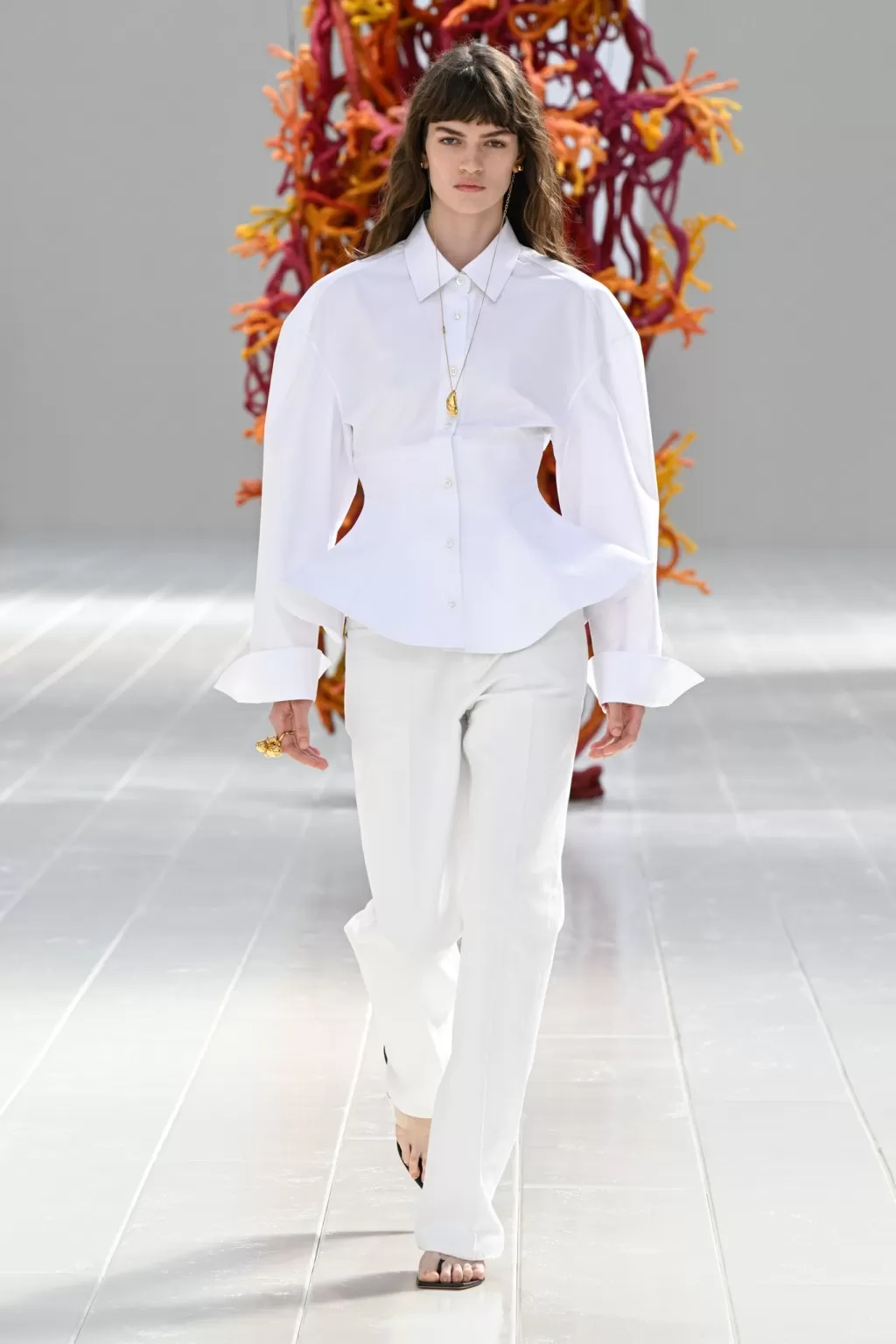
On a white shirt, for example, a second layer of fabric and numerous lines of stitching cover the lower third. The result visually cinches the waist before flaring into a delicate, undulating peplum. Paired with white bias-cut jeans featuring the suggestion of a sharp central crease, the silhouette opened the show at the Tennis Club de Paris.
Dense stitching also appears across collars and yokes, adding structure without relying on overly rigid construction. Piccioli plays with one of the season’s key ideas: finding new ways to alter a silhouette while preserving the essential identity of each garment.
Bias cutting emerges as another major element of the collection. Interestingly, according to the designer, it was not a technique used by Cristóbal Balenciaga, something Piccioli finds surprising given the house’s historic relationship with architecture, volume and the interaction between fabric and the body.
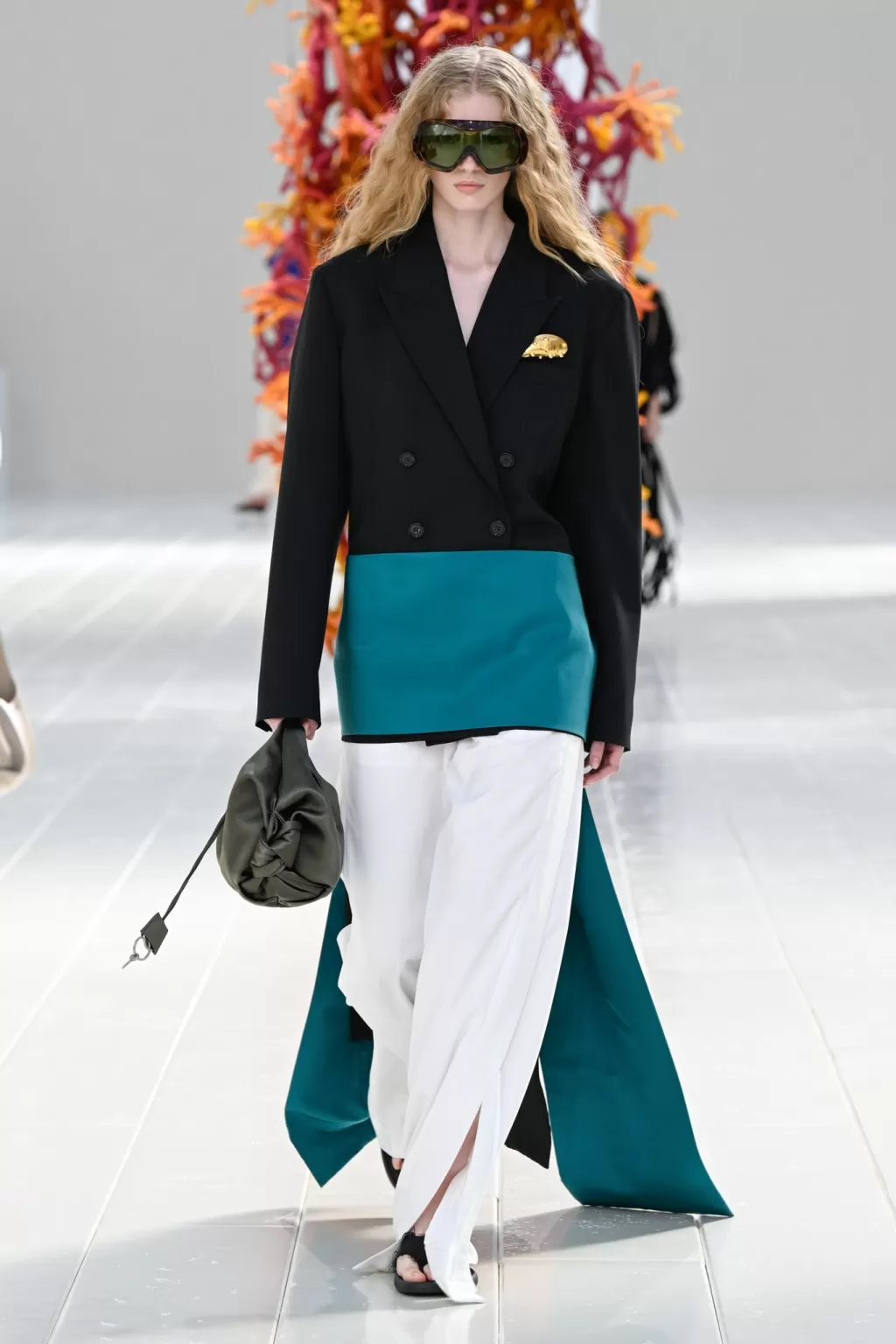
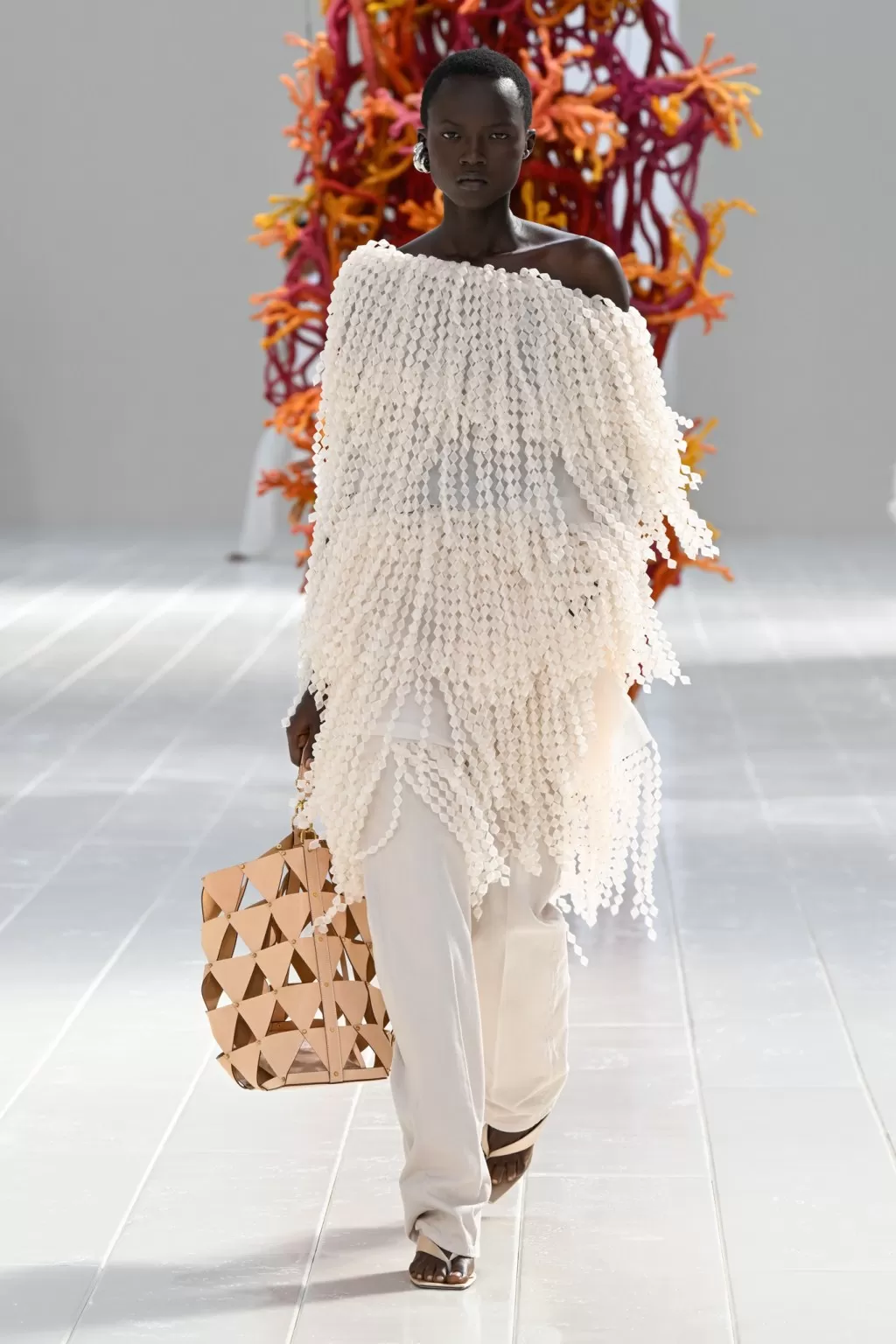
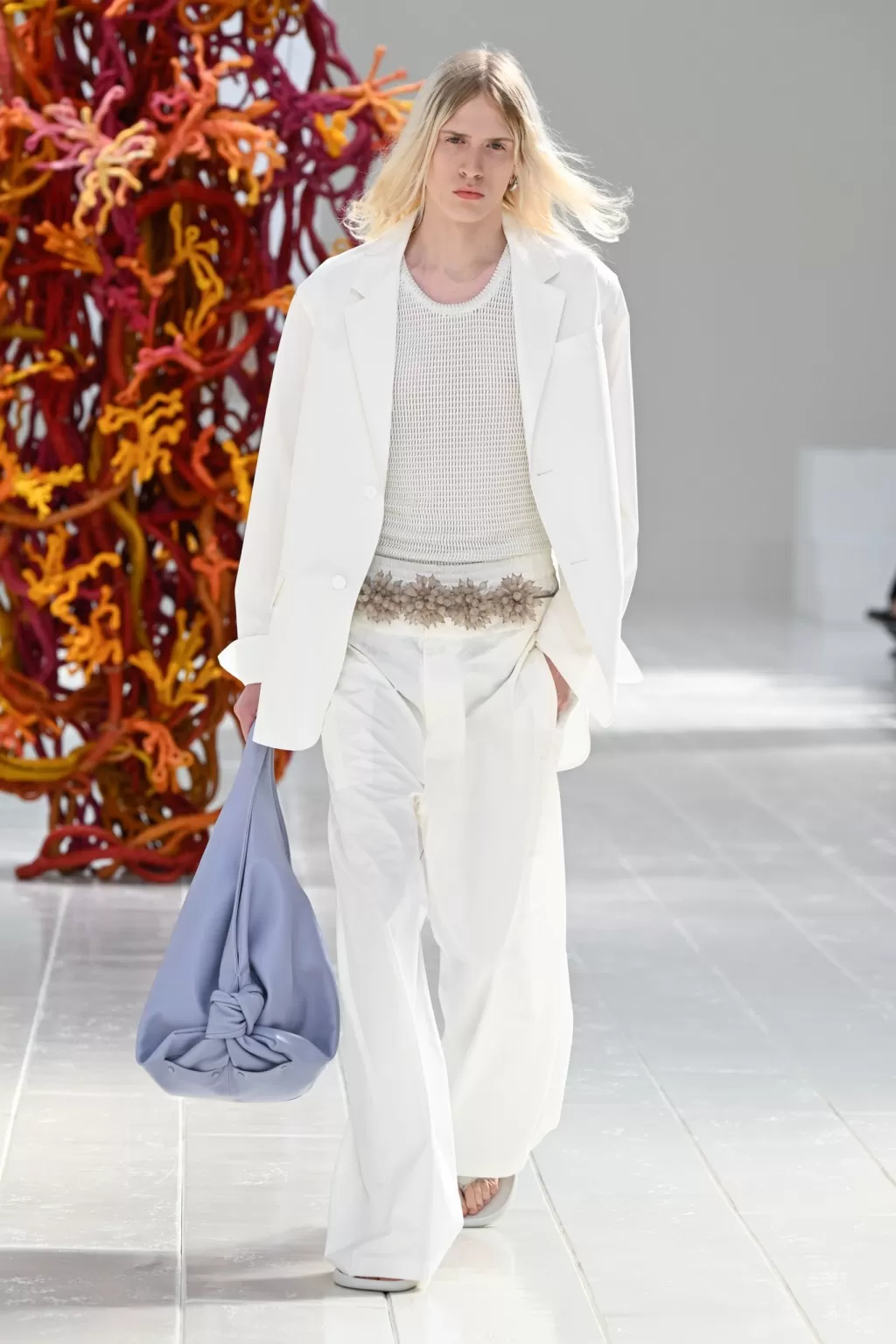
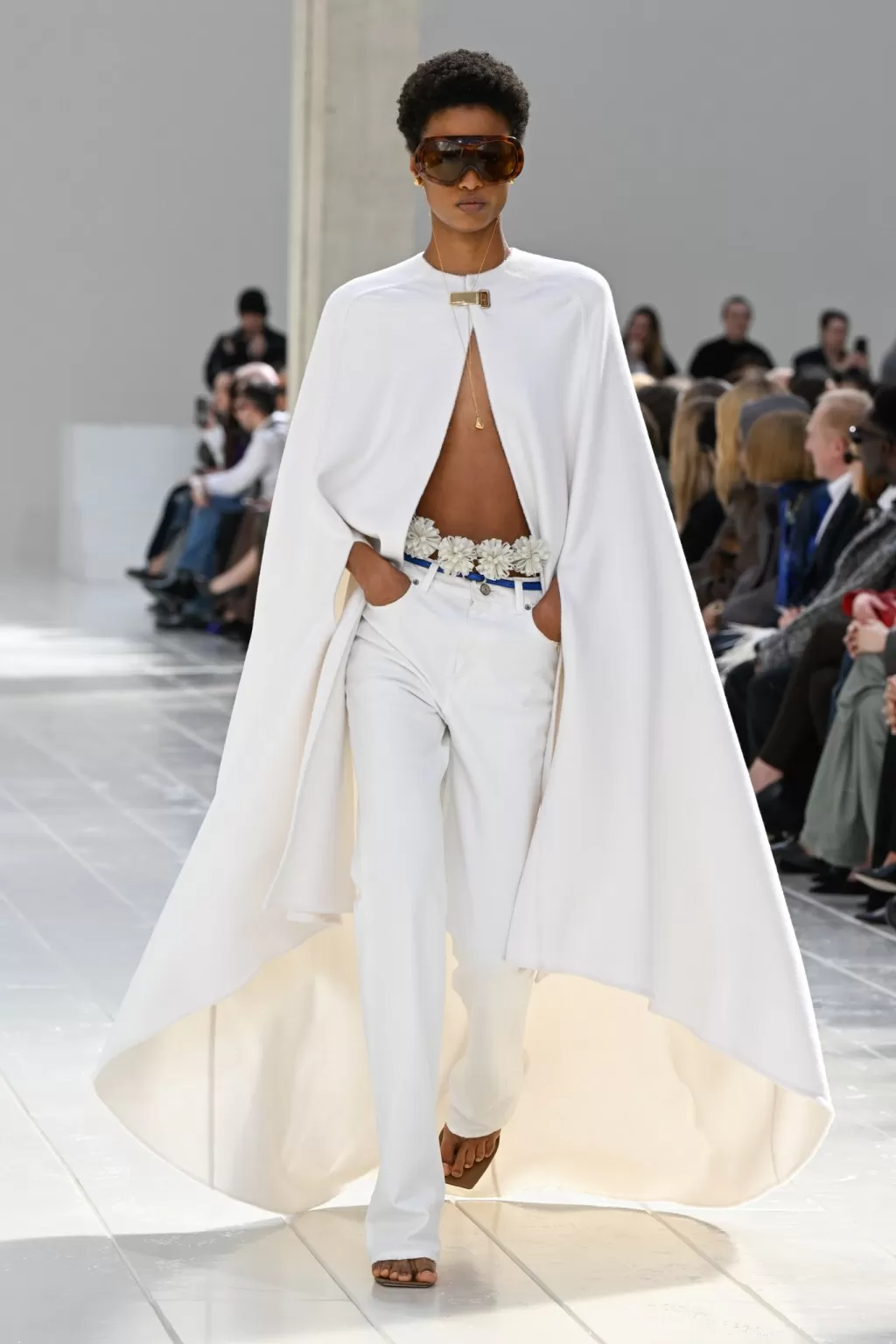
Piccioli applies the technique to jeans, eliminating the need for external side seams, as well as to unlined wool suits for both women and men. The intention is to change the feeling and attitude of the clothes without compromising their authenticity.
Comfort is another fundamental element. Men’s cotton jackets lose their traditional structure and adopt shirt-inspired backs, while a one-shouldered dress in mango-coloured jersey, covered in details reminiscent of delicate garlands, achieves an extraordinary sense of lightness.
A few references to the house’s more recent past remain. Oversized sunglasses, distressed jeans, voluminous boots and the occasional oversized bomber jacket inevitably recall certain codes developed during Demna’s tenure. The overall language, however, points towards a distinctly different direction.