.webp)

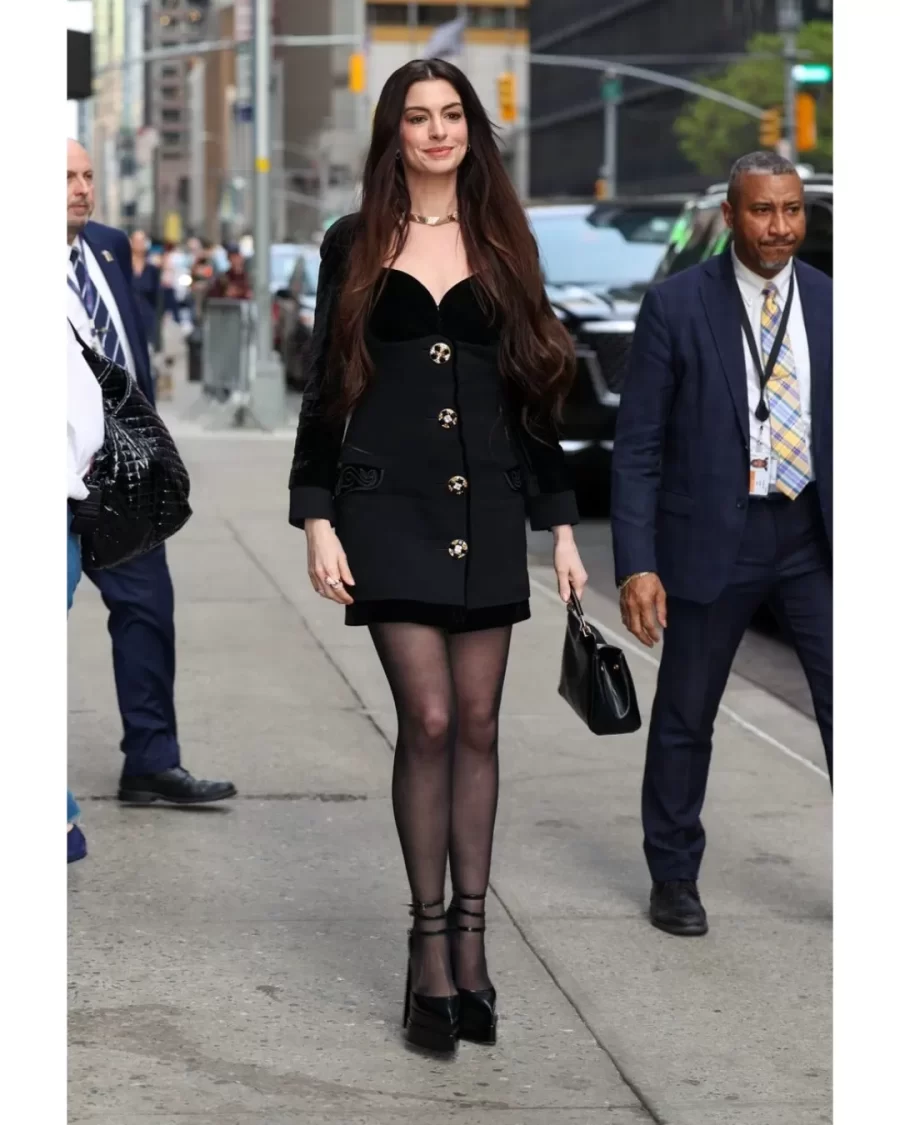
Anne Hathaway turns heads in New York wearing a 1991 Versace dress once worn by Naomi Campbell, in a direct nod to Andy Sachs’s aesthetic and the power of fashion archives.
Anne Hathaway has once again proven that fashion’s most powerful statements rarely come from novelty alone. During a recent promotional appearance in New York, the actress stepped out in a striking 1991 Versace mini dress once worn by Naomi Campbell, instantly setting off conversation across fashion circles and pop culture alike. More than a simple archival choice, the look felt like a calculated gesture — one that fused memory, cinema and fashion history into a single image.
At first glance, the dress itself carries all the ingredients of a classic nineties power look. Short, sharply fitted and finished with bold gold buttons, it channels the polished confidence that defined Versace at its most recognisable. Paired with sheer black tights and styled with restraint, Hathaway’s interpretation did not feel costume-like or overly nostalgic. Instead, it brought the silhouette into the present with clarity and precision, allowing the archival reference to breathe without losing relevance.
What gives the moment even more weight is its timing. With ‘The Devil Wears Prada 2’ approaching, Hathaway appears acutely aware of the cultural symbolism surrounding her public image. Whether intentional or instinctive, the visual echo of Andy Sachs is impossible to ignore. The outfit strongly recalls the polished, fashion-conscious phase of the character’s transformation — that moment in which clothing becomes more than appearance and starts functioning as identity, ambition and self-possession.
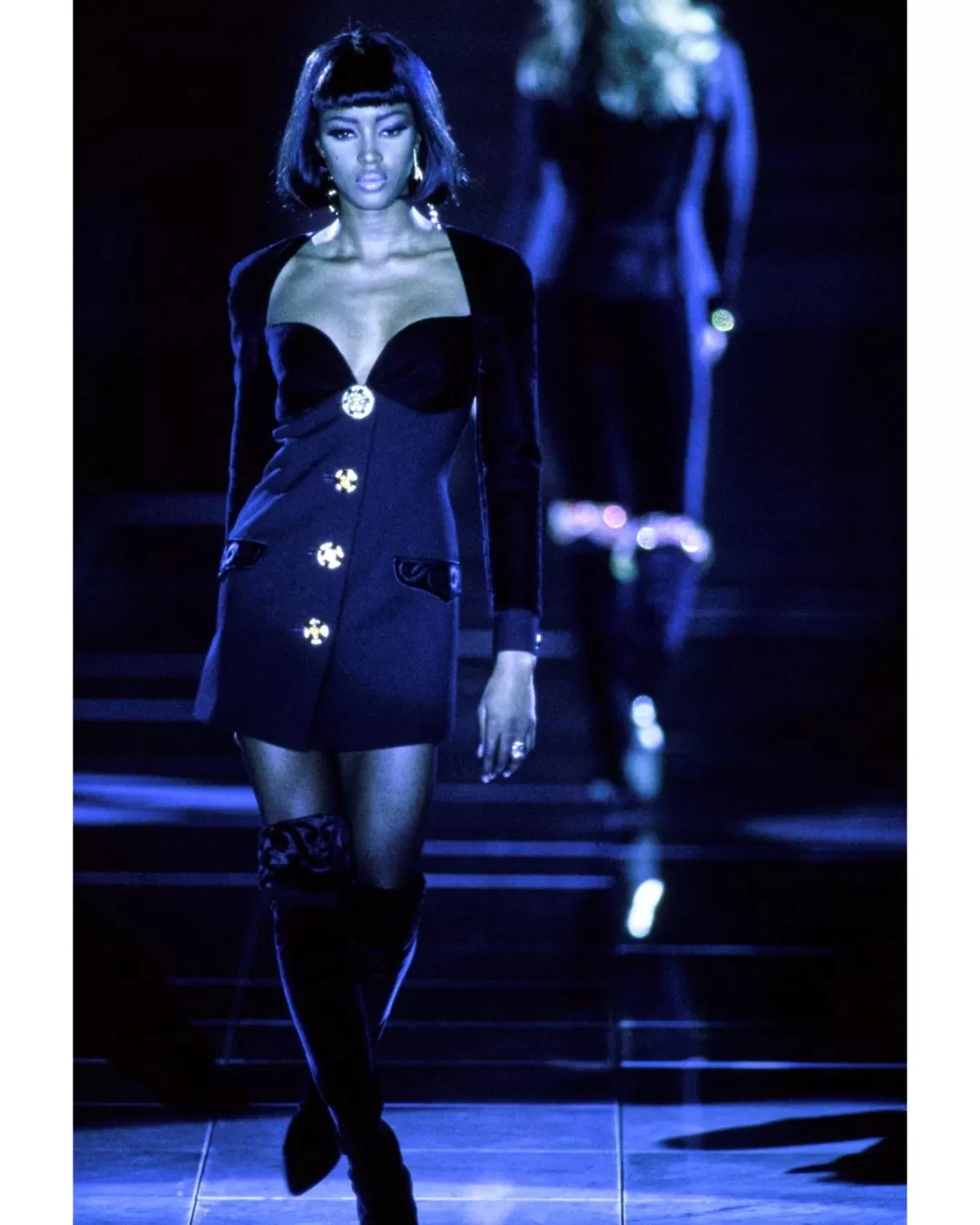
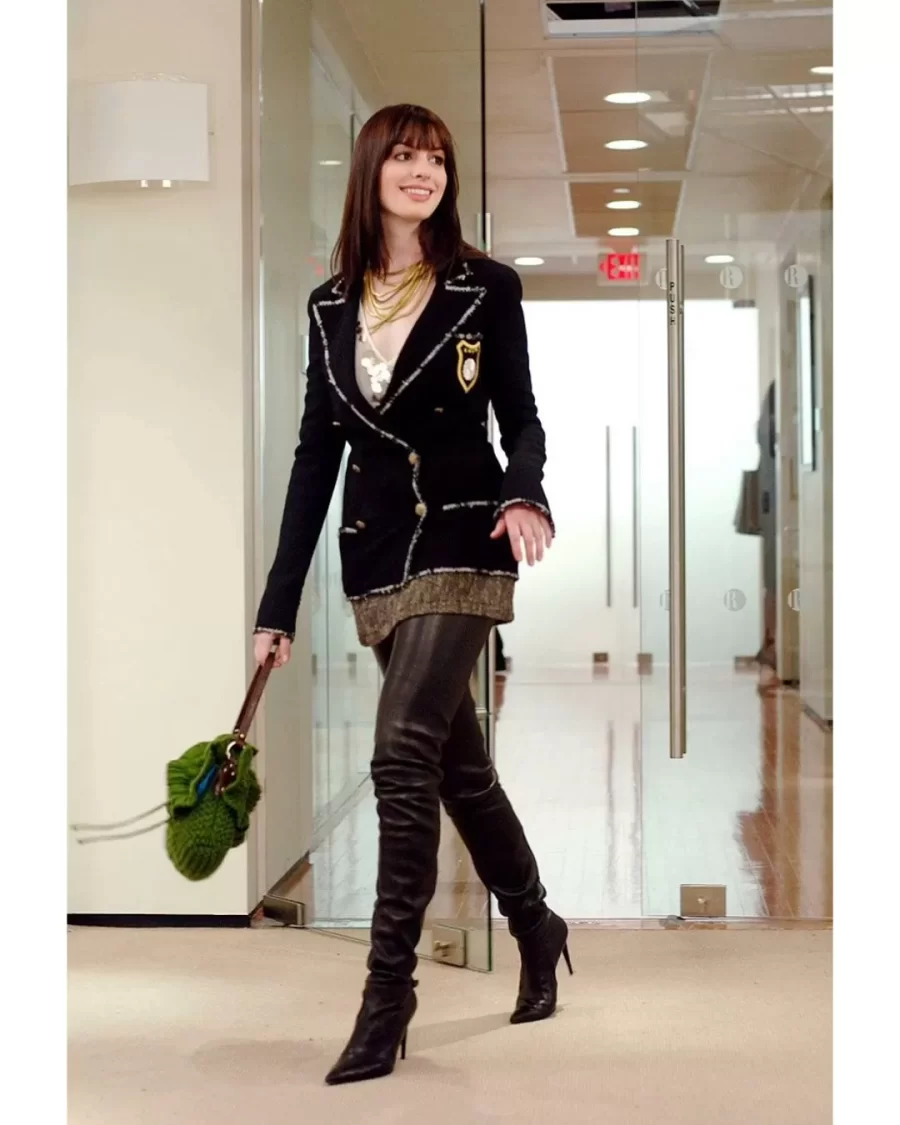
That is precisely why this is more than a celebrity wearing a vintage dress. By stepping into a piece once modelled by Naomi Campbell, Hathaway activates an entire legacy. The supermodel era of the early nineties was not simply about runway glamour; it represented the rise of models as global cultural figures, women whose presence shaped the visual language of fashion itself. To revisit that imagery now is to reconnect with a period when attitude, control and image held enormous symbolic force.
In recent years, fashion archives have become one of the industry’s richest storytelling tools. Celebrities and stylists increasingly look backwards not out of sentimentality, but because older pieces come with narrative depth. They carry memory, context and association. A contemporary runway look may deliver impact, but an archival garment often brings something more complex: the ability to speak across decades. In Hathaway’s case, the dress does exactly that. It places her in dialogue not only with Naomi Campbell, but with a broader fashion mythology built on power dressing, image construction and cinematic femininity.
There is also something compelling in the way the styling blurs the line between actress and character. Hathaway is not simply promoting a film; she is subtly playing with the audience’s memory of a role that still holds enormous cultural currency. That tension — between Anne Hathaway as herself and Andy Sachs as an enduring style reference — is what makes the look resonate beyond the usual celebrity fashion cycle.
In an era when public appearances are dissected in seconds and overstatement often dominates, Hathaway’s choice stands out for a different reason. It is precise, intelligent and emotionally legible. One archival dress was enough to reopen a conversation about fashion’s past, its present language and its enduring relationship with identity.
Some looks do not belong to a single moment. They wait, quietly, until the right woman and the right cultural timing bring them back to life.