
From global sci-fi universes to intimate character studies, Alexander Devrient reflects on identity, politics and the evolving voice of international actors.
Some actors arrive in the industry projecting immediate certainty. Others take a quieter path — one shaped not by instant visibility but by curiosity, cultural multiplicity and a desire to understand the worlds their characters inhabit. Alexander Devrient belongs unmistakably to the latter.
With roots stretching from Hamburg to Beirut and a career now firmly anchored in Britain’s international screen landscape, Devrient has built a trajectory defined by movement between genres, languages and cultures. Whether in historical drama or large-scale science fiction, his performances often explore the same underlying theme: how individuals navigate systems of power, identity and moral ambiguity.
His latest project places him inside one of television’s most iconic universes. In ‘The War Between the Land and the Sea’, connected to the long-running mythology of ‘Doctor Who’, Devrient plays Colonel Ibrahim, a senior UNIT officer confronted with a global crisis unlike any he has faced before.
The story imagines a world shaken by the sudden emergence of an ancient underwater species known as Homo Aqua. First introduced in the 1972 ‘Doctor Who’ serial ‘The Sea Devils’, these creatures return with a clear grievance: humanity’s exploitation of the oceans.
For Devrient, the appeal of the project lay in its ability to merge spectacle with deeper ethical questions. “I was immediately drawn to the historical roots of the storyline and the urgency of the crisis our characters are thrown into,” he explains. “There’s something exciting about stepping into a universe with that kind of legacy while telling a story that feels incredibly current and global.”
Yet the real fascination, he says, came from approaching the crisis through Ibrahim’s perspective. “He’s trained to assess threats and protect at all costs, but this isn’t a conventional enemy. The scale is global, the moral questions are complex, and he’s forced to confront not just a military challenge, but a deeply human one.”

Rather than presenting a simple battle between good and evil, the series reflects a world increasingly shaped by fear of the unknown and rapid political reaction. “When something disruptive appears, the instinct is often fear first, dialogue later,” Devrient notes. “What struck me about the scripts is that they ask who feels displaced, who feels threatened and who is genuinely listening.”
The scale of the story is matched by a strong ensemble cast, including Russell Tovey, Gugu Mbatha-Raw and Jemma Redgrave, who reprises her role as Kate Lethbridge-Stewart.
The atmosphere on set, according to Devrient, was unusually collaborative. “Everyone was down-to-earth and genuinely excited to create something special,” he says. Sharing scenes with Redgrave proved particularly grounding. “When you look into her eyes there’s an entire universe there. If another actor gives you that, it immediately anchors the scene.”
Entering the world of ‘Doctor Who’ also meant engaging with a franchise that carries more than six decades of history. Balancing that legacy with creative freedom can be daunting, but Devrient found that the scripts allowed room for emotional nuance. “With over sixty years of history it’s easy to fall into rigidity, especially with a military character,” he admits. “But the writing allowed moments of real humanity. We get to see the private lives of Ibrahim and Kate, and the moral dilemmas they face.”
The actor has also worked alongside multiple generations of performers within the same universe, including David Tennant, Catherine Tate and the current Doctor, Ncuti Gatwa. Each, he says, brings a distinct creative energy. “David and Catherine returned for the 60th anniversary specials with exactly the same punch and humour,” he recalls. “Watching them bounce off each other was magic.”
For Devrient, Ncuti Gatwa’s presence carries particular cultural significance. “Ncuti has paved the way for queer kids of colour to see themselves at the centre of the story,” he says. “And he smashed it — as younger Spaniards would say, lo petó.”
Representation is a theme that resonates deeply with Devrient’s own multicultural background. Growing up between German, Lebanese and British cultures has shaped both his personal identity and the characters he feels drawn to portray. “That mixture is a gift,” he reflects. “It allows me to feel culturally and emotionally connected to people from very different backgrounds.”
For actors who exist between cultures, identity becomes a layered concept rather than a fixed label. “If you live in countries that aren’t where your parents are from, identity becomes something fluid,” he says. “That complexity can be a character’s greatest strength — but also a vulnerability.”
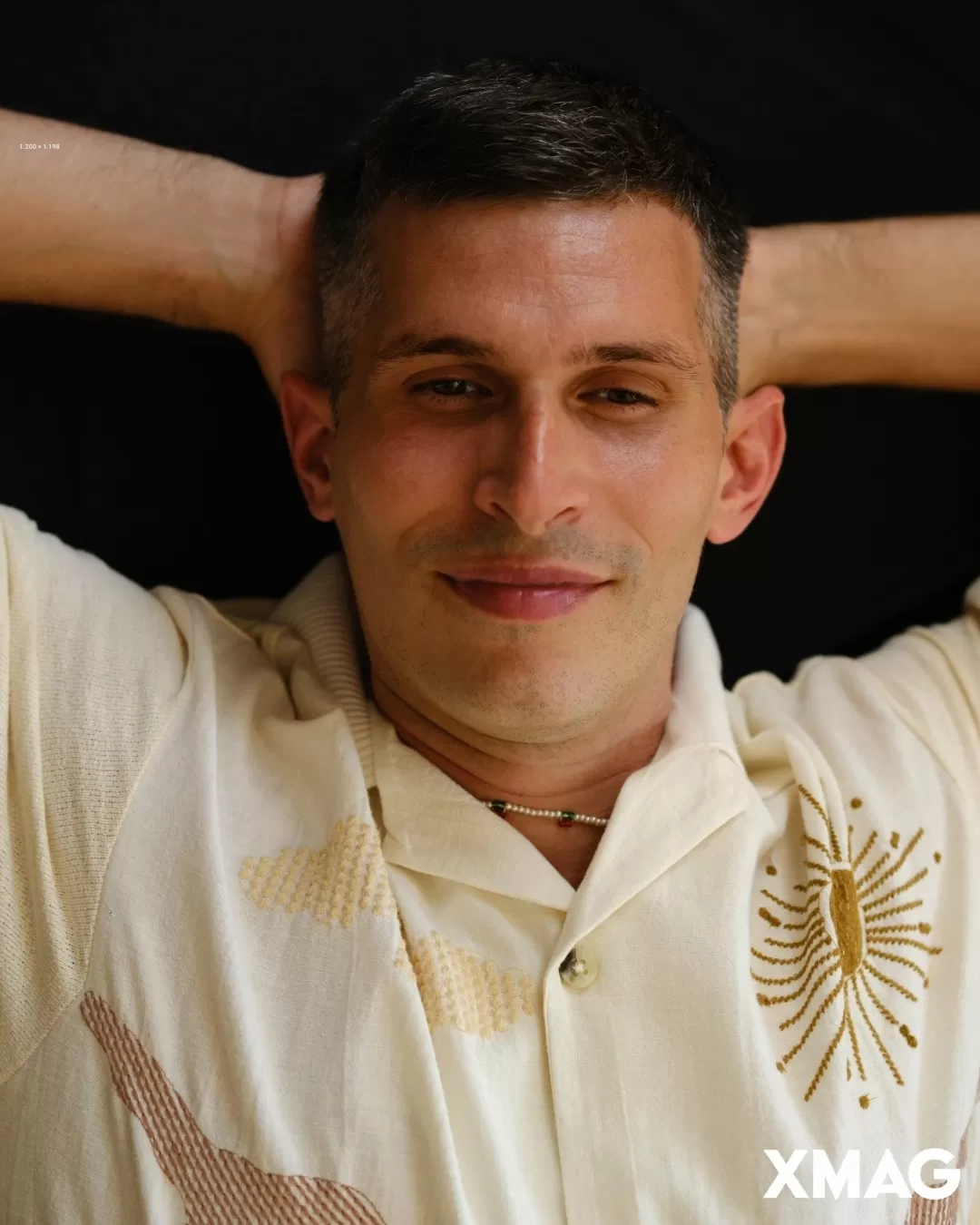
In a time marked by geopolitical tension and social polarisation, storytelling inevitably intersects with politics. Devrient does not necessarily believe actors have a public obligation to engage with every issue, but he recognises that art itself carries political weight. “Art is inherently political,” he says. “The stories we choose to tell and how they’re interpreted matter. What we cannot lose is our humanity for the other.”
Language is another dimension of that perspective. Devrient performs fluently in English, German, French and Spanish, occasionally adding Arabic into the mix. Each language, he explains, alters the emotional resonance of a performance. “Where the language sits in my body changes the tone of my voice,” he says. “Each one strikes a different emotional chord.”
His career reflects the same fluidity. From projects such as ‘Ted Lasso’ and ‘The Danish Girl’ to large-scale science fiction, Devrient has consistently moved across genres — something he actively embraces. “I once had a nickname as an actor: ‘The Chameleon’,” he recalls with a smile. “And it still feels accurate. I enjoy storytelling whether it’s comedy, drama, period or sci-fi.”
Looking ahead, the actor hopes to continue balancing expansive franchises with more intimate, character-driven narratives. He recently wrapped ‘Sira’ for Atresmedia and Netflix, a Spanish-language period drama that offered a stark contrast to the scale of ‘Doctor Who’. “Big universes are exciting,” he says. “But I’m equally drawn to intimate stories that explore human complexity — characters who live in moral grey areas and constantly surprise you.” For an actor whose career has been shaped by crossing borders — geographic, linguistic and cultural — that complexity is not simply appealing.
It is the territory where the most compelling stories begin.