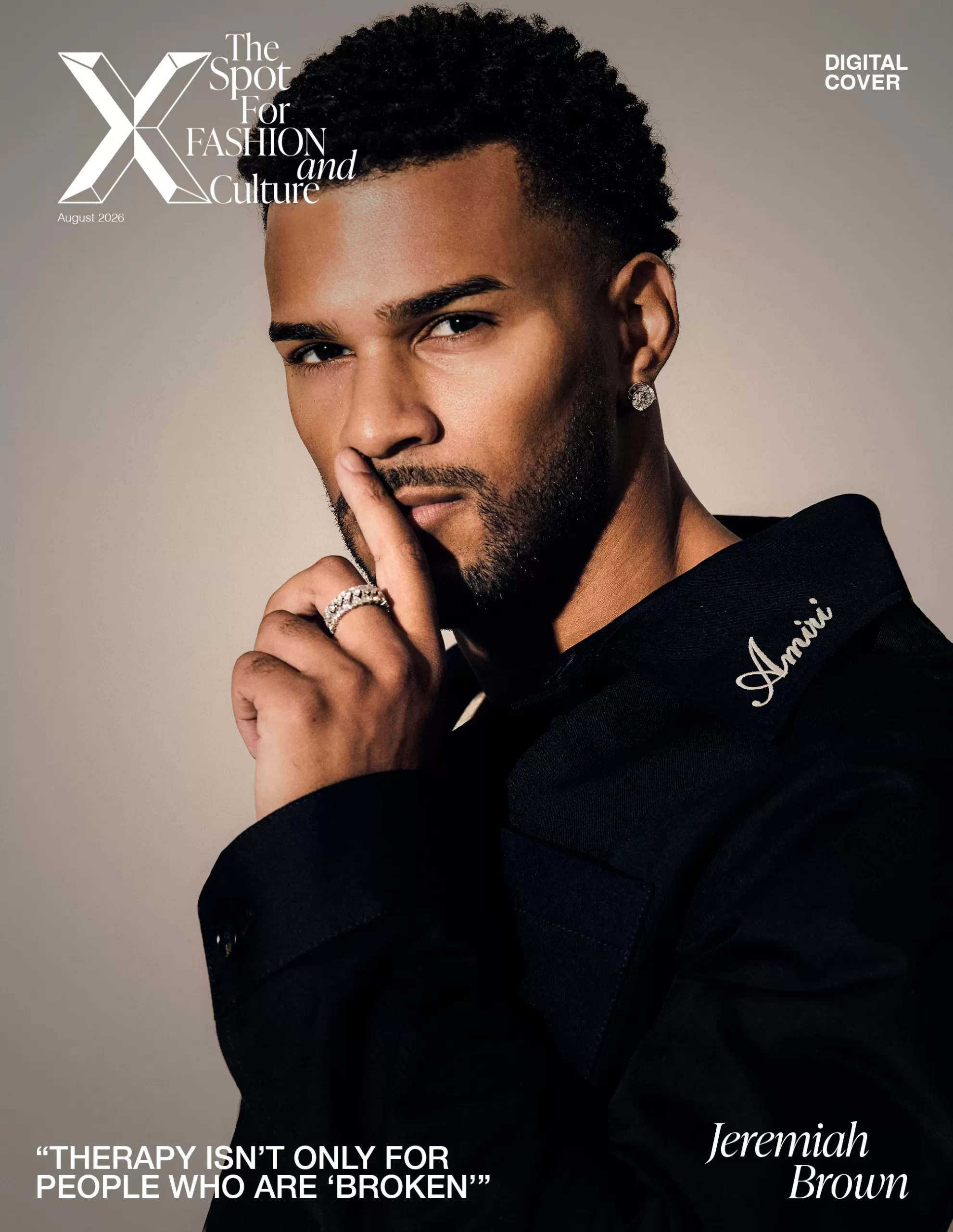


The television personality and creator reflects on mental health, books, fashion, streaming and turning visibility into a genuine community.
For Jeremiah Brown, the visibility that came with ‘Love Island USA’ was never meant to become the whole story. The reality show introduced him to a much wider audience, but the platform that followed quickly became something he wanted to use with greater intention. Rather than limiting himself to traditional content, Brown began speaking about subjects that had already shaped his own life: books, therapy, emotional wellbeing, self-mastery and personal growth.
“I’ve always wanted to help people in whatever way I can,” he says. “Now I have a platform that allows me to do that on a much bigger scale. If people are going to listen to what I have to say, I want to make sure I’m saying something that can actually impact them.”
That sense of responsibility has also changed the way he approaches public exposure. Brown is increasingly conscious that people watch not only what he says but how he behaves, and he wants those two things to remain aligned. At the same time, visibility has taught him an equally important lesson: authenticity does not require complete access. He can build a genuine relationship with an audience without making every aspect of his life public, particularly when it comes to relationships and dating.
“Therapy isn’t only for people who are ‘broken’”
Jeremiah Brown
By the time Brown entered ‘Love Island USA’, he had already been in therapy for around two years and had spent considerable time reading books about self-mastery. Both became important foundations when he left the show and suddenly found himself exposed to an enormous volume of opinions from people who felt they knew him.
“The show can definitely throw you for a loop mentally because it’s such a unique experience,” he explains. “Coming off the show and suddenly being exposed to so many opinions, I felt like my values and my roots were already planted pretty deeply.” Therapy, reading and the values instilled by his parents helped him separate who he actually was from the version of himself being discussed online.
That experience has made conversations around masculinity and emotional wellbeing especially important to him. Brown believes the stigma surrounding therapy remains damaging, particularly among men and within the Black community, where asking for professional support can still be interpreted as a sign that something must be wrong.
His own experience has been very different. “There have been plenty of times when I’ve felt like I was on top of the world and still went to therapy because there was more I could learn about myself,” he says. “Therapy isn’t only for people who are ‘broken’ or who ‘need to be fixed’. I actually think there’s strength in being willing to look inward.”
For Brown, real confidence comes from processing internal struggles rather than disguising them. Instead of projecting certainty for the benefit of others, understanding yourself creates a much more durable form of self-belief.


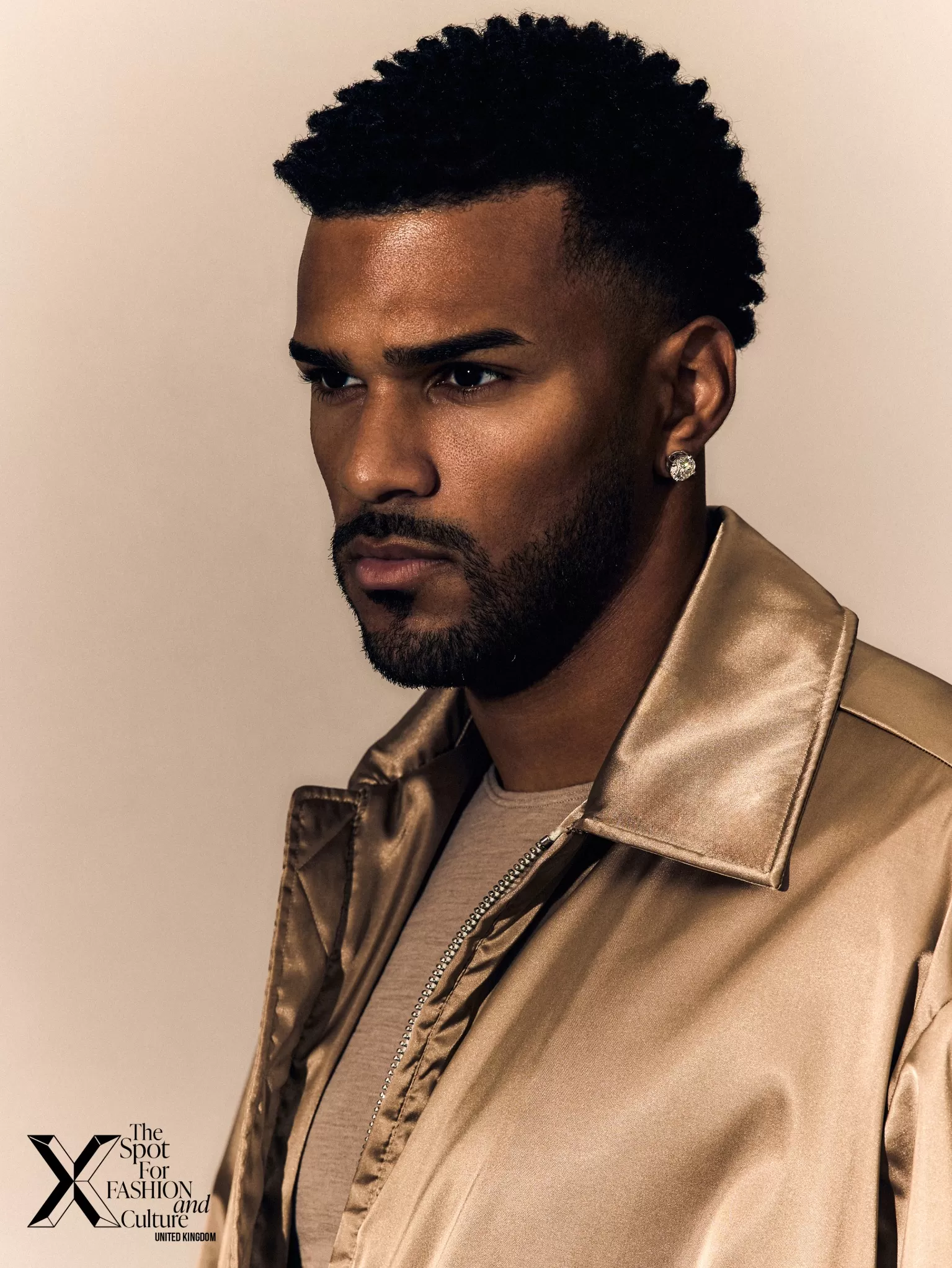
From comic books to ‘Jeremiah’s Reading Room’
Books were part of Brown’s life long before audiences associated him with reading. His uncle owned a comic book shop, where he would spend time devouring whatever he could find, while school reading programmes later turned that curiosity into something almost competitive. During the pandemic, however, his relationship with books changed considerably.
Spending so much time alone with his own thoughts forced him to confront parts of himself he was not entirely satisfied with. He began reading self-mastery books, starting with Stoicism, and literature gradually became less about entertainment and more about understanding himself and expanding his perspective.
That personal habit eventually evolved into ‘Jeremiah’s Reading Room’, a community that presents a very different side of him from the image traditionally associated with reality television. Some followers have told him they started reading because of his recommendations; others have returned to books or connected with something he has said about mental health. Those are the responses he values most because they remind him that behind millions of followers are individual people.
The Reading Room also reflects Brown’s refusal to fit neatly into one category. He openly calls himself a nerd while moving between literature, gaming, fashion, entertainment and streaming without considering any of those interests incompatible. “I’ve never liked putting myself in a box,” he says. “It’s fun for me to go from book club to an appearance where we’re going crazy, then go to a fashion show, game, stream or do a mukbang. All of those things are genuinely parts of me.”
For him, that freedom is characteristic of a generation increasingly uninterested in choosing a single identity. A person can care about fashion and books, gaming and mental health, entertainment and personal development without one interest invalidating another.
Fashion beyond reality television
Before ‘Love Island USA’, Brown was already working professionally as a model and had collaborated with brands including Levi’s, Tommy Hilfiger and Adidas. His relationship with fashion remains instinctive rather than dictated by rules. He is less interested in deciding what is fashionable at a particular moment than in the personality someone brings to what they wear.
“I genuinely think it’s more about who is wearing something and how they wear it than the actual piece itself,” he explains.
He nevertheless acknowledges that people entering fashion after reality television can still encounter scepticism. Brown has experienced moments when an interest he had long before television has been dismissed as performative simply because audiences encountered that side of him afterwards. Posting about a book, discussing fashion or exploring another creative space can prompt assumptions that he is simply adopting another identity for content.
His response has been consistency. “People are always going to have opinions, and I’ve accepted that,” he says. “Eventually, when people continue seeing you show up as yourself, they realise these things aren’t an act — they’re genuinely part of who you are.”

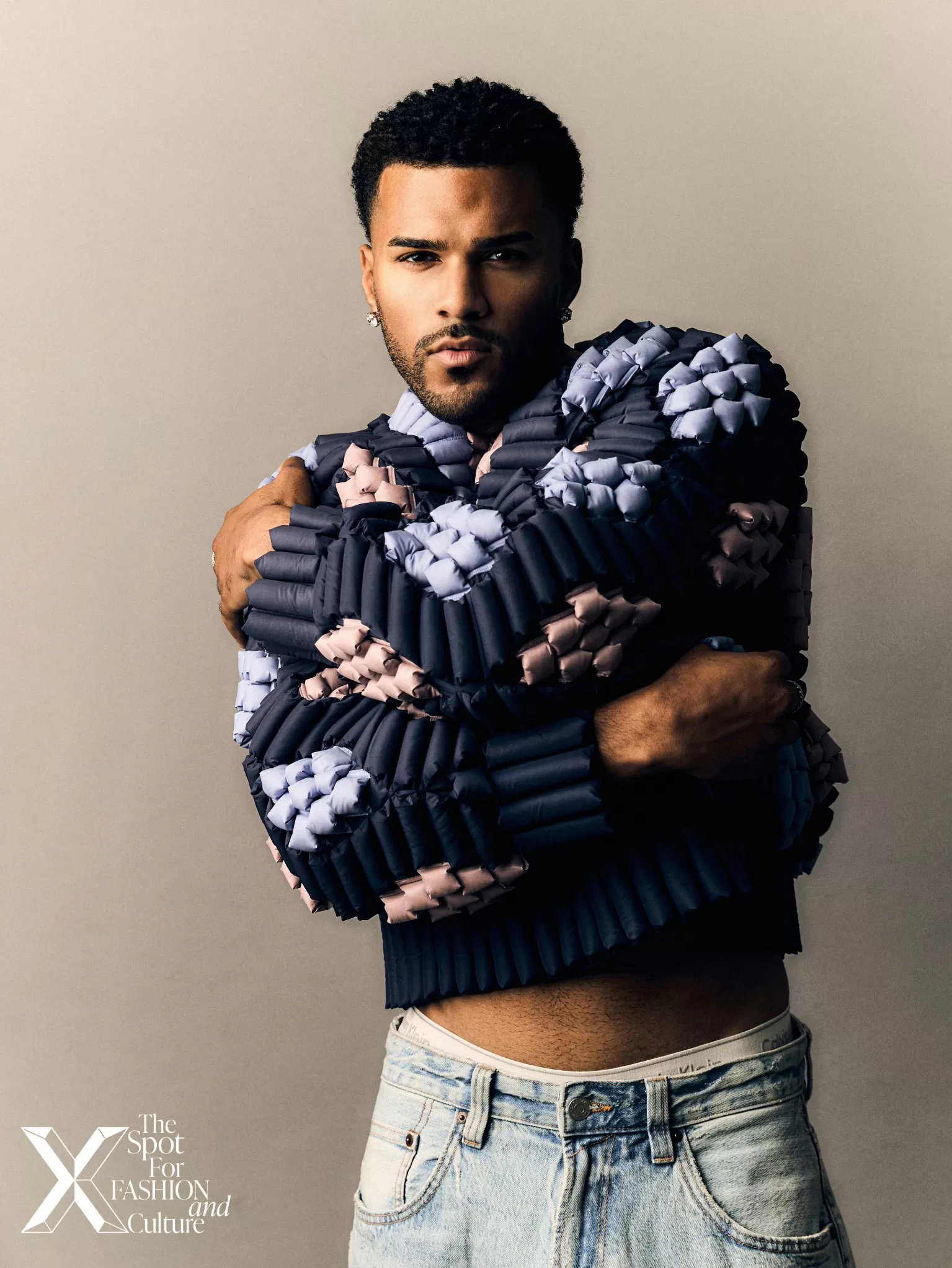

“The show may have opened the door, but it’s been up to me to show people who Jeremiah actually is”
Jeremiah Brown
Brown makes no attempt to minimise the opportunities that ‘Love Island USA’ created. Although he had already been making a living through modelling, the programme dramatically changed the scale of his platform and gave him access to possibilities he had never imagined.
“The platform from the show, combined with who I am and what I’ve been able to bring to the opportunities that followed, has led to things I didn’t even know were possible for me in this space,” he says. “I’m incredibly grateful for that.”
Where he draws the distinction is between receiving an opportunity and building something meaningful from it. Television may generate attention, but what happens afterwards depends on what someone chooses to do with that visibility. “The show may have opened the door,” he explains, “but it’s been up to me to show people who Jeremiah actually is once I walked through it.”
That philosophy extends to the JerBears, the community that has grown around him across different platforms. With an audience of more than three million people, Brown wants interaction to remain a two-way exchange. He replies to comments, brings followers into book club live streams, asks them to help choose future books and uses polls in the Reading Room to shape what the community does next.
“There’s a big difference between having followers and having a community,” he says. “A community is a two-way relationship. I don’t just want people watching what I’m doing — I want to hear from them, learn what they’re interested in and let them have a voice in what we create together.”
Building something beyond social media
That interest in participation also shaped his experience as part of Kai Cenat’s Streamer University. Being surrounded by creators working across different formats exposed Brown to new approaches to content and reinforced the importance of genuine relationships within an increasingly competitive digital landscape.
It also clarified the type of streaming he enjoys most. IRL streams appeal to him because their unpredictability makes them feel immediate and authentic, allowing experiences to unfold without every moment being carefully planned.
As his career expands across television, fashion, books, mental health advocacy and streaming, Brown is already considering what might exist beyond social media. Hosting is one of his clearest ambitions. Whether that begins with a smaller original project or eventually develops into a major television format, he wants to create a show of his own and continue building a career firmly rooted in entertainment.
What he does not want is for follower numbers to become the only measure of what he has achieved. His ambitions may be expanding, but the quieter impact of his platform remains just as important.
“If part of my legacy is that people started reading again because of me — or kept reading because of something I created — I’d be pretty happy with that too,” he says. “I want people to remember that I entertained them, but I also want them to feel like something I did added value to their life.”


CREDITS
Photographer – Timothy Fernandez
Styling – Ron Jeffries
PR – Malcolm Roberson – Persona PR