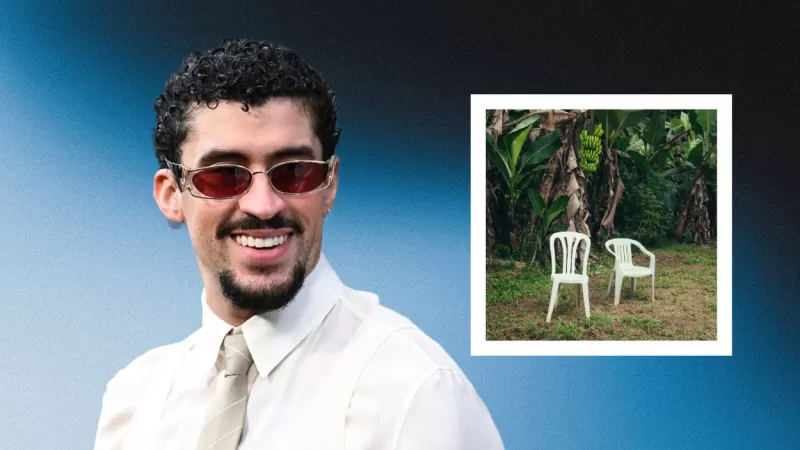

‘DtMF’ by Bad Bunny reaches No.1 on the Billboard Hot 100 after his Super Bowl performance, confirming his global cultural impact.
Bad Bunny’s performance at the Super Bowl 2026 was not only one of the year’s defining musical moments — it became a turning point in his career. Days after the show, the closing track of his set, ‘DtMF’, officially climbed to No.1 on the Billboard Hot 100, as confirmed by the chart itself.
It marks his second career No.1, but his first entirely solo. Until now, the artist had topped the ranking alongside Cardi B and J Balvin with ‘I Like It’ in 2018. This latest achievement, without collaborators, cements what the industry had long acknowledged: Bad Bunny is no longer simply the biggest Latin star of the moment — he is a global superstar in his own right.
The song features on his album ‘DeBÍ TiRAR MáS FOToS’ — translated as “I Should Have Taken More Photos” — a project that also secured the Grammy Award for Album of the Year. The album’s title lends its emotional abbreviation to the track itself, with ‘DtMF’ encapsulating the record’s core concept.
Far removed from the explosive reggaetón and club anthems that defined his early career, the track is steeped in nostalgia. In it, the artist reflects on memory, the passage of time and lost personal connections. In one of the most widely quoted lines, he sings: “I should have taken more photos when I had you / I should have given you more kisses and hugs whenever I could.” The lyrics resonated deeply with a generation accustomed to living through mobile screens yet not always preserving what truly matters.
The reaction online was immediate. Throughout 2025, ‘DtMF’ became one of TikTok’s most emotional trends, with thousands of users sharing videos and photo montages of family, friendships and loved ones. The song evolved into more than a hit single — it became a collective ritual of remembrance. The wave was so powerful that Bad Bunny himself publicly expressed emotion at seeing the fan-created tributes.
After the Super Bowl performance, momentum intensified. Several tracks from his set re-entered the Billboard Hot 100 Top 10, yet it was the most intimate song that ultimately claimed the summit. A telling detail: the biggest commercial triumph of his career arrived not with a party anthem, but with a confession.
The milestone also signals a broader industry shift. For years, it was assumed that success on the US chart required an English-language crossover. Bad Bunny achieves it entirely in Spanish, without diluting his identity or sound, proving that in the streaming era, language barriers are increasingly irrelevant.
With this No.1, the Puerto Rican artist adds another chapter to a record-breaking career: the most streamed global artist across digital platforms, sold-out stadiums on multiple continents and now the undisputed leader of the world’s most influential music chart as a solo act.
Paradoxically, his greatest success stems from a simple idea: remembering.
And perhaps that is the key. In a landscape driven by digital speed, Bad Bunny triumphs by singing about time that cannot be reclaimed.