
Amid Argentina’s ongoing crisis, Moschino transforms cultural identity into global luxury on the runway at Milan Fashion Week 2026.
In today’s Argentina, where daily conversation swings between pro-business reforms, social uncertainty and relentless political debate, cultural identity has once again become a refuge. It was precisely that feeling — more emotional than ideological — that surfaced unexpectedly on the runway in Milan.
Adrián Appiolaza’s Autumn/Winter 2026 collection for Moschino was not merely a show; it was an aesthetic translation of what it means to belong to a place even when that place is going through difficulty. Milan Fashion Week often speaks of fantasy and aspiration, of parallel worlds. This time, however, the runway turned towards something unmistakably real. Appiolaza did not attempt to export folklore; he did something more intimate: he brought memories.
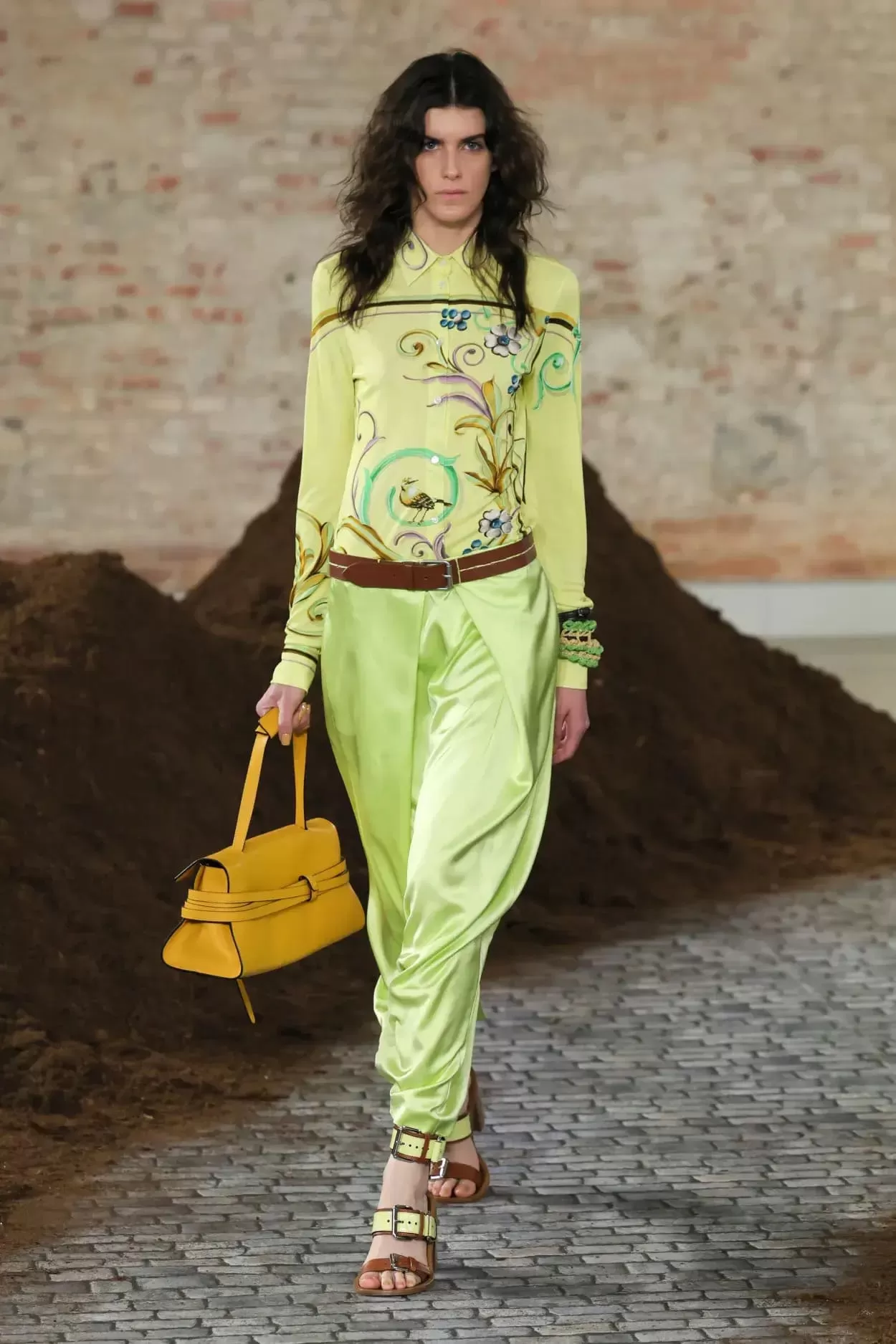
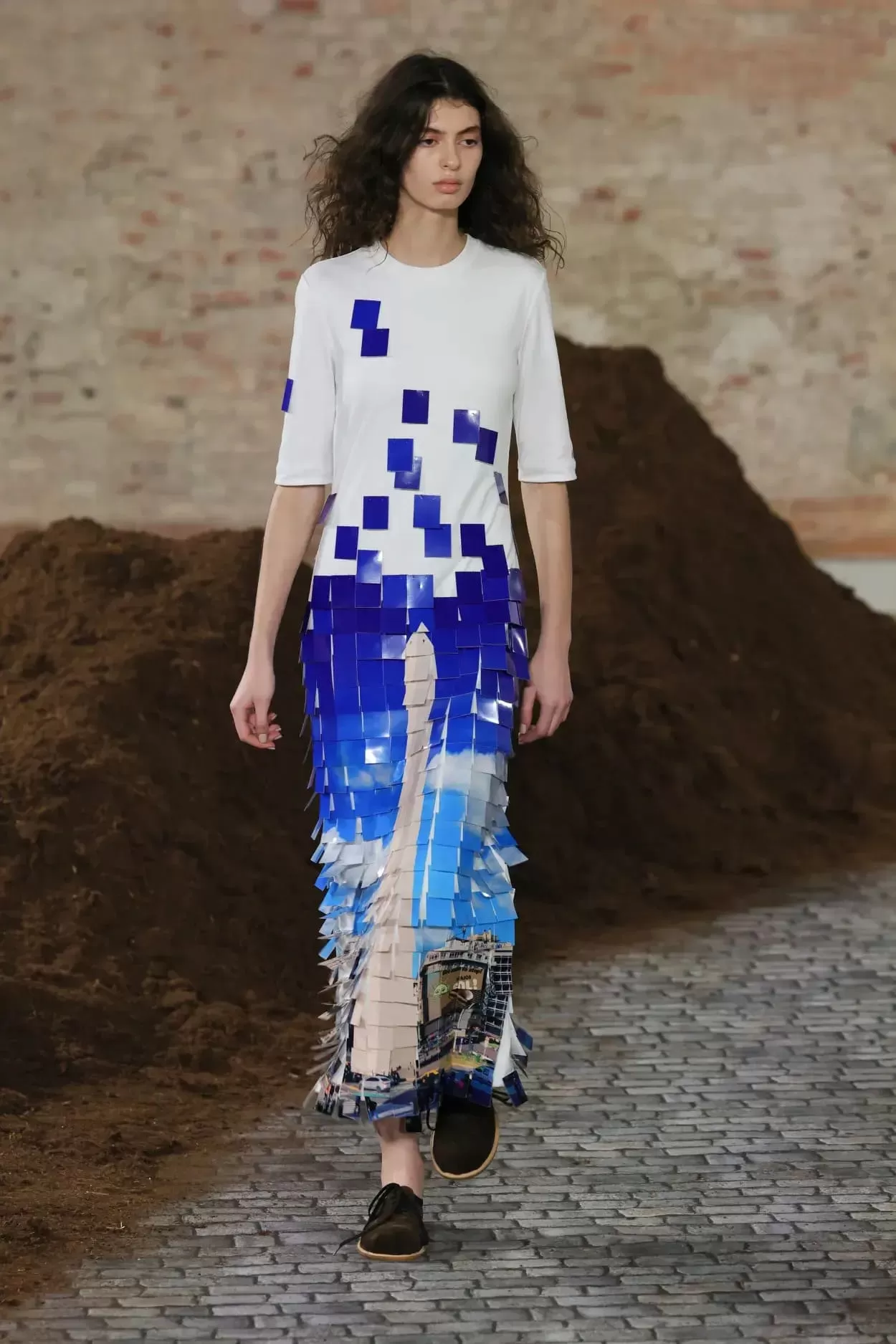
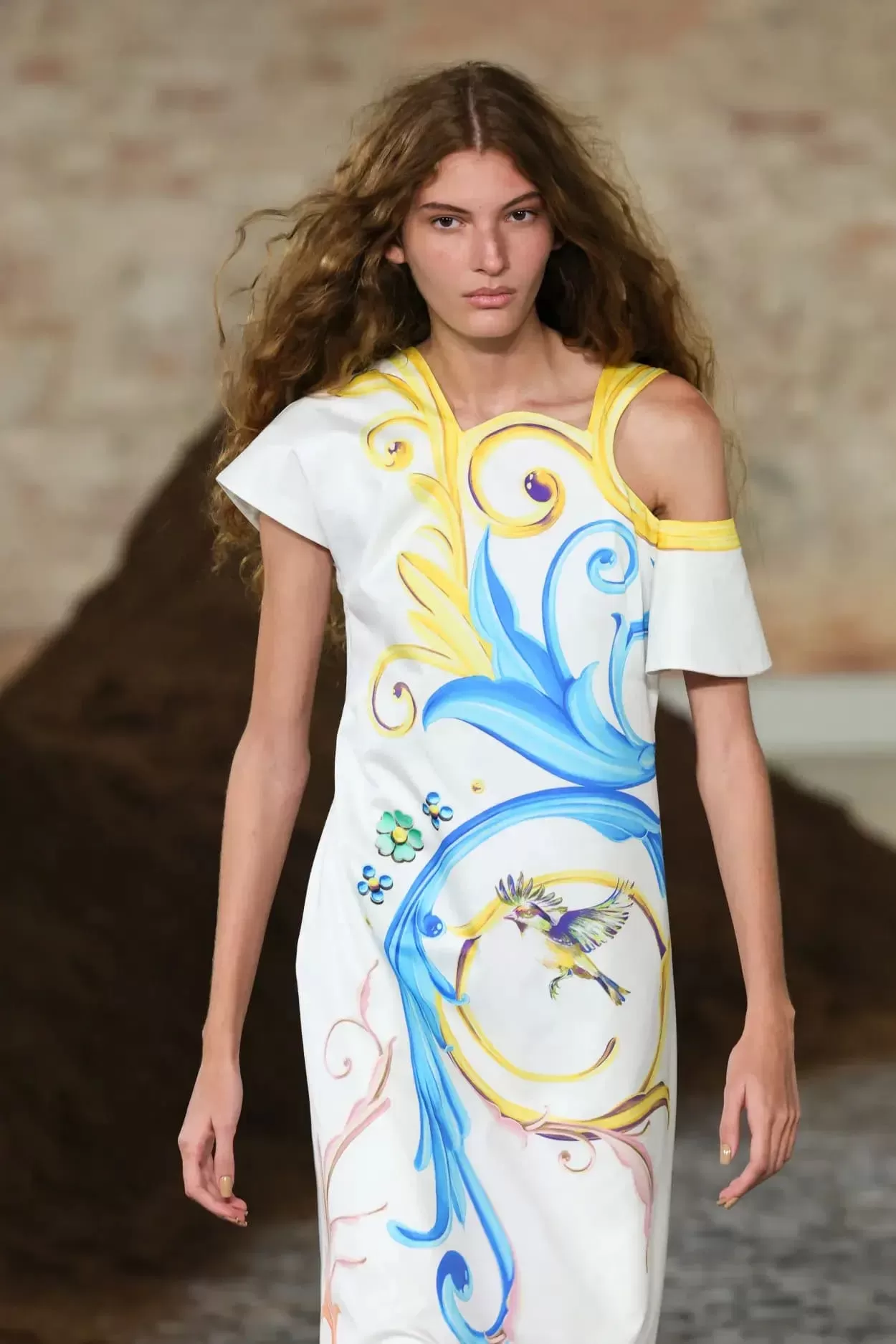
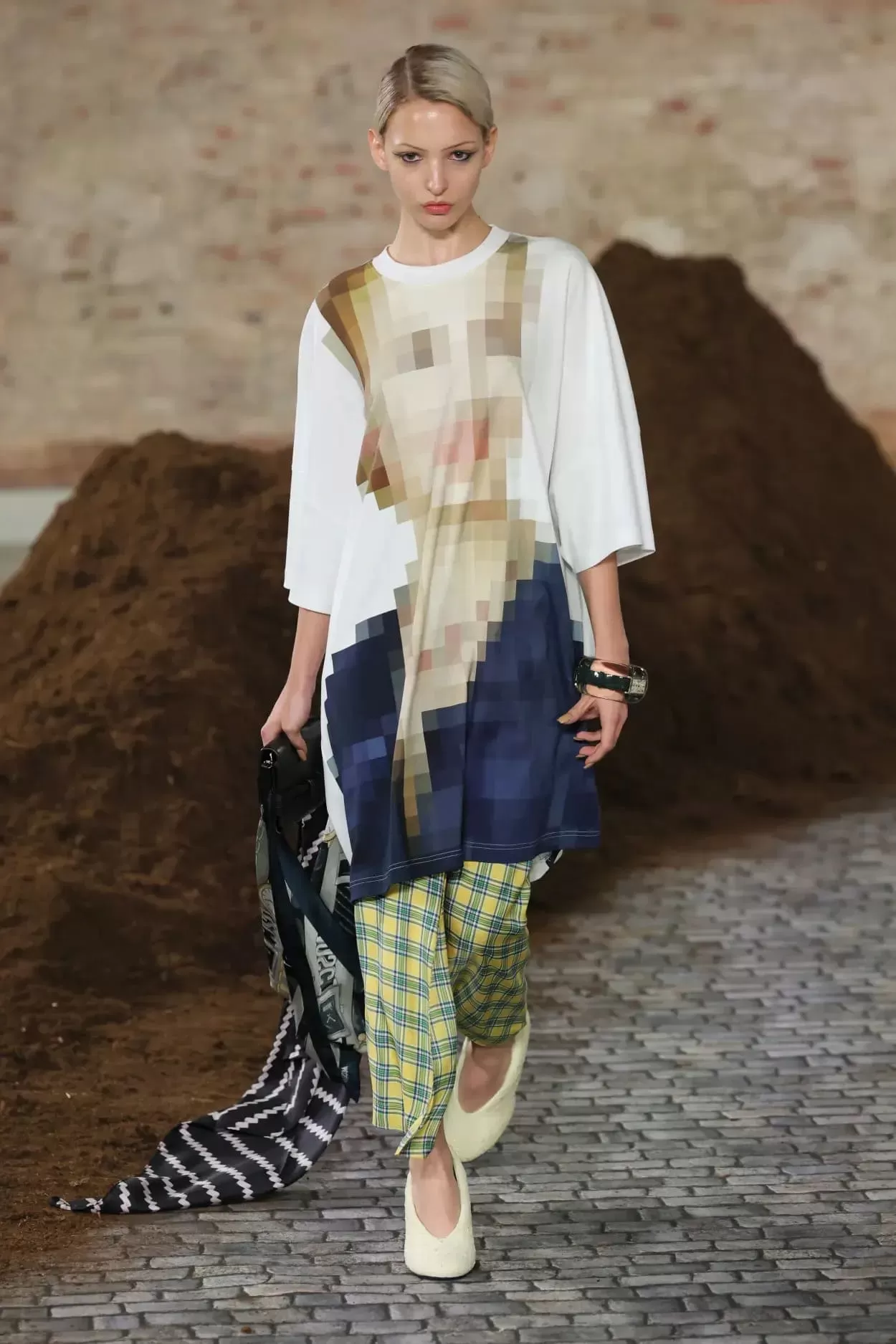
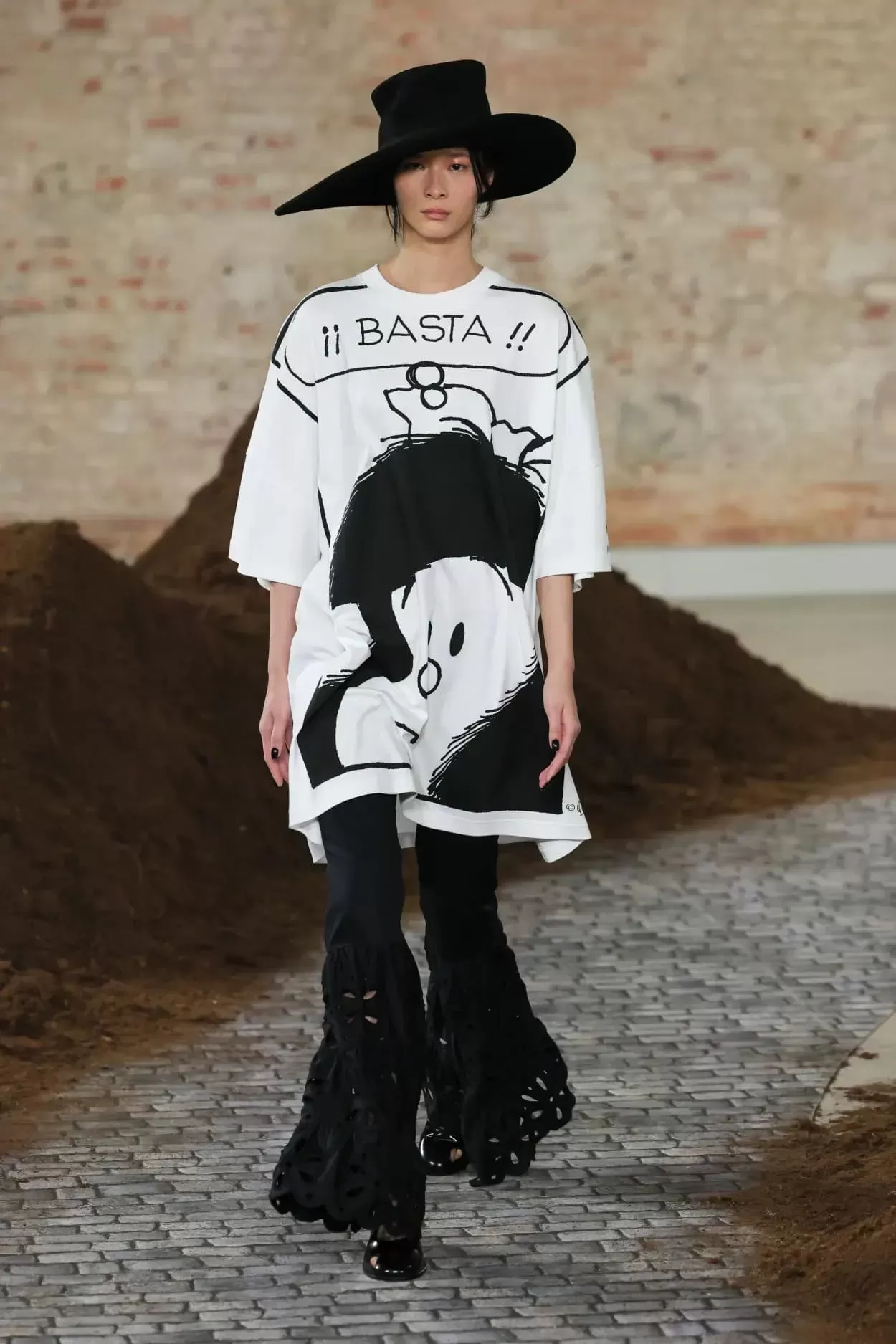
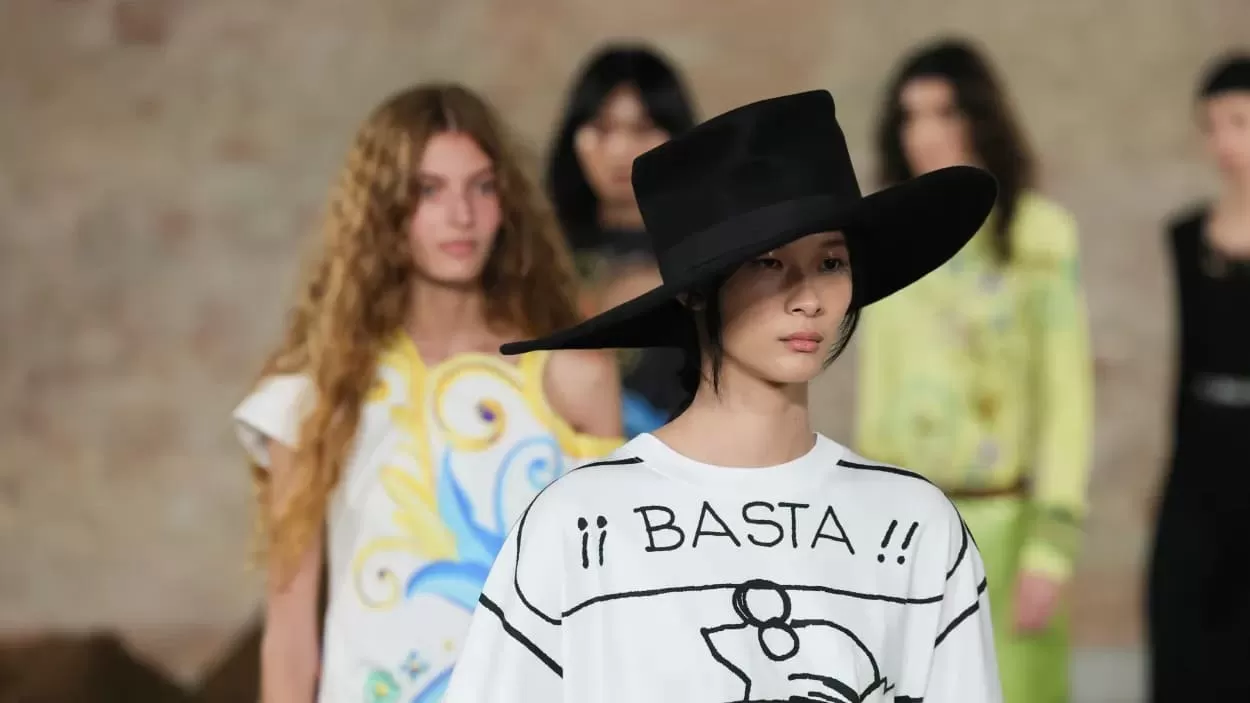
Mafalda appeared among the looks. Not as nostalgic caricature or playful pop reference, but as shared emotional language. The character created by Quino — with her historic “¡BASTA!” — ceased to be a comic-strip child and became a phrase that many Argentines recognise today at the dinner table, in a supermarket queue or in a late-night conversation. The garment did not shout politics; it spoke of collective fatigue, humour as defence, and the irony so deeply woven into the country’s character.
A similar shift occurred with the Obelisk. Reimagined as a structured dress, it moved from monument to everyday symbol. The same site of World Cup celebrations, economic protests and quiet mourning was reinterpreted as haute couture. It was not a tourist postcard; it was urban memory translated into luxury.
The reference to Eva Perón did not feel like a rigid historical citation either. Within the collection she appeared as a living cultural figure, almost domestic in presence. Evita does not belong solely to Argentine politics; she inhabits family conversations, generational debates and the collective idea of social mobility. In Milan, she functioned as she does in the national imagination: complex, contradictory and profoundly emotional.
Perhaps the most meaningful gesture lay in the use of fileteado porteño. This popular art form, born in workshops and bus bodywork — far removed from notions of elite culture — was embroidered onto luxury garments. Here the collection found its most human point: it did not elevate the popular to make it exclusive, but acknowledged that luxury can also emerge from the everyday.
Even the references to the countryside and the gaucho avoided cliché. There was no costume, no empty romanticism. Instead, they evoked a productive, hard-working Argentina — an identity shaped by effort rather than postcard nostalgia.
At its core, the collection did not depict an idealised Argentina, but a real one. A society accustomed to reinvention. A country that coexists with crisis yet continues to produce creativity, humour and future vision.
In purely fashion terms, the proposal preserved Moschino’s DNA: controlled theatricality, precise silhouettes and a constant dialogue between irony and elegance. This time, however, the irony carried cultural weight.
Because if the collection made one thing clear, it is that identity does not depend on economic stability. It may endure crises, debates and transformations, yet remains a cultural capital impossible to devalue. Within that reading, the repeated presence of Eva Perón did not feel accidental. More than an aesthetic citation, it suggested Adrián Appiolaza’s evident admiration for a figure who in Argentina still provokes both deep devotion and equally intense rejection.
For an Argentine designer leading a historic Italian house to foreground that imagery on a global stage such as Milan inevitably introduces a political dimension, even if unspoken. In a country currently governed by a sharply defined economic and social right, the choice may be read as cultural gesture, symbolic provocation or simply an assertion of identity. Fashion rarely provides answers, but it does raise questions: historical nostalgia, social commentary or a subtle signal directed at the present political climate?
In Milan, for a few minutes, that ambiguity also walked the runway — transformed into high fashion.