The historic impact of Prada’s acquisition of Versace reshapes the landscape of Italian luxury and signals a new creative era in Milan.
The purchase of Versace by Prada, valued at $1.375 billion, marks one of the most decisive moves in the recent history of Italian luxury. Far from being a purely financial operation, integrating the house famed for its sensual codes under the minimalist universe of Prada opens an unexpected scenario: a creative clash between two opposing yet complementary aesthetic languages. With this acquisition, the Prada Group strengthens its global position and injects new energy into a name that had long been operating below its full potential.
The deal, closed in cash and already approved by regulators, also represents a strategic exit for Capri Holdings, the US conglomerate that owns Michael Kors and Jimmy Choo, which will use the sale to reduce debt. Meanwhile, Donatella Versace publicly celebrated the transition, linking the announcement to the birthday of the empire’s founder, Gianni Versace, in an emotional gesture that underscores the symbolic weight of this new chapter.
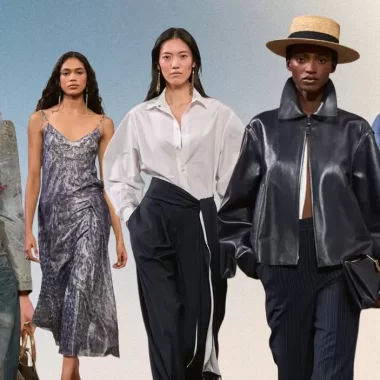
The future direction of Versace now lies in the hands of Lorenzo Bertelli, heir to the group and one of the most influential names in the new generation of European luxury. His stated goal is to preserve the house’s identity while unlocking its “enormous untapped potential”, a phrase suggesting that despite its global recognition, the brand had not reached the expected performance in recent years. The arrival of designer Dario Vitale, with a vibrant, ’80s-inspired debut collection shown at the latest Milan Fashion Week, points in that direction: a rebirth that requires coherence, investment, and long-term vision.
The appeal of the operation lies precisely in the coexistence of opposites. Prada, with its intellectual and refined aesthetic, and Versace, the ambassador of Italian maximalism, do not compete for the same audience. According to analysts, this complementarity could become a driver of growth—provided that the house founded by Gianni Versace manages to reconnect with an audience that now craves desire, personality, and narrative coherence.
The move also strengthens the industrial strategy of the Prada Group, whose manufacturing network in Italy now becomes a key asset for relaunching Versace. The company has consistently invested in leather goods, knitwear and footwear factories, and has trained hundreds of artisans in its own internal academy—a model that ensures creative control and technical excellence. This production power will be essential to ensure that Versace’s new era depends not on media noise but on the tangible quality of its products.
With this acquisition, Prada is not merely buying a brand: it is acquiring a legacy, a mythology, and a historic opportunity to rewrite the DNA of Milanese luxury. The challenge will be to transform that heritage into contemporary relevance. The industry is watching closely; the future of Italian luxury may be changing from within.