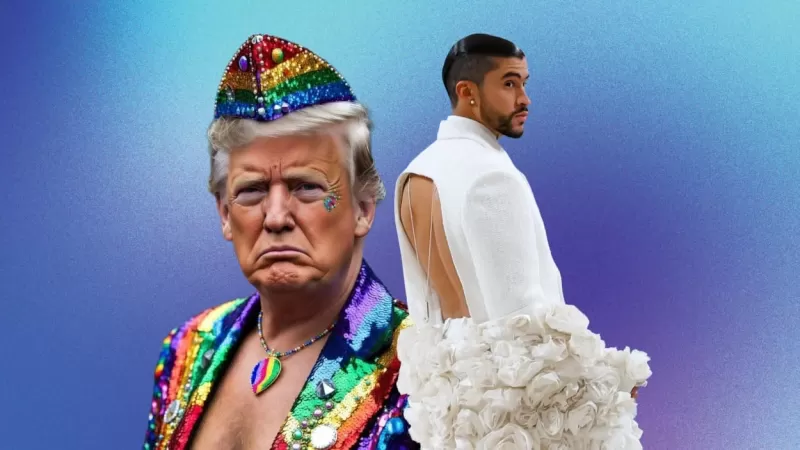

Donald Trump dismisses Super Bowl 2026 and targets Bad Bunny and Green Day, reigniting the clash between pop culture, politics and new masculinities.
In a moment of heightened cultural polarisation, Super Bowl 2026 has become far more than a sporting event. It now stands as a symbolic battleground between two opposing worldviews. The confirmation of Bad Bunny as the headline artist for the halftime show, alongside Green Day opening the ceremony, has triggered an immediate backlash from the most conservative corners of American politics. Among the loudest voices is Donald Trump, who has openly positioned himself against the event.
In a recent interview, the former president was unequivocal. He stated that he would not watch the Super Bowl, described the choice of performers as “terrible”, and claimed it “only spreads hate”, according to remarks published by the New York Post. He also confirmed that he would not attend the game, creating not just physical but ideological distance from an event that has historically functioned as a showcase of national unity. This time, however, the spectacle appears to unsettle him more than usual.
Trump’s comments do not exist in isolation. Both Bad Bunny and Green Day have been outspoken critics of his political legacy, and each represents a strand of popular culture that no longer aims for neutrality. In the case of the Puerto Rican artist, his presence on the halftime stage carries meaning far beyond music. It speaks to Latino identity, linguistic pride — with a performance likely delivered largely in Spanish — and a form of masculinity that refuses to conform to traditional power codes.
In recent days, rumours circulated about Bad Bunny’s potential wardrobe, with speculation that he might wear a dress during the performance. Although production sources later denied this possibility, as reported by TMZ, the mere suggestion was enough to ignite debate. This was never really about a garment, but about what it symbolises: a masculine expression that challenges rigid norms and, precisely because of that, provokes resistance in certain sectors.
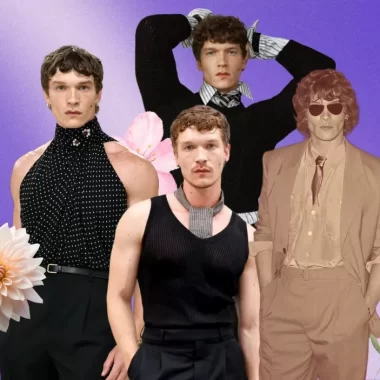
The episode once again brings a recurring cultural tension to the forefront: the politicisation of male fashion. Artists such as Bad Bunny, Harry Styles and Pedro Pascal have repeatedly demonstrated that dressing in ways perceived as ambiguous, sensitive or outside the traditional masculine canon is not an empty provocation, but a statement of autonomy. In this context, Trump’s reaction reads less as a response to music and more as fear of what that aesthetic communicates.
With its vast global audience and unparalleled media reach, the Super Bowl amplifies this message. Having one of the world’s most watched entertainment events led by a Latino, queer-friendly and politically vocal artist signals a clear shift in cultural power. The aim is no longer to please everyone, but to reflect the complexity and diversity of the present moment. That shift inevitably unsettles those who continue to defend closed definitions of identity, gender and nationhood.
Trump’s announced absence from the stadium in Santa Clara becomes, in itself, a symbolic gesture. Faced with a spectacle that celebrates cultural plurality and creative freedom, rejection functions as a way of reasserting ideological boundaries. Yet the conversation has already moved beyond the event itself.
Ultimately, the question is not whether Bad Bunny will wear a dress, nor whether Trump will watch the game. The real issue is why, in 2026, the free expression of the male body is still perceived as a threat. And perhaps the answer lies precisely there: in the transformative power of pop culture when it stops asking for permission.